Fresh-Pressed Olive Oil Club

The Olive Oil Hunter News #43

Grilled Halloumi Over Salad Recipe, Spotlight on Cheeses That Can Take the Heat, When to Wash Veggies and The Link Between Exercise and Sleep

Who doesn’t love a gooey grilled-cheese sandwich? But what can you do when you want cheesy goodness without the bread? The delicious answer is cheese varieties that hold their shape under heat.

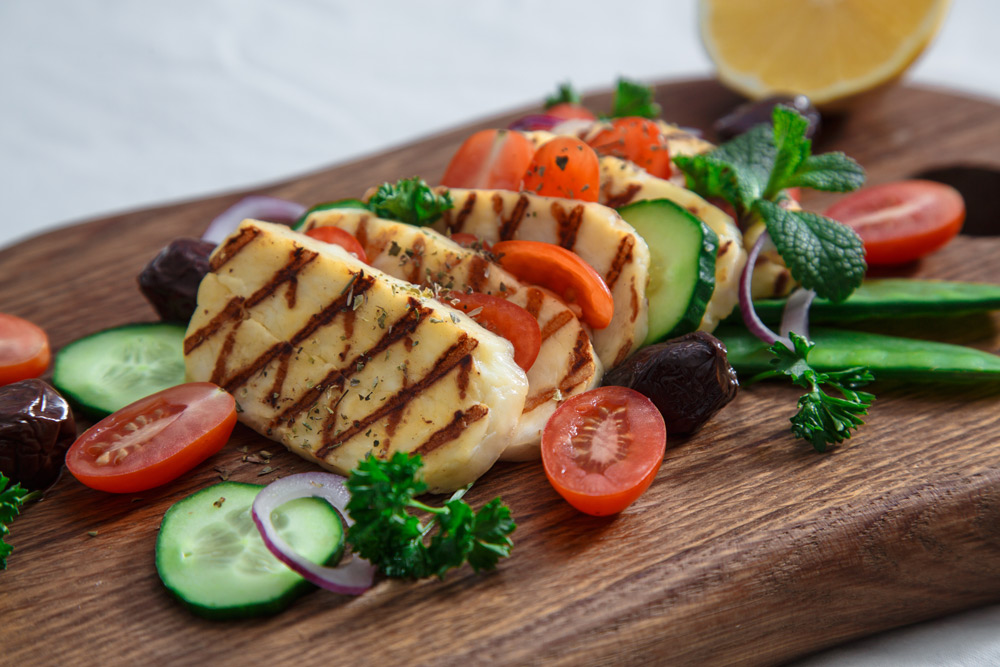
GRILLED HALLOUMI OVER SALAD

  • GRILLED HALLOUMI OVER SALAD Grilled Halloumi Over Salad

    I’m a huge fan of halloumi, a brined goat’s milk cheese from Cyprus. Because it has a high melting point, this firm, somewhat salty cheese can be grilled directly on the grate. You can skewer chunks along with your favorite veggies or simply grill slices and serve them with the refreshing seasonal salad in this recipe.

    Ingredients

    • 4 tablespoons extra virgin olive oil, divided
    • 1 tablespoon best-quality red wine vinegar 
    • 1 teaspoon fresh oregano, chopped, or 1/2 teaspoon dried oregano 
    • Kosher salt to taste
    • Freshly ground black pepper to taste
    • 8 ounces cherry tomatoes, halved 
    • 1 cucumber, diced
    • One head romaine lettuce, washed, dried, and torn 
    • 12 brined Kalamata olives, drained, pitted, and halved 
    • 1/2 cup loosely packed flat-leaf parsley, coarsely chopped
    • 12 ounces of halloumi, cut crosswise into 1/3-inch-thick slices 
    • 4 tablespoons Greek yogurt (optional)

    Directions

    Step 1

    Make the salad: In a bowl, whisk together 2 tablespoons of the olive oil, the red wine vinegar, oregano, salt, and pepper. Add the tomatoes, cucumber, lettuce, olives, and parsley. Toss gently to coat the vegetables with the dressing and divide evenly on four plates.

    Step 2

    Pour the rest of the olive oil onto a rimmed sheet pan and gently coat both sides of each cheese slice. On a medium-hot grill, grill the cheese for 1 to 2 minutes per side, turning with tongs or a thin-bladed spatula. (Work in batches if necessary.) 

    Step 3

    Top each salad plate with equal amounts of the grilled cheese and add a dollop of yogurt, if desired. Serve immediately. 

    Yields 4 servings.

Healthy Ingredient Spotlight: Americans and Potatoes

Healthy Ingredient Spotlight

More Cheeses That Can Take the Heat

Halloumi isn’t the only fresh, semi-firm cheese that can be cooked without melting. Another great one is paneer, the cheese used in Indian cuisine, most famously the creamy spinach dish saag paneer. It’s readily available at many markets, not just specialty shops. And from frigid Finland comes leipäjuusto, popular there at breakfast, according to the experts at the magazine Culture: The Word on Cheese. These cheeses will soften when grilled, but they won’t break down and melt thanks to their low acid content. That’s also the reason you may hear a squeaking sound as you bite into them!

Healthy Kitchen Tip: Grapefruit Knife

Healthy Kitchen Nugget

When Exactly to Wash Veggies

While most concern over food contamination centers on raw meat, vegetables as well as fruits can have organisms you want to keep out of the kitchen. Here are some tips from the FDA and the University of Maine Cooperative Extension to stay safe.

Start by choosing produce that isn’t bruised or damaged. If shopping for precut foods, like fruit chunks or bags of lettuce, make sure they’ve been kept refrigerated or on ice at the store, and get them into the fridge as soon as you get home. If a food gets marred before you’ve had a chance to use it, cut off the affected areas before preparing or eating it.

There are also steps to take with freshly harvested produce, whether from your own garden or a farmers’ market. Washing off produce can help reduce microorganisms. There’s no need to use soap or a special produce wash—just gently rub the produce while holding it under plain running water. Do make sure the water is no more than 10 degrees Fahrenheit colder than the food, or else any pathogens could get drawn in through the stem (if there is one). Because excess water can lead to faster molding or rotting, be sure to thoroughly dry your produce with clean paper towels before storing it in the fridge. To store produce without washing it first, shake, rub, or brush off any garden dirt with either a clean, soft brush or a clean, dry paper towel before you bring it inside if possible. Then place the produce in a plastic bag or container to prevent any risk of contamination to other foods in your fridge. For a list of which produce should be washed and which produce should be wiped clean, check out this resource page from the University of Maine Cooperative Extension.

Always rinse produce right before you peel or cut it so that any dirt and bacteria aren’t picked up by your knife and transferred back onto the fruit or vegetable or elsewhere in your kitchen.

For Your Best Health: Brain Health

For Your Best Health

The Mediterranean Diet: Brain Booster

One of the reasons I’m such a proponent of olive oil is the key role it plays in the fabulously healthy Mediterranean diet, known for its heart health benefits. A recent study published in the journal Neurology advances the theory that it protects brain health too. The researchers found that, among a group of 500 seniors, those who ate an unhealthy diet had higher levels of amyloid and tau proteins, which have been linked to Alzheimer’s, in their cerebrospinal fluid, and that they performed worse in memory tests than those who regularly ate a Mediterranean-like diet. “There was also a significant positive correlation between a closer adherence to a Mediterranean-like diet and a higher volume of the hippocampus. The hippocampus is an area of the brain that is considered the control center of memory. It shrinks early and severely in Alzheimer’s disease,” explained Tommaso Ballarini, PhD, lead author of the study. “It is possible that the Mediterranean diet protects the brain from protein deposits and brain atrophy that can cause memory loss and dementia.” The researchers will continue their work by reexamining the same study participants in four to five years.

In the meantime, this delicious way of eating isn’t complicated. According to the Mayo Clinic, while there is no single definition of the Mediterranean diet, it is typically high in vegetables, fruits, whole grains, beans, nuts and seeds, and olive oil. Here’s an easy way to adopt it:

  • Daily: vegetables, fruits, whole grains, and healthy fats
  • Weekly: fish, poultry, beans and eggs with moderate portions of dairy
  • Limited: red meat
Fitness Flash: The Link Between Exercise and Sleep

Fitness Flash

The Link Between Exercise and Sleep

There are many factors that contribute to good health, with getting enough exercise and getting good quality sleep among them. We know that, separately, physical inactivity and poor sleep are linked to a greater risk of death from causes such as heart disease and cancer. New research published in the British Journal of Sports Medicine now shows that exercise and sleep may be more linked to each other than we thought. Scientists looked at the exercise and sleep patterns of more than 380,000 middle-aged adults over an 11-year period and how different combinations affected their health. Not surprisingly, compared with those with a high physical activity level and healthy sleep combination, those at the other extreme—no moderate-to-vigorous physical activity and poor sleep—were most at risk for heart disease, stroke, and cancer. However, the findings also showed that getting the recommended 150 minutes of exercise a week could mitigate the risks posed by poor sleep, prompting the researchers to suggest that there’s a certain synergy between the two activities. This was an observational study that relied on self-reported data so cause and effect can’t be established, but it does give the idea that you should meet physical activity goals as you work on getting better sleep. Other lifestyle habits that helped participants achieve better sleep levels were being thinner, eating more fruits and vegetables, spending less time sitting each day, not smoking, and limiting alcohol.

Get More Recipes In Your Inbox!

The Olive Oil Hunter News #40

Spinach and Strawberry Salad with Bacon Recipe, Spotlight on Strawberries, How to Properly Store Berries, Eating Whole Fruits and Counting Your Steps for Your Best Health

Salads were made for hot summer days when you want to keep cooking to a minimum. And there’s no better way to enhance your favorite greens with another hallmark of the season—fresh berries. The mix of sweet and savory is a true palate pleaser and really elevates the experience.

Spinach and Strawberry Salad with Bacon

  • The Olive Oil Hunter News #40 Spinach and Strawberry Salad with Bacon

    My wife, Meghan, and I enjoyed this simple salad on the first day of our first Chilean olive oil expedition, and we recreated it as soon as we returned home. For an equally delicious variation, substitute blueberries and chopped walnuts for the strawberries and almonds.

    Ingredients

    • 6 strips thick-cut bacon, diced
    • 10 ounces fresh spinach, sliced into thin strips
    • 1 quart ripe strawberries, hulled and sliced
    • 1/2 cup extra virgin olive oil
    • Juice of one lemon
    • 1 teaspoon honey or more to taste
    • Coarse kosher or sea salt to taste
    • Freshly ground black pepper to taste
    • 1/4 cup sliced almonds

    Directions

    Step 1

    Place the bacon in a cold skillet and bring the heat to medium. Cook the bacon until the fat is rendered and the bacon is crisp, 6 to 8 minutes. Drain the bacon on paper towels and set aside. Arrange the spinach and strawberries in a large serving bowl.

    Step 2

    Make the dressing: Combine the olive oil, lemon juice, honey, and salt and pepper in a small bowl. Whisk to mix. Taste and add more honey or salt or pepper as needed. Just before serving, drizzle the dressing over the salad, tossing gently to mix. Top with the reserved bacon and the almonds.

    Yields 4 servings.

Healthy Ingredient Spotlight: Savoring Strawberries

Healthy Ingredient Spotlight

Savoring Strawberries

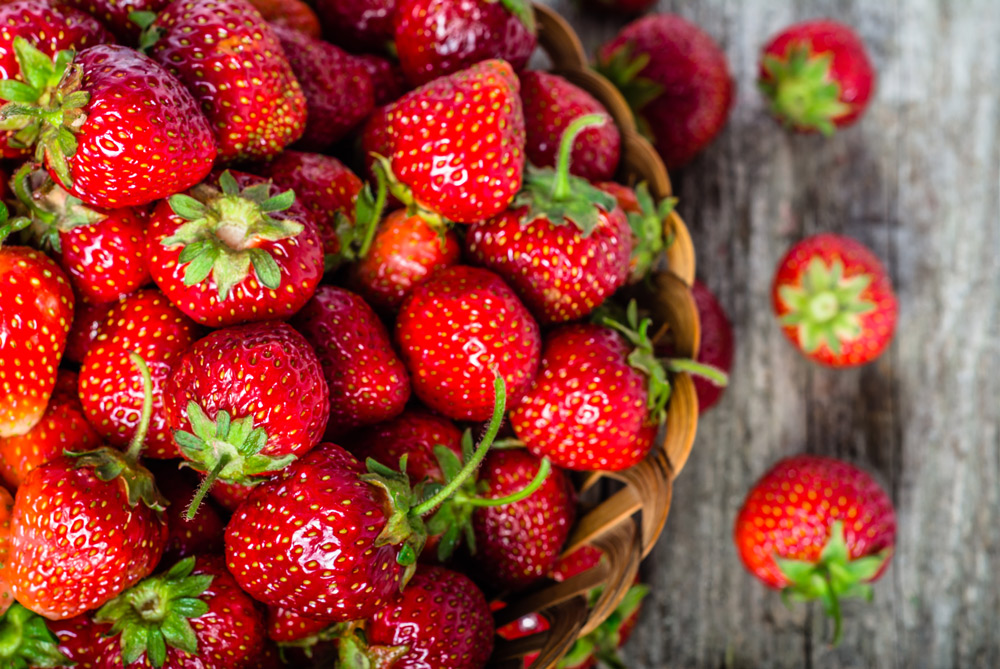
I’m such a big fan of berries. Not only are they delicious, but the icing on the cake is that these fruits are nutrient powerhouses. Blueberries, blackberries, and raspberries seem to get all the attention for their phytonutrients—plant-based compounds that are essential for good health. But strawberries, too, have their fair share of anthocyanins, which give all berries their vivid colors. Strawberries also have fiber and vitamin C, one of their many antioxidants—a cup of berries has more C than an orange. Antioxidants help fight cell damage throughout the body. Choose strawberries with a uniform bright red color, a good indicator of their antioxidant content.

Healthy Kitchen Tip: Smart Storing for Berries

Healthy Kitchen Nugget

Smart Storing

Whether you grow your own or get your berries at a farmer’s market, don’t wash them in advance. It’s very hard to dry them thoroughly enough to prevent excess moisture from encouraging mold or rot, even in the fridge. The University of Maine Extension suggests “dry cleaning” them by shaking, rubbing, or brushing off any garden dirt with either a clean, soft brush or a clean dry paper towel (do this while still outside if you’re harvesting your own). Discard any crushed or spoiled berries. Then place them, with their green tops still on, in a plastic bag or container to prevent contamination of other foods in the refrigerator. When you’re ready to eat, gently rinse them under cool running water.

If you have such a bounty that you want to freeze some, then do wash them carefully in cold water and pat dry as thoroughly as possible without bruising them. Hull them (a grapefruit knife makes fast work of removing the stems) and freeze on a baking sheet—this prevents them from freezing in a clump. As soon as they’re frozen, transfer to a freezer-safe container or bag.

For Your Best Health: Eating Whole Fruits for Health

For Your Best Health

Whole Fruits

Diabetes is a growing global concern, with around half a billion people affected. It happens when your pancreas, which produces insulin in response to high levels of sugar in your blood, can’t produce enough to bring those levels down. We know a healthy lifestyle helps lower diabetes risk, and that includes following a smart diet. Research published in the Endocrine Society’s Journal of Clinical Endocrinology & Metabolism offers a great step to take in that direction. “We found people who consumed around two servings of fruit per day had a 36 percent lower risk of developing type 2 diabetes over the next five years than those who consumed less than half a serving of fruit per day,” said study author Nicola Bondonno, PhD, of the Edith Cowan University Institute for Nutrition Research in Perth, Australia. “We did not see the same patterns for fruit juice.”

The researchers noted a link between eating whole fruit and markers of insulin sensitivity—study participants who ate more fruit had to produce less insulin to lower blood glucose levels. “This is important because high levels of circulating insulin can damage blood vessels and are related not only to diabetes, but also to high blood pressure, obesity, and heart disease,” explained Dr. Bondonno.

Fitness Flash: Every Step Counts

Fitness Flash

Every Step Counts

For optimum health, getting 10,000 steps a day has been the holy grail, but new research presented at the American Heart Association’s Epidemiology, Prevention, Lifestyle & Cardiometabolic Health Conference 2021 found that taking just 4,500 daily steps may help you live longer, whether you reach that goal through a concentrated effort or from small increments throughout the day.

Participants involved in the nine-year study wore a step-counting device so that the researchers could compare the effects of uninterrupted bouts of steps, such as walking for 10 minutes or longer, to occasional short spurts, such as climbing stairs and general activities like housework or just walking to or from a car.

“Technological advances made in recent decades have allowed researchers to measure short spurts of activity. Whereas, in the past we were limited to only measuring activities people could recall on a questionnaire,” said lead study author Christopher C. Moore, MS, a PhD student in epidemiology at the University of North Carolina at Chapel Hill. “With the help of wearable devices, more research is indicating that any type of movement is better than remaining sedentary.”

Of course, the effects of movement/exercise are cumulative. It’s important to note that there are further benefits gained from getting in 2,000 steps in uninterrupted increments, including for heart health as well as for longevity.

Get More Recipes In Your Inbox!

The Olive Oil Hunter News #32

Mediterranean Deviled Eggs, Spotlight on Anchovies, Perfect Hard-Boiled Eggs, The Truth About Eggs, and How to Balance Exercise and Eating

In this issue we’ll cover how to finally achieve the perfect hard-boiled egg for the oh-so-classic hors d’oeuvre—deviled eggs, but with a Mediterranean spin.

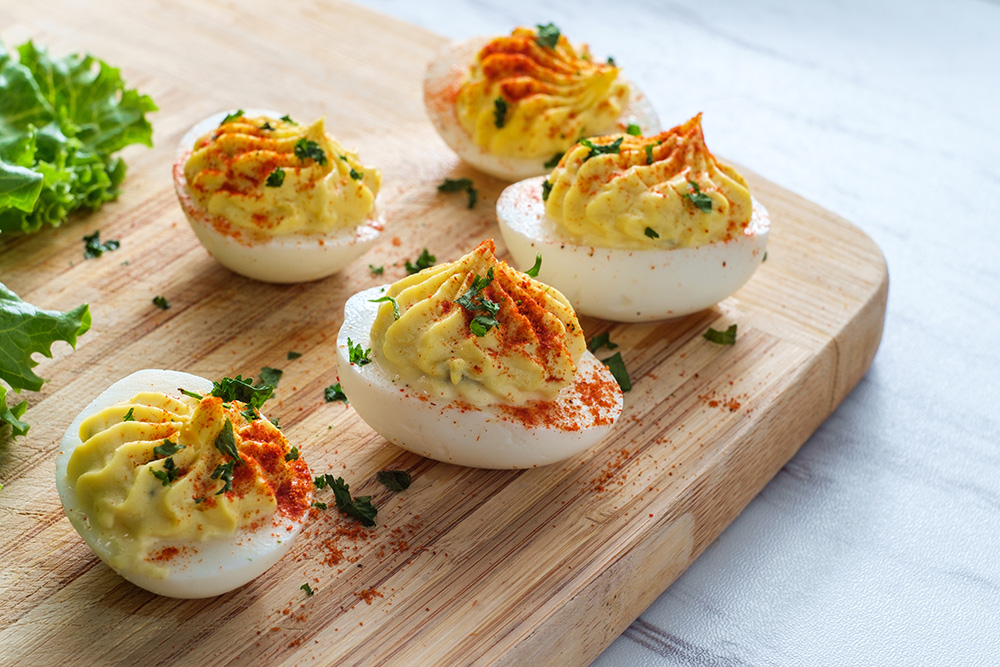
Mediterranean Deviled Eggs

  • The Olive Oil Hunter News #32 Mediterranean Deviled Eggs

    They say what’s old is new again, and that’s definitely true about the classic hors d’oeuvre deviled eggs. But I like to put a Mediterranean spin on this popular canape with heart-healthy extra virgin olive oil as the enrichment rather than the original, butter. Olive oil not only adds creaminess, but a delicious spiciness, too. And adding a variety of garnishes lets you get super creative and give your platter of deviled eggs a festive look. Enjoy!

    Ingredients

    • 12 hard-boiled eggs, peeled
    • 2-3 tablespoons extra virgin olive oil
    • 3 tablespoons mayonnaise
    • 1 tablespoon Dijon-style mustard
    • 1 tablespoon minced shallot or onion
    • 1 tablespoon flat-leaf parsley, rough chopped
    • 2 teaspoons fresh lemon juice, preferably from a Meyer lemon
    • 1 anchovy or 1/2 to 1 teaspoon anchovy paste
    • 1/2 clove garlic, minced
    • Sea salt and freshly ground black pepper
    • Your choice of garnishes (ideas below)

    Directions

    Step 1

    Cut the eggs in half lengthwise, remove the yolks and transfer them to the bowl of a small food processor. (Alternatively, use an electric hand-held mixer.) Put the egg white halves on a deviled egg platter or other oversized dish.

    Step 2

    To the bowl with the yolks, add 2 tablespoons of the olive oil, the mayonnaise, mustard, shallot or onion, parsley, lemon juice, anchovy, and garlic and process until fairly smooth. Add salt and pepper to taste and the remaining tablespoon of olive oil if the mixture is too thick.

    Step 3

    To pipe the filling into the egg white halves, place a resealable plastic bag into a tall drinking glass and turn the edges over the rim of the glass. (For an extra fancy touch, place a wide fluted pastry tip in one of the lower corners.) Fill the bag with the yolk mixture and seal the bag after pressing out any air. Snip off one of the lower corners and then gently squeeze a generous amount of the filling into the egg white halves. If you don’t have enough filling for all the whites, chop the remaining ones and enjoy them in a salad. Garnish the deviled eggs with your choice of olive slices, slivers of sun-dried tomatoes, drained brined capers, chopped chives, good-quality anchovies, basil chiffonade, caviar and/or a sprinkle of pimentón (Spanish smoked paprika). I like to pick four to six options, depending on what I have on hand. Cover and refrigerate until you’re ready to serve. The deviled eggs can be made up to four hours in advance.

Healthy Ingredient Spotlight: Anchovies

Healthy Ingredient Spotlight

Anchovies

When it comes to anchovies, you either love them or you haven’t really tried them or your experience has been with poor-quality anchovies packed in poor-quality oil, and they were overly fishy. If that’s the case, I say it’s time to try again because anchovies impart the all-important “fifth taste,” umami, to dishes. They also typically disappear as they meld into other ingredients—this is especially true when added to a sauce or a sauté. Buy best-quality anchovies in a jar that, once opened, will keep for a few weeks in the fridge, or get a tube of anchovy paste for even easier use.

Healthy Kitchen Tip: Perfect Hard-Boiled Eggs

Healthy Kitchen Nugget

Perfect Hard-Boiled Eggs

Want perfectly round centers on your hard-boiled eggs? The day before cooking, place the eggs on their sides in their carton. To make peeling easier, cook eggs by placing them directly from the refrigerator into boiling water. Then lower the heat to a simmer to avoid the usual “boil-over.” I like to cook them for 12 minutes and then plunge them into cold water to stop the cooking process and chill them down quickly. Gently crack the shell all around and peel under running water.

For Your Best Health: Are Eggs Good for Me, or Not?

For Your Best Health

Are Eggs Good for Me, or Not?

It seems that there are as many studies on the effects of eggs on health as there are days in the year, with the results of new studies often contradicting prior findings! Take the study published in February 2021 in the journal PLoS Medicine. Researchers analyzed self-reported egg-eating for the year 1995 from a pool of more than a half-million retired Americans and then looked at the incidence of heart disease and diabetes and deaths over the next 16 years. Of all the foods recorded on participants’ questionnaires—124 to be exact— the study pointed a finger at previously exonerated eggs as the culprit for those ills. But a group of experts queried by the British group Science Media Centre, which provides interpretation and statistical analyses of scientific studies, said “not so fast.”

“The most important drawback of this study was the way egg consumption data was collected. What and how much food people ate was asked just once, and people were asked to recall what they had eaten in the past. This is problematic because people tend to forget; also their diets might change a lot, particularly if they became ill,” said Ada Garcia, PhD, one of the experts and a senior lecturer in Public Health Nutrition at the University of Glasgow in Scotland. “Studies that observe diet and lifestyle behaviours are useful to understand whether what we eat is linked to becoming ill or dying, but they are not conclusive. We eat a combination of foods and one specific part of the diet—in this case, whole eggs—cannot be fully blamed. The key thing to remember is to keep a balance in what we eat and what we do: Eating a variety of healthful foods, avoiding overeating or indulging in foods that are too high in sugar and energy, keeping an eye on how much salt we eat. Being overweight or obese, smoking, consuming too much alcohol, and not being physically active are much more important factors to consider for prevention of chronic diseases and related deaths. The conclusions of this study are overblown. Blaming eggs alone for an increased risk of cardiovascular disease is a simplistic and reductionist approach to the concept of diet and disease prevention.”

Another point to make is that many studies have acknowledged that cholesterol from foods like eggs doesn’t translate to high blood cholesterol and its health consequences—that’s due more from saturated fat. But when it comes to buying eggs, there’s a different type of confusion—this time surrounding which are the healthiest. According to the Cleveland Clinic’s Kristin Kirkpatrick, RD, LD, USDA labels don’t always tell the whole story. For instance, “organic eggs” sound great and tell you that the chickens weren’t given growth hormones, but not whether they had antibiotics or were raised humanely. “Free-range” and “free-roaming” don’t indicate the quality of the hens’ outdoor space or how often they were able to access it. “Cage-free” doesn’t tell you how crammed they might have been in the chicken house. On the other hand, she points out that “pasture-raised” means the chickens were free to hunt for their food and, as a result, their eggs tend to naturally have more omega-3 fatty acids and the antioxidant lutein—you can tell by the deeper yolk color. She points out that the gold standard for humane treatment is a stamp on the egg carton that says “animal welfare approval.” The silver medal goes to the “certified humane” designation. Want really fresh eggs? Check out small farmers in your area and visit them to check out the operation for yourself, she suggests.

Fitness Flash: Balancing Exercise and Eating

Fitness Flash

Balancing Exercise and Eating

Could exercise be making you fatter? Exercise is an essential part of good health, but when it comes to calories, a brisk 30-minute walk, for example, only burns off somewhere between 150 and 200 calories. Yes, that can help with weight loss efforts, but here’s the rub—most people overestimate exercise’s calorie burn, plus they tend to reward themselves with food afterwards and actually take in more calories than they used in working out. This behavior was confirmed by an experiment conducted by scientists from the Technical University of Munich (TUM) and the University of Nebraska. They compared the amount of food that study participants ate after exercise as well as after a rest period.

“We were able to show for the first time that certain characteristics, such as the amount and ‘urgency’ with which a person wants to eat, change over the course of physical exertion,” said Karsten Köhler, PhD, assistant professor in exercise, nutrition, and health at TUM. “The actual results suggest that physical exertion can entice those who do sport to eat larger amounts of food more quickly after the training session. Since weight loss is a main motivation for exercising for many, and failure to achieve the desired weight loss makes it likely to quit exercising, it could be a good strategy to think about what you want to eat afterwards before you start to exercise.”

For instance, have yogurt and fruit at the ready instead of reaching for an oversized muffin. The research team is now looking at other strategies that could make exercise a more substantial part of weight loss.

Get More Recipes In Your Inbox!

The Olive Oil Hunter News #31

Tuna Ceviche with Avocado, Spotlight on Merquén, How to Shop for Raw Fish, Diet, Exercise, Manual Jobs and Heart Health

The one I want to share with you in this edition of the Olive Oil Hunter Newsletter comes from central Chile and features one of the area’s most widely used spice mixtures: merquén (you’ll also see it spelled merkén). Rusty red in color, it’s made by grinding dried smoked goat’s horn chiles with salt and toasted coriander seeds…and it adds an unmistakable flavor to this dish. When shopping online, look for true merquén from Chile. Etnia is one brand that sources it directly.

Tuna Ceviche with Avocado

  • The Olive Oil Hunter News #31 Tuna Ceviche with Avocado

    Originally from the neighboring country of Peru, ceviche is very popular in Chile. Not surprising given Chile’s proximity to the Pacific (it has thousands of miles of coastline).

    Ingredients

    • 1 pound sushi-quality albacore or yellowfin tuna, cut in 1/2-inch dice
    • 1/2 small red onion, cut in small dice
    • 1 garlic clove, peeled and minced
    • 1 to 2 serrano or jalapeño chiles, to taste, stemmed, seeded and minced
    • 1 tablespoon brined capers, rinsed and drained
    • 1 ripe avocado, peeled, pitted, and cut in small dice
    • Coarse salt (kosher or sea) and freshly ground black pepper, to taste
    • 1/3 cup fresh lime juice
    • 1/4 cup extra virgin olive oil
    • 1/4 chopped fresh cilantro leaves, or more to taste Leaf lettuce, baby arugula, baby spinach, or radicchio leaves, for serving

    Directions

    Step 1

    Refrigerate the diced tuna while you prepare the remaining ingredients.

    Step 2

    Place the onion in a small bowl and cover with cold water. Let it sit for five minutes, then drain, rinse, and dry on paper towels. (This step removes some of the bitterness.)

    Step 3

    In a medium bowl, combine the onion, garlic, chile, capers, avocado, salt, pepper, and 2 tablespoons of the lime juice. Toss together gently. Add the tuna to the bowl.

    Step 4

    Stir together the remaining lime juice and the olive oil. Pour over the tuna and toss the mixture together. Season to taste with salt and pepper. Cover and refrigerate for 15 minutes, stirring gently from time to time.

    Step 5

    Just before serving, add the cilantro and toss. Taste and adjust seasonings. Line salad plates with salad greens, spoon the ceviche on top, and serve.

    Serves 4 to 6 — Recipe from cooking.nytimes.com

Healthy Ingredient Spotlight: Merquén

Healthy Ingredient Spotlight

Merquén

Merquén is a spice created by Chile’s indigenous Mapuche people and it’s an essential ingredient in Mapuche cuisine. It’s the star of puré de papas picante (spiced mashed potatoes), pebre (salsa), and mani merquén (roasted peanuts). Try it sprinkled on your favorite nuts as well as on fresh popcorn. It’s both spicy and smoky, and reminds me of Spain’s pimentón, so it’s great in many classic Spanish dishes, too.

Healthy Kitchen Tip: How to Shop for Raw Fish

Healthy Kitchen Nugget

How to Shop for Raw Fish

Seafood shopping can be a true challenge, especially when you want fish that’s safe to eat raw. While the citrus juice used in ceviche changes the chemistry of raw seafood, it doesn’t remove every possible toxin. So, you still want to start with the freshest fish possible. The reason to look for sushi-grade (or sashimi-grade) tuna is that it has been harvested, transported, and stored to exact specifications so that it is always maintained at a safe (meaning cold enough) temperature. A very safe option is buying frozen fish filets that have gone through super-freezing, in which just-caught fish are frozen rapidly at temperatures between −76 °F to −112 °F, a method that also kills parasites. When allowed to thaw in the fridge, fish treated this way can actually taste fresher than fresh. If the fish listed as sushi grade at your store is labeled “previously frozen,” ask the fishmonger if it was super-frozen. If it was, then you can buy without worry. Because of growing demand for sushi-grade fish, you can now buy it online from some top-notch seafood companies, like New York’s famous Fulton Fish Market, and get it shipped right to your home.

For Your Best Health: Diet and Exercise Go Hand-in-Hand

For Your Best Health

Diet and Exercise Go Hand-in-Hand

Salt and pepper, seltzer and lime, olive oil and balsamic vinegar—there are some things that just go hand in hand. The same is true for diet and exercise. You likely already know that the US Department of Health and Human Services offers separate recommendations for each: the Physical Activity Guidelines for Americans and the Dietary Guidelines for Americans. But what was unclear was whether you could achieve health benefits from sticking to just one set of recommendations. Though many of us suspected the answer, we now know for sure: It takes both, especially to prevent a dangerous condition known as metabolic syndrome. This is a combination of health risk factors, including excess fat around the waist, insulin resistance, and high blood pressure, which are conditions that, in turn, set the stage for heart disease, stroke, and type 2 diabetes.

Researchers analyzing data from 2,379 participants of the decades-long Framingham Heart Study found that adhering to the diet guidelines alone lowered the odds of metabolic syndrome by 33%, and adhering to physical activity guidelines alone lowered them by 51%, but following both lowered the odds by 65%.

And there’s no time to lose. “The earlier people make these lifestyle changes, the more likely they will be to lower their risk of cardiovascular-associated diseases later in life,” said the study’s corresponding author Vanessa Xanthakis, PhD, assistant professor of medicine and biostatistics at Boston University School of Medicine.

Fitness Flash: Manual Jobs and Heart Health

Fitness Flash

Manual Jobs and Heart Health

Speaking of exercise, a 10-year study published in the European Heart Journal has some startling findings about health effects of jobs that require a lot of activity, whether from standing all day or doing heavy physical labor. While workers might be moving all day long, if the work activity causes blood pressure to stay high all day long, too, that’s risky for your heart—and quite the opposite of the heart-health benefits of a 30-minute leisure-time walk, for instance. “Many people with manual jobs believe they get fit and healthy by their physical activity at work and therefore can relax when they get home. Unfortunately, our results suggest that this is not the case,” said Professor Andreas Holtermann, PhD, of the National Research Centre for the Working Environment in Copenhagen, Denmark. “And while these workers could benefit from leisure physical activity, after walking 10,000 steps while cleaning or standing seven hours in a production line, people tend to feel tired, so that’s a barrier.”

Professor Holtermann is piloting several approaches to make work activity more beneficial. These call for using new strategies to complete tasks, like rotating between sitting, standing, and lifting during a shift for those on a production line, as well as ways to infuse sedentary jobs with chunks of heart-healthy fitness time.

Get More Recipes In Your Inbox!