Some of our favorite members of the Brassica family, brussels sprouts, star in this vegan-friendly mélange of seasonal vegetables. Large king oyster or shiitake mushrooms can be found at many supermarkets or Asian food emporiums. Feel free to substitute other meaty mushrooms, such as portobellos or creminis.
8 ounces medium shallots, peeled and halved lengthwise
6 to 8 fresh thyme sprigs
1/2 cup extra virgin olive oil, divided use
1/2 teaspoon freshly ground black pepper
1 1/2 teaspoons coarse salt (kosher or sea)
1 pound king oyster or shiitake mushrooms, stemmed, cut into 1/2-inch cubes
1 tablespoon soy sauce
1 teaspoon smoked paprika
Directions
Step 1
Preheat the oven to 400°F. Toss together the brussels sprouts, pearl onions, shallots, thyme, and 1/4 cup of olive oil on a large rimmed baking sheet; sprinkle with the pepper and 1 teaspoon of salt. Roast until tender and browned, about 30 minutes. Remove from the oven; remove and discard the thyme sprigs.
Step 2
While the brussels sprout mixture roasts, heat the remaining 1/4 cup of olive oil in a large skillet over medium-high heat. Add the mushrooms; cook, stirring occasionally, until just starting to brown, 6 to 8 minutes. Reduce the heat to medium-low; cook, stirring occasionally, until nicely browned and nearly crisp, 6 to 8 minutes. Remove from the heat. Stir in the soy sauce, smoked paprika, and the remaining 1/2 teaspoon salt. Transfer the mushrooms to paper towels to drain. Stir the mushrooms into the brussels sprout mixture just before serving.
Serves 8 to 10 — Recipe from Food and Wine, November 2020
Greek Fava Recipe, Spotlight on Legumes and Gluten-Free Legume Pasta, and the Truth About Diet and Exercise
This is the time of year when I’m usually in Italy and Greece, tasting the most amazing, freshly pressed olive oils and working with my growers on creating flavorful and unique blends. There’s nothing quite like spending fall in the heart of the Mediterranean, with its comfortable daytime temps and cool evenings, wonderful for unwinding at a Greek taverna, savoring luscious mezze—their wide array of appetizers—and wine with people who not only love them, too, but are responsible for growing the crops that chefs and vintners depend on.
Mediterranean food is rich, heart-warming, stick-to-your-ribs cuisine. With this week’s recipe, you can bring one of my favorite tastes of Greece to your own table…
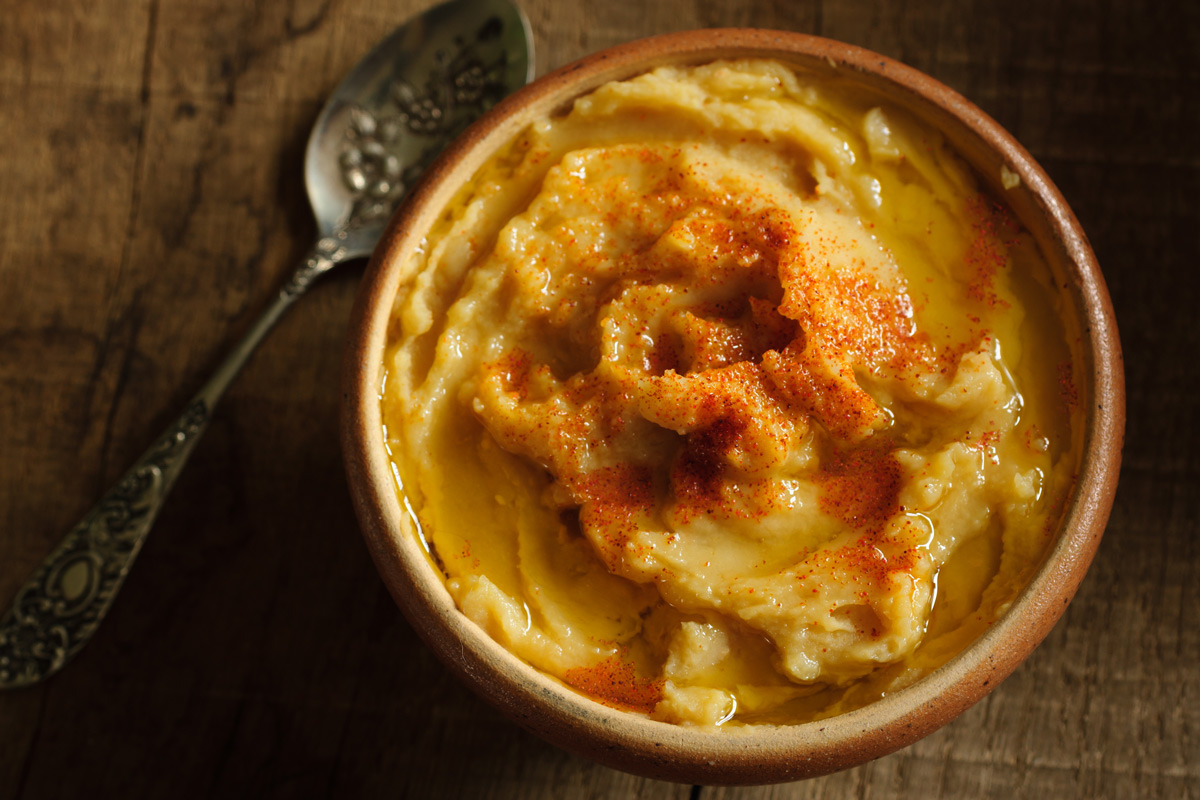
In Greece, “fava” is a creamy purée made from the yellow split peas traditionally grown on the island of Santorini. These split peas are not related to fava beans, though both are legumes. Yellow and green split peas are great pantry items, and supermarket brands cost just cents a bag. But if you really want to splurge, for just a few dollars more, you can buy true Greek yellow split peas from Arosis, a purveyor that sources them from small Greek farms. Many online merchants sell a variety of the company’s products.
Greek fava is a wonderful twist on hummus, the better-known legume-based dip. Fava has a silky creaminess for a great mouthfeel. It’s often topped with caramelized onions and capers and served with toasted pita wedges, but I love using cucumber spears and sliced veggies for dipping.
Ingredients
1 cup dry yellow split peas
3 cups chicken or vegetable stock, homemade or low-sodium canned
2 small onions, diced
2 cloves garlic, coarsely chopped
1 bay leaf
6 tablespoons extra virgin olive oil, plus more if desired
2 tablespoons fresh lemon juice
1 tablespoon fresh oregano or flat-leaf parsley, finely chopped
Coarse salt
Freshly ground pepper
Paprika (smoked if possible)
Optional: capers, caramelized onions and lemon wedges
Directions
Step 1
Rinse the split peas in cold water to remove any grit and drain. Transfer to a large saucepan and pour in enough stock to cover by at least an inch—start with 2.5 cups. Add half the diced onion, the garlic and the bay leaf. Bring to a boil over medium-high heat and skim off any foam that accumulates on top. Reduce the heat and simmer, covered, until the peas reach a thick, porridge-like consistency, 30 to 60 minutes. Stir occasionally and add the final half-cup of broth if all the liquid is absorbed before the peas are tender—don’t let them dry out or scorch on the bottom of the pan.
Step 2
When the peas are done, allow them to cool. Discard the bay leaf. Transfer the peas to a food processor using a slotted spoon and reserving any remaining cooking liquid in case needed. Add 5 tablespoons of the olive oil and the lemon juice and process until smooth. The consistency should be like mashed potatoes. If the mixture is too dry, add any stock that remained in the pan or a couple of tablespoons of water. Add the oregano or parsley and pulse until well distributed. Season to taste with salt and pepper.
Step 3
Mound the fava in a serving bowl and top with a sprinkle of paprika and the remaining diced onion and tablespoon of olive oil or more to taste. If making ahead, refrigerate and then let it come to room temperature before digging in. Garnish with capers, caramelized onions and lemon wedges as desired.
Quick Kitchen Hack: Once a week I like to make a batch of caramelized onions. Not only are they great on the fava, but they’re also delicious as a condiment or flavor booster on everything from eggs and burgers to steamed vegetables and even toast. Slice three or four large onions and sauté in 4 tablespoons of extra virgin olive oil. Cook them low and slow—it could take up to an hour—until completely soft and brown, a sign that their natural sugar has been released. Finish with a splash of your favorite balsamic vinegar, pack into a glass jar, and refrigerate.
Yields 6 appetizer servings.
Healthy Ingredient Spotlight
Superstar Legumes
Legumes are superstars among plant-based foods because of their fiber, protein and wealth of other nutrients. Within legumes is the group called pulses. These are specifically plants that have pods, explains USA Pulses, and a pulse itself is the dry edible seed within the pod. Among the most delicious types are whole and split dry yellow and green peas; green, French green, red, black and small brown lentils; and a veritable army of beans, including the well-known kidney beans, great northern beans and black-eyed peas (a bean, not actually a pea!), adzuki beans, the oversized cranberry bean, and, yes, the fava bean. Explore more at pulses.org.
Healthy Kitchen Nugget
To Soak or Not to Soak
Not all legumes need a long soak before they can be used. Simply rinse lentils and dried peas, removing any tiny pebbles you might find. For cooking, a good rule of thumb is to start with 2.5 cups liquid per 1 cup lentils, 2 cups liquid for 1 cup dried peas, and add more as needed during cooking. They’re often tender after a 30-minute simmer.
You can cook beans without soaking first, but they’ll take a lot longer. For chickpeas, use 3 cups water to 1 cup chickpeas, and soak for 8 to 24 hours. For beans, use enough water to cover and soak overnight. Your bowl should allow for the beans to double or triple in size. Drain, rinse with cool water and simmer 1.5 to 2 hours, depending on your recipe.
For a faster no-soak method, USA Pulses recommends a quick boil and rest: Boil 2 cups water and 1 cup beans for 3 minutes, or 3 cups water and 1 cup chickpeas for 2 minutes. Remove from heat, cover and wait 1 hour before proceeding with your recipe.
For Your Best Health
Gluten-Free Legume Pasta
You know that regular pasta is part of the pantheon of refined flour-based products that lack the micronutrients of whole grains. Enriched pasta contains some, but hardly all, of the vitamins and minerals lost when the wheat is refined. But whole-grain pasta isn’t the only alternative, particularly if you want gluten-free or simply fewer carbs. Enter legume-based pasta—black beans, chickpeas and red lentils are taking the starring spots among pasta alternatives from companies like Eden Foods and even pasta king, Barilla. Plus, they have more fiber and more protein than whole-grain pasta, according to a report by UC Berkeley. To keep the goodness going, think vegetable- and olive oil-based sauces rather than butter or cream.
Fitness Flash
The Truth About Diet and Exercise
Whether you’re a casual or serious fitness enthusiast, you know that exercise and diet work together to build a better body. But it turns out that some sports nutrition lore is actually incorrect. At last year’s meeting of the American College of Sports Medicine, renowned Newton, Massachusetts-based sports nutritionist Nancy Clark, RD, set the record straight.
You don’t need protein supplements to build muscle. Getting about 110 to 150 grams of real protein a day will do it. To increase muscle size, the answer is strength training.
Think protein if you want a bedtime snack. In fact, a study published in the British Journal of Nutrition in 2018 found that a cup of cottage cheese about an hour before you turn in will help with muscle repair while you sleep.
For vegans, make sure to get enough leucine, the amino acid that triggers muscles to grow. Nonanimal sources include nuts, seeds, soy foods, lentils, beans and other plant proteins. Since a standard serving of most of these plant-based foods doesn’t have as much leucine as a serving of meat, for instance, you might need to have a serving at every meal and for snacks to get the recommended daily intake, Clark advises.
Mediterranean Chicken Wing Recipe with Healthy Ingredients, Spotlight on Cumin and Garlic, Bone Health and Social Media
As fall gears up, I love to get in the kitchen and revisit recipes from around the world. Sharing them with you and highlighting super-healthy ingredients are very important to me because this message is so important: Delicious food can, and should be, healthy food…and healthy food can be delicious! Whether you follow the Mediterranean diet, have adopted a Keto or Paleo plan, or are vegetarian or vegan, once you have access to a repertoire of great recipes with fresh pressed olive oil, you can tailor them to your diet by swapping healthy ingredients as needed. Below you’ll find my favorite alternative chicken wing recipe.
Let’s get cooking with…
Piri-Piri Drumsticks with Blue Cheese Dip
You don’t have to be a football fanatic to love sports bar food like Buffalo hot wings, named for the city that lays claim to them. I like to indulge not only by recreating this favorite dish at home, but also by elevating it with an alternative chicken wing recipe with fresh pressed olive oil that switches from wings to drumsticks—more meat!—glazed with piri-piri, a Portuguese chile sauce available in larger supermarkets or online.
Nando’s Peri-Peri Sauce is my go-to brand (both spellings are correct!). For the blue cheese dip, the ultimate is Cabrales, an artisanal blue from Asturias, Spain. And for even more flavor, I’m replacing celery sticks with fresh fennel. The only prep work—still fast and easy—is the marinade for the drumsticks. Since they need time to absorb all the spices, I like to do this early in the day.
Ingredients
For the drumsticks
2 tablespoons pimentón (smoked Spanish paprika)
2 teaspoons coarse kosher or sea salt
1-1/2 teaspoons ground cumin
1-1/2 teaspoons dry mustard
1-1/2 teaspoons ground fennel seed
1 teaspoon freshly ground black pepper
12 meaty chicken drumsticks
Extra virgin olive oil
Large fennel bulb
For the glaze
3 tablespoons butter
1 clove garlic, minced
1/2 cup Nando’s Peri-Peri Sauce or your favorite hot sauce
1 tablespoon fresh lemon juice
For the dip
1/2 cup crumbled Cabrales or other artisanal blue cheese
3/4 cup sour cream
1/4 cup mayonnaise
1 teaspoon Worcestershire sauce
1 to 2 tablespoons milk or cream (optional)
Extra virgin olive oil
Directions
Step One
Combine the pimentón and other spices in a small bowl. Place the drumsticks in a large bowl (or a large resealable plastic bag) and coat them with olive oil. Add the spice mixture and use your hands to distribute it evenly. Cover and refrigerate for 4 to 8 hours.
Step Two
To cook, preheat your oven to 400°F. Line a rimmed baking sheet with foil, then top with a wire rack. Oil the rack and arrange the drumsticks on it. Bake until cooked through, 40 to 45 minutes, turning once or twice with tongs. (Alternatively, you can grill the drumsticks.)
Step Three
While the chicken is cooking, make the dip and the glaze. For the dip, mash the blue cheese in a bowl with a fork. Whisk in the sour cream, mayonnaise and Worcestershire sauce. If desired, thin with the milk or cream. Transfer to a serving bowl and drizzle with olive oil.
Step Four
For the glaze, melt the butter in a small saucepan over medium-low heat. Add the garlic and cook for 2 to 3 minutes. Stir in the piri-piri sauce and lemon juice and bring to a simmer. When the drumsticks are cooked through, remove from the oven, brush on all sides with the glaze, and return to the oven for 5 minutes to set.
Step Five
To plate, trim the fennel bulb, reserving the feathery fronds. Cut in half lengthwise, remove the core, and then slice each half into small wedges. Arrange them on a platter with the drumsticks, garnish with the fronds, and serve with the dip.
Yields 4 appetizers or 2 hearty main dish servings.
Healthy Ingredient Spotlight
Earthy Cumin
Cumin, the seed of the Cuminum cyminum plant, is a relative of caraway, fennel and parsley and has been used in medicine and cooking for over 4,000 years. Originally found in Egypt, cumin was introduced to the Mediterranean region and Asia (notably India and China) before being brought to the Americas by the Portuguese and Spaniards. Its earthy flavor adds a unique richness to dishes, and it’s a mainstay in countless cuisines…from Indian curries and chutneys to Moroccan tagines to Mexican salsas and moles. Buy cumin in seed form. When a recipe calls for ground cumin, do it yourself in a spice grinder.
Healthy Kitchen Nugget
Garlic’s Key Enzyme: Allicin
Eating garlic every day is one of the tastiest ways to enhance your health. To maximize garlic’s benefits, whenever you chop or crush cloves, wait 15 minutes before adding to a recipe. That’s the time it takes for a key enzyme to trigger allicin, one of many compounds in garlic that help fight heart disease, inflammation and damage from oxidative stress. For the greatest benefits, eat garlic raw, as in salad dressings, or minimally cooked, like in a fast stir-fry.
For Your Best Health
Selenium for Bone Health
When it comes to bone health, most of us think of calcium and vitamin D. But another needed nutrient is the trace mineral selenium. New research shows that a shortage could lead to problems including increased bone turnover, reduced bone mineral density and a higher risk for bone disease. Selenium is also important for reproductive health, proper thyroid hormone function, and combating oxidative damage and infections. All it takes is 55 micrograms a day. You can get about that much from 1.5 ounces of yellowfin tuna, 3 ounces of halibut, 4 ounces of shrimp or sardines, 7 ounces of light meat chicken or just one Brazil nut—a crazy-rich source!
Fitness Flash
Screen Time and Increased Stress
There’s no doubt that we’re all spending more and more time on social media and tapping into streaming services, sometimes as a way to cope with stress or as an antidote to physical distancing. But these are trends that started long before the pandemic. Problem is, excessive screen time can take a toll on emotional and physical health. It can actually increase stress thanks to bad news overload and lead to weight gain, sleep disorders and even addiction to social media or other outlets, like computer games or online gambling.
According to a study published in the Journal of Medical Internet Research, the takeaway is that media in general and social networks in particular can help you cope when they provide support and fact-based, positive information and when you steer clear of both sensationalized and false news. Also, put exercise in your playbook—it can work wonders on stress, anxiety and insomnia as well as give you a break from day-to-day problems.
This moist cake proves chocolate and olive oil have an affinity for each other. On its own, the cake itself is vegan, as it contains no eggs or dairy. You can leave off the ganache and simply serve the cake with a dusting of powdered sugar and a few raspberries.
Ingredients
For the cake:
3 cups all-purpose flour
2 cups sugar
1/2 cup unsweetened cocoa
2 teaspoons baking soda
1 teaspoon salt
1/2 teaspoon espresso powder
2 tablespoons cider vinegar
2 teaspoons vanilla
2/3 cup extra virgin olive oil
2 cups cold water
For the ganache:
12 ounces good semisweet chocolate chips
2/3 cup heavy cream
1 teaspoon instant coffee granules
1/2 teaspoon pure vanilla
Directions
Step 1
Preheat the oven to 350°F. Spray a 9 x 13 inch baking pan lightly with cooking spray. Set aside.
Step 2
Make the cake: In a large bowl, whisk together the flour, sugar, cocoa, baking soda, salt, and espresso powder.
Step 3
In a medium bowl, whisk together the vinegar, vanilla, olive oil and water. Pour the wet ingredients into the dry ingredients and whisk until fully combined. Pour into the prepared pan.
Step 4
Bake for about 30 minutes or until a toothpick inserted in the center comes out with a few moist crumbs. Set aside on a rack to cool.
Step 5
Make the ganache: In a small saucepan, combine the chocolate, heavy cream, and instant coffee granules in the top of a double boiler. Heat over simmering water, stirring until smooth and glossy. Remove from the heat and add the vanilla. Pour the ganache over the cake and spread evenly.