Fresh-Pressed Olive Oil Club

The Olive Oil Hunter News #93

Olive Oil Chiffon Cake Recipe, Using Olive Oil in Lieu of Butter or Oil, and The Therapeutic Properties Of Olive Oil

As your Olive Oil Hunter, it’s only natural that I love to share new research on the benefits of olive oil. What gets me so excited is that you get all the health boosts from its polyphenols and other compounds while, at the same time, enhancing your cooking with its deep flavors. Unlike guidelines that call for following a restrictive diet or eating foods that are good for you but that you don’t really enjoy, extra virgin olive oil is more of a healthy lifestyle choice. Yet even the most long-standing members of the Fresh-Pressed Olive Oil Club may be surprised by just how delicious olive oil can be in sweets—as you’re about to find out!

Olive Oil Chiffon Cake
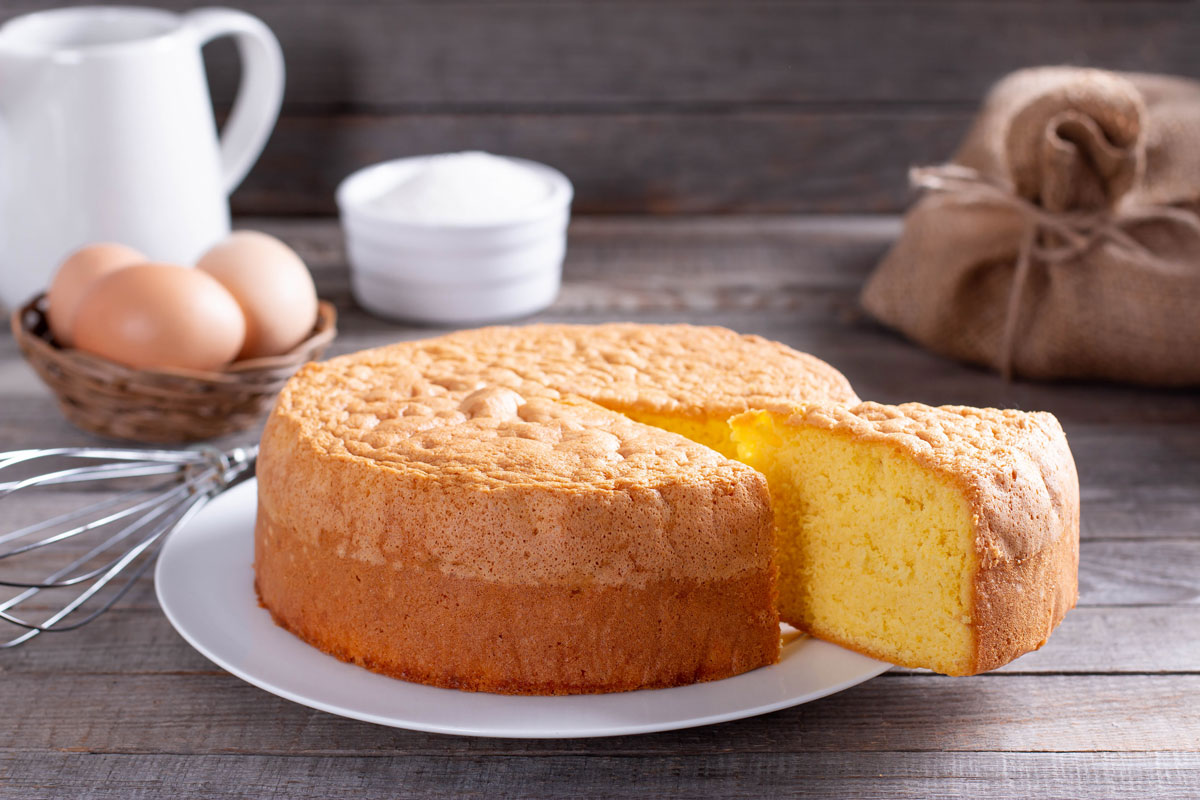
  • Olive Oil Chiffon Cake Olive Oil Chiffon Cake

    What sets chiffon cake apart from other yellow cakes is its versatility—use it for classic layer cake recipes, for ice cream cakes, and even for a breakfast cake. Because it’s made with oil, not butter, chiffon cake stays moist in the fridge or freezer. Extra virgin olive oil adds a subtle yet rich flavor—you’ll never call chiffon cake bland again! What’s more, it’s wonderful for getting all the benefits of olive oil in a sweet way. This recipe yields two 9-inch rounds. I love to cut a wedge from one layer and top it with yogurt and fruit for breakfast or a snack. You can also cut each layer in two horizontally to build a four-layer cake with your favorite filling.

    Ingredients

    • 5 large eggs
    • 1 cup sugar, divided
    • 1/2 + 1/8 cup extra virgin olive oil
    • 1 1/2 teaspoons vanilla extract
    • 1/3 cup water, room temperature
    • 1 1/4 cups cake flour
    • 1/2 + 1/8 teaspoon baking powder
    • 1/2 teaspoon kosher salt
    • 1/2 + 1/8 teaspoon cream of tartar

    Directions

    Step 1

    Separate the whites from the yolks when the eggs are cold and then leave them on the counter for about 30 minutes to come to room temperature (the whites will whip much better than when cold). Center one of the racks in the middle of your oven and preheat it to 325°F. Line two 9-inch cake pans with parchment paper and set aside. 

    Step 2

    In a large bowl, whisk the yolks and 1/2 cup sugar for about 2 minutes until fully blended and light in color. Whisk in the olive oil, vanilla, and water. Whisk the flour and baking powder in a small bowl and then whisk this into the yolk mixture until it’s fully incorporated.

    Step 3

    In a standing mixer or large bowl, beat egg whites, salt, cream of tartar, and the remaining 1/2 cup sugar on low speed for about 30 seconds and then gradually increase the speed to high. Continue beating for 8–10 minutes until you get a glossy meringue with firm peaks.

    Step 4

    Fold about a cup of the meringue into the yolk mixture to lighten it and then gently fold in the rest in three batches, just until there are barely any streaks of meringue visible. Divide the batter between the two pans and gently smooth the surfaces with an offset spatula. Bake the cakes on the same rack for 15 minutes and then reverse their positions and continue baking until the tops are golden brown and spring back when lightly pressed with a fingertip—about 15 minutes more, depending on your oven.

    Step 5

    When done, invert the pans onto two wire racks to cool for about an hour. Turn them right side up and run an offset spatula around the sides of the cakes to loosen them, then invert them again, take off the pans, and remove the parchment. If you aren’t using the layers right away, you can stack them with a piece of parchment paper between them and store them in a covered cake holder for up to three days on the counter.

    Yields two 9-inch cake layers

Healthy Kitchen Nugget: No-mess Marinating

Healthy Kitchen Nugget

The Great Olive Oil Swap

Whether you’re making a dish that’s sweet or savory, olive oil adds another layer of flavor that butter doesn’t always impart and that’s certainly missing with other plant-based oils. When you’re using olive oil in place of a vegetable oil, use the same amount called for in the recipe. When you’re using it in place of butter, use 75 percent of the amount of butter, so 3 tablespoons of olive oil for 4 tablespoons of butter.  

For Your Best Health: Eye Health

For Your Best Health

Olive Oil as Therapy

In a special issue of the journal Nutrients devoted solely to research on olive oil, a team of scientists from Spain wrote a comprehensive report on the benefits of extra virgin olive oil. What was especially interesting was the role it might one day play in clinical nutrition—when doctors use nutrition to treat or manage health conditions, sometimes with supplemental feedings through an IV or even a feeding tube to correct deficiencies. Extra virgin olive oil is being looked at for this because of its many therapeutic properties. 

Most of us tend to think of the benefits of olive oil as preventive, but there’s also the possibility that it can be healing, thanks to components like oleic acid, hydroxytyrosol, and oleuropein. While the researchers point out that focused studies are needed to “chisel specific recommendations for its therapeutic use through different formulations in other specific diseases and clinical populations,” they list these top benefits of olive oil on its own or as part of the Mediterranean diet:

  1. Supports cardiovascular function and health
  2. Supports lipoprotein metabolism, which could positively influence cholesterol levels
  3. Affects carbohydrate metabolism, helping protect against metabolic syndrome (a precursor of diabetes)
  4. Protects against neurodegenerative diseases
  5. Lowers cancer risk
  6. Supports healthy gut microbiota 

From “Therapeutic Properties and Use of Extra Virgin Olive Oil in Clinical Nutrition: A Narrative Review and Literature Update,” Nutrients2022 (14).

Get More Recipes In Your Inbox!

Olive Oil Chiffon Cake

What sets chiffon cake apart from other yellow cakes is its versatility—use it for classic layer cake recipes, for ice cream cakes, and even for a breakfast cake. Because it’s made with oil, not butter, chiffon cake stays moist in the fridge or freezer. Extra virgin olive oil adds a subtle yet rich flavor—you’ll never call chiffon cake bland again! What’s more, it’s wonderful for getting all the benefits of olive oil in a sweet way. This recipe yields two 9-inch rounds. I love to cut a wedge from one layer and top it with yogurt and fruit for breakfast or a snack. You can also cut each layer in two horizontally to build a four-layer cake with your favorite filling.

Ingredients

  • 5 large eggs
  • 1 cup sugar, divided
  • 1/2 + 1/8 cup extra virgin olive oil
  • 1 1/2 teaspoons vanilla extract
  • 1/3 cup water, room temperature
  • 1 1/4 cups cake flour
  • 1/2 + 1/8 teaspoon baking powder
  • 1/2 teaspoon kosher salt
  • 1/2 + 1/8 teaspoon cream of tartar

Directions

Step 1

Separate the whites from the yolks when the eggs are cold and then leave them on the counter for about 30 minutes to come to room temperature (the whites will whip much better than when cold). Center one of the racks in the middle of your oven and preheat it to 325°F. Line two 9-inch cake pans with parchment paper and set aside. 

Step 2

In a large bowl, whisk the yolks and 1/2 cup sugar for about 2 minutes until fully blended and light in color. Whisk in the olive oil, vanilla, and water. Whisk the flour and baking powder in a small bowl and then whisk this into the yolk mixture until it’s fully incorporated.

Step 3

In a standing mixer or large bowl, beat egg whites, salt, cream of tartar, and the remaining 1/2 cup sugar on low speed for about 30 seconds and then gradually increase the speed to high. Continue beating for 8–10 minutes until you get a glossy meringue with firm peaks.

Step 4

Fold about a cup of the meringue into the yolk mixture to lighten it and then gently fold in the rest in three batches, just until there are barely any streaks of meringue visible. Divide the batter between the two pans and gently smooth the surfaces with an offset spatula. Bake the cakes on the same rack for 15 minutes and then reverse their positions and continue baking until the tops are golden brown and spring back when lightly pressed with a fingertip—about 15 minutes more, depending on your oven.

Step 5

When done, invert the pans onto two wire racks to cool for about an hour. Turn them right side up and run an offset spatula around the sides of the cakes to loosen them, then invert them again, take off the pans, and remove the parchment. If you aren’t using the layers right away, you can stack them with a piece of parchment paper between them and store them in a covered cake holder for up to three days on the counter.

Yields two 9-inch cake layers

The Olive Oil Hunter News #92

Glorious Gazpacho Recipe, The Colors of Bell Peppers and Convenience of Canned Tomatoes, More Reasons for a Diet with Deep Colors and The Good Work of Gardening

Tomatoes, tomatoes, tomatoes. They’re not only an essential component of delicious gazpacho, but they are also part of the theme that runs throughout this issue of the newsletter. Along with other deeply colored fruits and vegetables, they offer antioxidants that can improve so many facets of our health. And there’s even a special bonus to growing them yourself as part of the benefits of gardening. Read on!

Glorious Gazpacho

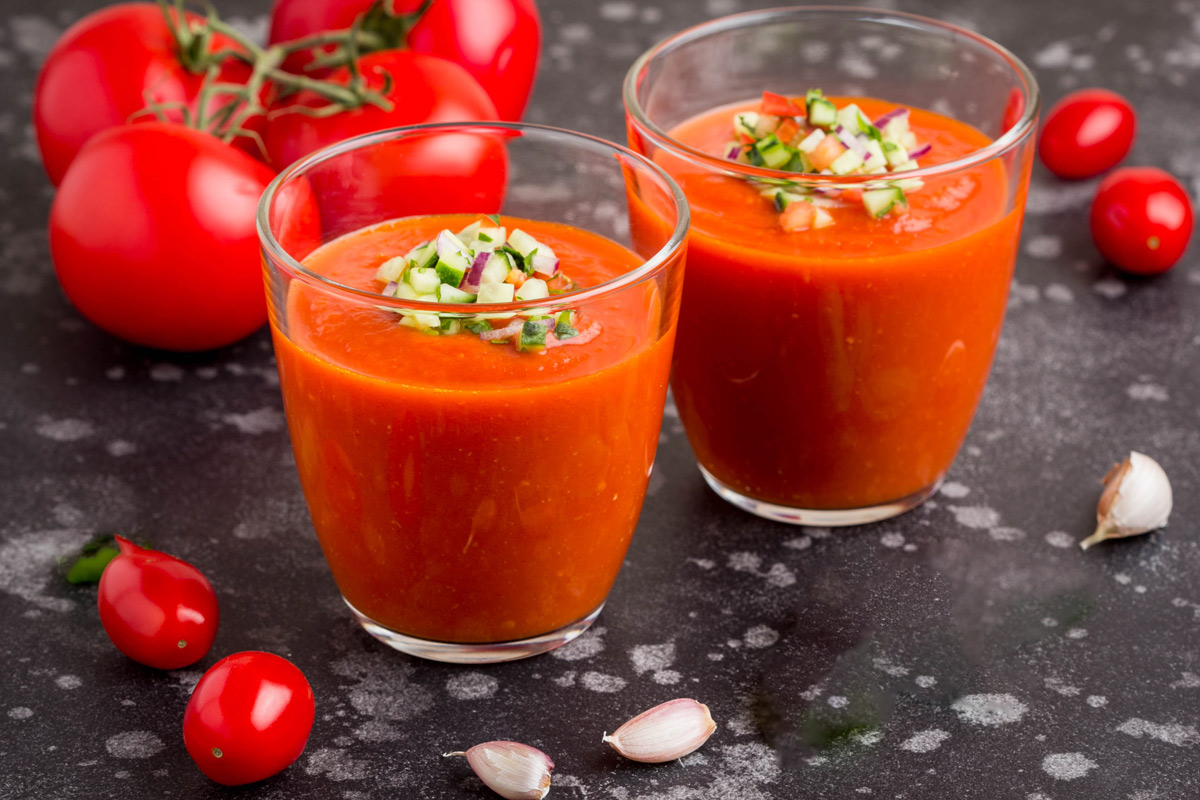
  • Gazpacho Drinkable Gazpacho

    This perfect end-of-summer dish brings together the best seasonal produce with a no-muss, no-fuss prep. Think smooth: True gazpacho is made to be sipped as a drink, not eaten with a spoon. For an extra boost of fiber, leave the skin on the cucumber.

    Ingredients

    • 2 pounds ripe red tomatoes
    • 1 green pepper, stemmed and seeded
    • 1 cucumber, peeled
    • 1/2 medium onion
    • 1 tablespoon sherry vinegar, plus more for serving 
    • 2 garlic cloves
    • 1/2 cup extra virgin olive oil, plus more for serving
    • Pinch of fine sea salt 
    • 3/4 cup cold water, plus more as needed

    Directions

    Step 1

    Cut the vegetables into chunks and add them with the other ingredients to a blender. Process until they turn into a smooth liquid. If it’s too thick, add more water, a tablespoon at a time. Pour into glasses and garnish with a few drops of olive oil and vinegar. 

    Yields 4 servings

Healthy Ingredient Spotlight: How to Store Fresh Herbs

Healthy Ingredient Spotlight

The Colors of Bell Peppers

Red, orange, and yellow bell peppers are now nearly as common as green ones, with purple, black, and even white variations making an appearance. What’s the real difference? According to the Mississippi State University Extension Service, it mostly comes down to how long the peppers are on the vine—they all start out green and then, depending on the exact variety, will mature into their predetermined color and get sweeter in taste.

All bell peppers are rich in vitamin C, with two or more times the amount in an orange, and good sources of vitamins B6, K, A, and E, but their nutrients differ slightly with their color. For instance, yellow bell peppers are rich in violaxanthin, and red bell peppers are replete with capsanthin and beta-carotene. Orange peppers are particular powerhouses of lutein and zeaxanthin, states the Tufts University Health & Nutrition Letter. So, as with all fruits and vegetables, reaching for a rainbow of peppers will not only brighten your recipes, but will also give you an array of nutrients.

Healthy Kitchen Nugget: No-mess Marinating

Healthy Kitchen Nugget

The Convenience of Canned Tomatoes

There’s nothing quite like a fresh summer tomato, but you don’t need to put tomato-based recipes on hold once the current crop runs out. Canned tomatoes can come to the rescue! I like to keep a variety in the pantry: whole (peeled), crushed, diced, and puréed. But what about brands? And must they be made from famed Italian plum tomatoes or will California-grown ones be just as tasty?

It’s hard to find a true consensus. Taste tests conducted at popular food sites came up with completely different brands and opinions regarding the winner(s). So, have some fun by putting together your own sampling at home. For a starting point, here are some brand names that stand out: Muir Glen and Bianco DiNapoli, both of which use tomatoes grown in Northern California; Redpack, which is made with tomatoes grown in Indiana; and Cento San Marzano, with tomatoes grown in Italy. 

If you want to try an ultra-premium brand with true San Marzano tomatoes, be sure you’re getting the real thing by looking for the letters DOP on the label—they stand fordenominazione d’origine protetta (or protected designation of origin), and signify that the food was produced, processed, and packaged according to local traditions and rules in the Agro Sarnese-Nocerino, a set geographical zone within the provinces of Salerno, Avellino, and Naples in Italy. 

For Your Best Health: Eye Health

For Your Best Health

More Reasons for a Diet with Deep Colors

Women tend to live longer than men but actually have higher rates of illness. According to new research from University of Georgia, a diet rich in foods with pigmented carotenoids such as yams, kale, spinach, watermelon, bell peppers, tomatoes, oranges, and carrots can help, especially for eye and brain health

“The idea is that men get a lot of the diseases that tend to kill you, but women get those diseases less often or later so they [persevere] but with illnesses that are debilitating,” says Billy R. Hammond, PhD, a professor in the behavioral and brain sciences program in the department of psychology at Georgia and co-author of the study. “For example, of all of the existing cases of macular degeneration and dementia in the world, two-thirds are women…these diseases that women suffer for years are the very ones most amenable to prevention through lifestyle.”

The study, “The influence of the macular carotenoids on women’s eye and brain health,” published in Nutritional Neuroscience, reviewed and analyzed previous research detailing several degenerative conditions, from autoimmune diseases to dementia. Even controlling for lifespan differences, women experience these conditions at much higher rates than do men. “If you take all the autoimmune diseases collectively, women account for nearly 80%. So, because of this vulnerability, linked directly to biology, women need extra preventive care,” Dr. Hammond says.

One reason for this vulnerability has to do with the way women store vitamins and minerals in body fat—this creates a useful reservoir during pregnancy but, with less available for the retina and the brain, increases their risk for degenerative problems.

This is where eating deeply pigmented foods comes in. Two carotenoids, lutein and zeaxanthin, are found in specific tissues of the eye and brain and have been shown to directly lessen central nervous system degeneration. “Men and women eat about the same amount of these carotenoids, but the requirements for women are much higher,” says Dr. Hammond. “The recommendations should be different, but there are, generally, not any recommendations for men or women for dietary components that are not directly linked to deficiency disease (like vitamin C and scurvy). Part of the idea for the article is that recommendations need to be changed so that women are aware that they have these vulnerabilities that they have to proactively address, so they don’t have these problems later in life.”

Carotenoids are available via supplements, but Dr. Hammond says getting them through food is a much better strategy for increasing intake (like the orange bell peppers mentioned above). “Components of diet influence the brain, from things like personality to even our concept of self. I don’t think people quite realize what a profound effect diet has on basically who they are, their mood, even their propensity to anger,” he says. “And now of course this is extended to the microbiome and the bacteria that make up your gut—all of these components work together to create the building blocks that compose our brain and the neurotransmitters that mediate its use.”

Fitness Flash: Walking to Manage Osteoarthritis

Fitness Flash

The Good Work of Gardening 

Working with plants may give your mental health a boost, even if you’ve never gardened before. In a new study published in PLOS One, researchers found that gardening lowered stress, anxiety, and depression in 32 healthy women who had never gardened before and attended twice-weekly classes for a month.

“Past studies have shown that gardening can help improve the mental health of people who have existing medical conditions or challenges. Our study shows that healthy people can also experience a boost in mental well-being through gardening,” says Charles Guy, PhD, principal investigator on the study and a professor emeritus in the environmental horticulture department at the University of Florida.

Researchers assigned half of the participants to gardening sessions and the other half to art-making sessions to serve as a point of comparison. “Both gardening and art activities involve learning, planning, creativity, and physical movement, and they are both used therapeutically in medical settings. This makes them more comparable, scientifically speaking, than, for example, gardening and bowling or gardening and reading,” Dr. Guy says.

In the gardening sessions, participants learned how to compare and sow seeds, transplant different kinds of plants, and harvest and taste edible plants. Those in the art sessions learned techniques such as papermaking, printmaking, drawing, and collage. Using assessments measuring anxiety, depression, stress, and mood, the researchers found that both groups experienced similar improvements in mental health over time, with gardeners reporting slightly less anxiety than art makers did.

Despite the small number of participants and short length of the study, the researchers were still able to demonstrate evidence of what medical clinicians would call the dosage effects of gardening—that is, how much gardening someone has to do to see improvements in mental health.

The idea of using gardening to promote better health and well-being—called therapeutic horticulture—has been around since the 19th century. Many of this study’s participants left with a newly discovered passion: “At the end of the experiment, many of the participants were saying not just how much they enjoyed the sessions but also how they planned to keep gardening,” Dr. Guy says.

Get More Recipes In Your Inbox!

Drinkable Gazpacho

This perfect end-of-summer dish brings together the best seasonal produce with a no-muss, no-fuss prep. Think smooth: True gazpacho is made to be sipped as a drink, not eaten with a spoon. For an extra boost of fiber, leave the skin on the cucumber.

Ingredients

  • 2 pounds ripe red tomatoes
  • 1 green pepper, stemmed and seeded
  • 1 cucumber, peeled
  • 1/2 medium onion
  • 1 tablespoon sherry vinegar, plus more for serving 
  • 2 garlic cloves
  • 1/2 cup extra virgin olive oil, plus more for serving
  • Pinch of fine sea salt 
  • 3/4 cup cold water, plus more as needed

Directions

Step 1

Cut the vegetables into chunks and add them with the other ingredients to a blender. Process until they turn into a smooth liquid. If it’s too thick, add more water, a tablespoon at a time. Pour into glasses and garnish with a few drops of olive oil and vinegar. 

Yields 4 servings