Fresh-Pressed Olive Oil Club

Olive Oil Hunter News #264

Hawaiian-Inspired Sheet Pan Chicken Recipe, Spotlight on Pineapple, Choosing a Rimmed Sheet Pan, Reversing Prediabetes, and Countering Joint Pain 

Sheet pan dinners are still all the rage because they allow you to cook your meal in one pan with an easy clean-up as the capper. While this recipe didn’t originate in our 50th state, it’s inspired by one of Hawaii’s most iconic crops, juicy pineapples. Along with red onions and bell peppers, they create the sweet and tangy taste this dish is known for. I’m sharing health news about two of the most prevalent conditions affecting Americans: prediabetes and joint pain.

Hawaiian-Inspired Sheet Pan Chicken

  • Hawaiian-Inspired Sheet Pan Chicken Hawaiian-Inspired Sheet Pan Chicken

    This recipe is a crowd-pleaser and a delicious answer to the question, “What’s for dinner?” Note: A Microplane is perfect for grating the garlic and the ginger right over the mixing bowl for the marinade.

    Ingredients

    For the marinade:

    • 1/3 cup extra virgin olive oil
    • 1/3 cup reduced-sodium soy sauce
    • 3 tablespoons brown sugar
    • 4 garlic cloves, grated
    • 2 teaspoons grated fresh ginger
    • 1 teaspoon dry mustard
    • 1 teaspoon wild sumac
    • 1/2 teaspoon red pepper flakes

    For the chicken and vegetables:

    • 4 cups pineapple chunks from a fresh pineapple
    • 1 large red bell pepper 
    • 1 large yellow bell pepper
    • 1 large red onion
    • 1-1/2 pounds boneless, skinless chicken breasts or thighs

    Directions

    Step 1

    In a medium bowl, whisk together the marinade ingredients; set aside. 

    Step 2

    Cut each pepper into 1-inch squares and add to a large bowl. Peel and cut the onion into 8 wedges, then cut each wedge in half; add to the bowl with the bell peppers. Finally, cut the chicken into 1-inch cubes and add to the bowl. Pour on the marinade and toss to coat. Marinate for 1 hour (you can also marinate overnight in the fridge).

    Step 3

    While the chicken marinates, prepare the pineapple. Start by cutting off and discarding the top and bottom. Stand it up on your cutting board and use a serrated knife, working from top to bottom, to cut off the peel in strips. Next, use the knife to cut the pineapple in half, then into quarters. Make V-shaped cuts in each quarter to remove and discard the tough core. Cut each of the four sections into roughly 1-inch pieces. Transfer 4 cups to a bowl and set aside (enjoy any leftover pineapple at another meal).

    Step 4

    When ready to cook, preheat your oven to 400°F and line a rimmed sheet pan with parchment paper. Transfer the chicken and vegetables to the sheet pan and roast for 15 minutes. Then carefully top with the pineapple and any juice in the bowl; roast for another 10 minutes.

    Step 5

    Set your oven to broil and place the sheet pan under your broiler for 3 minutes for a caramelized finish. 

    Yields 4 servings

Healthy Ingredient Spotlight: Pineapple

Healthy Ingredient Spotlight

Pineapple

fresh pineapple

If you love pineapple for its sweet taste, you’ll love it even more for its potential health benefits. According to a comprehensive review published in the journal Food Research International, it’s a rich source of bioactive compounds, dietary fiber, and minerals. Research also suggests it has anti-inflammatory and antioxidant properties, supports heart health and digestion, and may even help lower diabetes risk.

Choosing a ripe pineapple takes a little detective work. Look for a vibrant golden-yellow color rising from its base and a crown of green leaves. It should have a tropical aroma, firm skin, a slight give when squeezed, and an underside free of any white splotches, which could be mold.

Quick Kitchen Nugget: Choosing a Rimmed Sheet Pan 

Quick Kitchen Nugget

Choosing a Rimmed Sheet Pan 

Sheet pans are great not only for roasting vegetables and sheet-pan dinners but also for baking cookies and certain cakes like genoise layers that are fairly thin. The sides hold in juices released during cooking and are also easy to grab with oven mitts. 

The most highly rated pans are made of aluminum, and the brand name that comes up in review after review is Nordic Ware, praised for even cooking and resistance to warping. When the pan is lined with parchment paper, clean-up is a breeze.

For Your Best Health: Reversing Prediabetes

For Your Best Health 

Reversing Prediabetes

People diagnosed with prediabetes, a condition that affects up to one in three adults, have traditionally been advised to eat healthier and shed pounds to reduce the risk of progression to type 2 diabetes. This message has remained largely unchanged for decades, yet the results have been mixed. Diabetes rates continue to rise worldwide, and many individuals with prediabetes struggle to meet weight-loss targets. As a result, they often feel discouraged while their risk remains high.

New findings published in Nature Medicine point to a different path. The research shows that prediabetes can go into remission — meaning blood sugar levels return to normal — even in the absence of weight loss. In fact, about one in four people participating in lifestyle programs were able to normalize their blood sugar without losing weight. Even more striking, this type of remission offers the same level of protection against future diabetes as remission achieved through weight loss.

How can blood sugar improve without a drop in body weight or even with weight gain? The study states that the answer appears to lie in where fat is stored in the body. Not all fat has the same effect on health. Visceral fat, which surrounds internal organs deep in the abdomen, is particularly harmful. It promotes chronic inflammation and disrupts insulin — the hormone responsible for regulating blood sugar. When insulin does not function properly, blood glucose levels rise.

On the other hand, subcutaneous fat — the fat just beneath the skin — can actually support healthier metabolism. This type of fat releases hormones that help insulin work more efficiently. The study found that individuals who reversed prediabetes without losing weight tended to shift fat away from their abdominal organs and toward areas under the skin, even when their overall weight did not change.

The researchers also found that natural hormones, similar to those targeted by medications like Wegovy and Mounjaro, play an important role. These hormones, especially GLP-1, help pancreatic beta cells release insulin when blood sugar rises. People who achieved remission without weight loss appeared to boost this hormone system naturally, while reducing the influence of other hormones that raise glucose levels.

Instead of focusing only on the number on the scale, people with prediabetes may benefit from strategies that influence how fat is distributed in the body. Certain dietary patterns can help. Healthy fats — including the monounsaturated fats in olive oil and olives, and the polyunsaturated fats in fish, nuts, and seeds typical of a Mediterranean-style diet — may help reduce visceral fat. Regular endurance exercise can also lower abdominal fat, even when overall weight stays the same.

This does not mean weight loss should be ignored. Losing weight still supports overall health and reduces diabetes risk. However, the research suggests that normalizing blood sugar should be a primary goal, regardless of whether weight changes.

For many people who have struggled with traditional weight-loss programs, this opens the door to meaningful improvements through metabolic changes rather than a sole focus on weight.

Healthcare providers may also need to expand their approach. Tracking blood sugar improvements and encouraging fat redistribution through targeted nutrition and exercise could provide alternative strategies for patients who find weight loss difficult.

Fitness Flash Icon: Countering Joint Pain

Fitness Flash

Countering Joint Pain 

An article written by Dr. Clodagh Toomey, physiotherapist and associate professor at the School of Allied Health, University of Limerick in Ireland, and published in The Conversation, a nonprofit news organization that shares expert findings with the public, serves as a great reminder that the most powerful treatment to ease joint pain and the stiffness of osteoarthritis isn’t surgery or medication, but rather exercise: Movement nourishes cartilage, strengthens muscles, reduces inflammation, and even reshapes the biological processes driving joint damage.

Stiff knees, sore hips, and persistent joint pain are often brushed off as normal signs of aging. But osteoarthritis, the most common joint disease worldwide, is not being treated in line with what research shows, and in many countries and healthcare systems, people are rarely directed toward the one therapy proven to reduce pain and protect joints. Specifically, the article pointed out that in countries such as Ireland, the UK, Norway, and the US, fewer than half of people diagnosed with osteoarthritis are referred to exercise programs or physical therapy by their primary care provider. More than 60 percent receive treatments that clinical guidelines do not recommend, and about 40 percent are referred to a surgeon before nonsurgical options have been properly explored.

To understand why this matters, it helps to look at how joints function, wrote Dr. Toomey. Regular physical activity does more than ease symptoms. It can biologically and physically lower the risk of developing osteoarthritis and reduce its severity. Cartilage, the smooth tissue that cushions the ends of bones, does not have its own blood supply. It depends on movement to stay healthy. When you walk or put weight on a joint, cartilage is gently compressed, pushing fluid out. When the pressure is released, it draws fluid back in, bringing nutrients and natural lubricants with it. Each step helps nourish and maintain the joint.

This is why describing osteoarthritis as simple “wear and tear” is misleading. Joints are not like tires that inevitably break down over time. Instead, osteoarthritis is better understood as a long process of breakdown and repair. Regular movement plays a central role in supporting healing and maintaining the health of the entire joint.

Osteoarthritis affects not only cartilage but also the entire joint, including joint fluid, underlying bone, ligaments, surrounding muscles, and even the nerves that control movement. Targeted exercise addresses many of these components at once. Muscle weakness is one of the earliest warning signs of osteoarthritis, and resistance training can help reverse it. Research shows that weak muscles increase the risk of both developing osteoarthritis and experiencing faster progression.

Swimming to counter arthritis

Dr. Toomey pointed out that neuromuscular exercise programs designed specifically for people with hip and knee osteoarthritis and led by physical therapists can be especially beneficial. For instance, those participating in the Denmark-based program called GLA:D® (Good Life with osteoArthritis in Denmark) reported meaningful reductions in pain, better joint function, and improved quality of life lasting up to 12 months after finishing the program.

Talk to your doctor about a tailored workout with a physical therapist experienced with the needs of people with arthritis. Or contact the Arthritis Foundation, which organizes both exercise and aquatic fitness programs offered across the country.

Get More Recipes In Your Inbox!
Olive Oil Hunter #247

Winter Salad Recipe, Spotlight on Homemade Vinaigrettes, Prepping Greens, A New Benefit of Vitamin D, and Aerobics for Knee arthritis

Salads aren’t just for summer, and if one of your New Year’s resolutions is to eat more fruits and veggies, this winter greens recipe fits the bill. I’ve dressed it with a sweet-tart vinaigrette that you can use with a variety of foods for lighter eating. I’m also sharing two new important findings: how vitamin D can help people avoid a second heart attack and a surprising way to manage knee arthritis.

Winter Salad

  • Winter Pear Salad Winter Salad

    Using sweet and tart vinegars adds complexity to this vinaigrette, which is a delicious foil for the slightly bitter greens and sweet pears.

    Ingredients

    For Vinaigrette:

    • 1 tablespoon red wine vinegar, such as Austrian Red Wine Vinegar
    • 1 tablespoon balsamic vinegar of Modena, such as Condimento Barili Exclusivi
    • 1/2 tablespoon Dijon mustard
    • 1/2 tablespoon honey
    • 1/4 teaspoon coarse sea salt, plus more to taste
    • 1/2 garlic clove, minced 
    • 1/3 cup extra virgin olive oil
    • Freshly ground black pepper to taste

    For the Salad:

    • 1/2 cup hazelnuts or walnut halves
    • 4 to 6 cups baby spinach, baby kale, escarole, or other winter greens, rinsed and dried
    • 2 ripe pears, cored and thinly sliced
    • Block of Parmigiano-Reggiano or 2 ounces mild blue cheese

    Directions

    Step 1

    Make the vinaigrette: In a medium mixing bowl, whisk together the vinegars, mustard, honey, salt, and garlic. Gradually whisk in the olive oil until the dressing is emulsified. Season to taste with pepper and more salt, if desired.

    Step 2

    Make the salad: Heat a small sauté pan. When hot, add the nuts and toast for 2 minutes until they become fragrant, tossing frequently; set aside.

    Step 3

    Divide the greens among 4 salad plates and top with equal amounts of pear slices and nuts. If using Parmigiano-Reggiano, use a cheese plane to make long shavings over each salad. If using blue cheese, crumble it. Drizzle a spoonful of vinaigrette over each salad and pass the rest on the side.

    Yields 4 servings

Healthy Ingredient Spotlight: Homemade Vinaigrettes

Healthy Ingredient Spotlight

Homemade Vinaigrettes

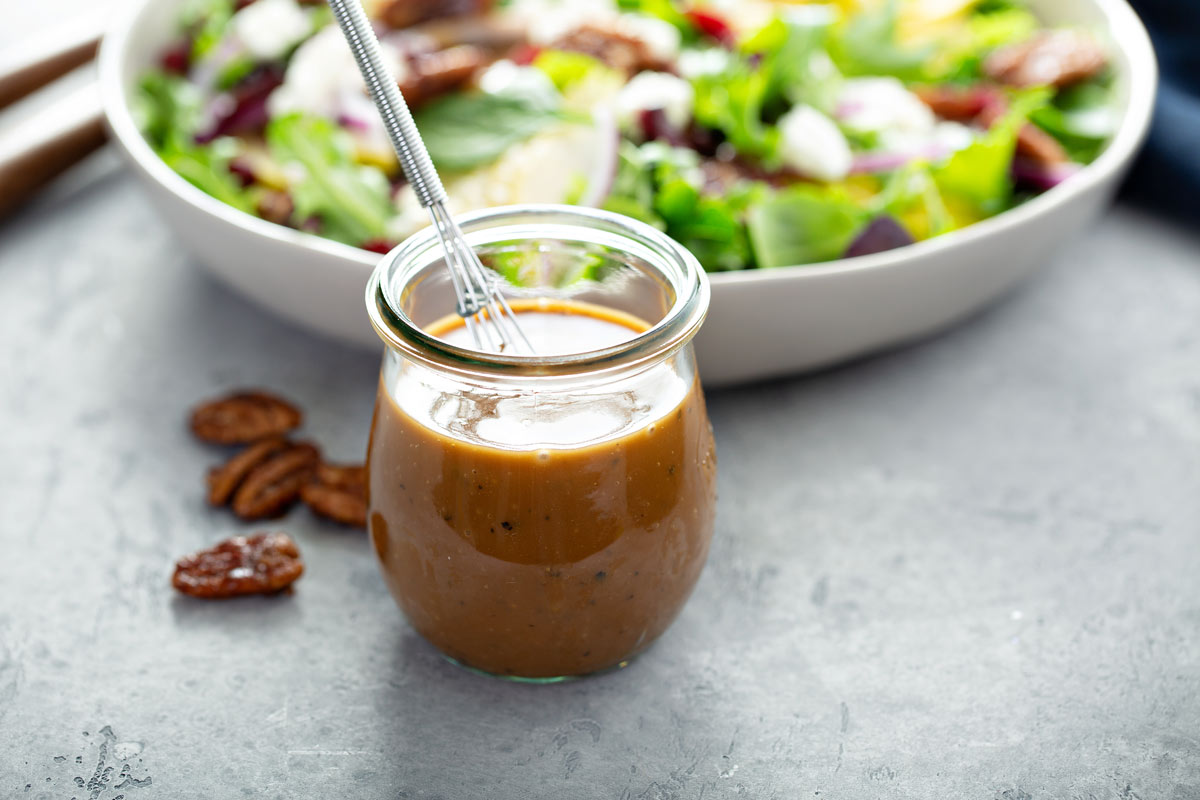
Homemade Vinaigrette

It’s no secret that most bottled dressings are loaded with sugar, artificial ingredients, and poor- quality oil. On the other hand, it’s so easy to make your own with just a few quality ingredients. Vinaigrettes can be made with a whisk, but using a blender or mini food processor can make fast work of it, especially if some ingredients need to be chopped or minced. As a general rule, you can pulse all the ingredients except the olive oil for a few seconds—let the machine mince any herbs, garlic, or shallots for you. Then with the machine still running, slowly add the olive oil through the feed tube until the vinaigrette is emulsified. Vinaigrette will keep for up to a week in the fridge; shake well or whisk as needed before using.

Quick Kitchen Nugget: Prepping Greens

Quick Kitchen Nugget

Prepping Greens

To maximize taste when making salads, prep your greens by rinsing and drying them in a salad spinner or with an absorbent kitchen towel—dressing coats them better when they’re dry and won’t be diluted by water clinging to the leaves. Rather than simply pouring vinaigrette over your salad, mix it in with two forks or tongs to really dress the greens. Also, keep in mind that vinaigrettes aren’t just for salads—drizzle them over roasted vegetables, grains, and cold meats. 

For Your Best Health: A New Benefit of Vitamin D

For Your Best Health 

A New Benefit of Vitamin D

In a large randomized clinical trial, researchers from Intermountain Health in Salt Lake City found that managing the vitamin D levels of people who experienced a heart attack through a “target-to-treat” approach, with blood levels monitored and dosages adjusted to reach an optimal range, cut the likelihood of a second heart attack by 50%. The findings were presented on Nov. 9 at the 2025 American Heart Association Scientific Sessions in New Orleans.

According to researchers, the results carry global importance, as between one-half and two-thirds of people worldwide have low levels of vitamin D. In the past, most individuals received sufficient vitamin D through sunlight exposure. Today, with lifestyle changes and medical advice aimed at reducing skin cancer risk, people spend less time in the sun and must rely more on dietary supplements such as vitamin D3 to maintain healthy levels.

Low vitamin D levels have long been linked to poor cardiovascular outcomes in observational studies. However, earlier clinical trials that provided standard supplementation doses failed to show measurable reductions in heart disease risk. Intermountain scientists wanted to test a different idea: Rather than giving everyone the same dose, what if supplementation was adjusted to reach a specific healthy vitamin D level?

“Previous studies just gave patients supplementation without regularly checking blood levels of vitamin D to determine what supplementation achieved,” said Heidi May, PhD, cardiovascular epidemiologist at Intermountain and the study’s principal investigator. “With more-targeted treatment, when we checked exactly how supplementation was working and made adjustments, we found that patients had their risk of another heart attack cut in half.” 

The Intermountain study, called the TARGET-D trial, ran from April 2017 to May 2023 and included 630 patients who had suffered a heart attack within a month of enrolling. Participants were followed until March 2025 to monitor cardiovascular outcomes.

Patients were randomly assigned to one of two groups: One received no vitamin D management and the other underwent active, targeted vitamin D3 treatment. The goal for the treatment group was to raise blood levels of vitamin D to above 40 nanograms per milliliter (ng/mL). At the start, 85% of participants had blood levels of vitamin D below that threshold. More than half of the patients receiving targeted therapy required an initial dose of 5,000 international units (IUs) of vitamin D3 compared to typical supplement recommendations of 600-800 IUs.

Blood levels of vitamin D were checked annually for those maintaining healthy levels. Patients with lower levels were tested every three months and had their dosage adjusted until reaching the 40 ng/mL target. Afterward, their levels were monitored once a year.

Researchers tracked major cardiac events, including heart attacks, strokes, heart failure hospitalizations, and deaths. Out of 630 participants, 107 experienced such events. While there was no significant difference in the overall risk between the two groups, the chance of having a second heart attack was cut in half among those receiving targeted vitamin D3 treatment.

“We’re excited with these results but know we have further work to do to validate these findings,” said Dr. May. Researchers plan to expand their work with a larger clinical trial to confirm and build upon these findings. “A larger study group will allow us to more fully evaluate whether targeted vitamin D management can reduce not only repeat heart attacks but also other forms of cardiovascular disease,” she said.

Fitness Flash Icon: Knee arthritis? Try Aerobics! 

Fitness Flash

Knee arthritis? Try Aerobics!

A sweeping review of 217 studies representing 15,684 participants found that aerobic exercises like walking and cycling offer the best pain relief and mobility gains for knee osteoarthritis. Compared to other types of exercise, aerobic training showed the strongest evidence across short- and long-term outcomes. All forms of exercise were found to be safe, but experts recommend making aerobic activity the foundation of treatment as it’s the most effective for easing pain, improving movement, and enhancing overall quality of life.

Osteoarthritis develops when the cartilage cushioning the ends of bones wears down, leading to swelling, stiffness, and discomfort. It can affect any joint, but the knees are most commonly impacted. About 30% of adults over age 45 show signs of knee osteoarthritis on X-rays, and roughly half of them experience significant pain and mobility problems.

Exercise is a cornerstone of osteoarthritis care, yet many medical guidelines lack clear direction on which kinds are most beneficial for knee osteoarthritis specifically. To clarify this, researchers analyzed the effectiveness and safety of several exercise approaches.

Exercise for knee arthritis

The trials varied in quality, but the team assessed the strength of the evidence using the internationally recognized GRADE (Grading of Recommendations Assessment, Development and Evaluation) system. They examined several key outcomes: pain reduction, physical function, gait performance, and quality of life. Each was measured at short-term (4 weeks), mid-term (12 weeks), and long-term (24 weeks) follow-ups. Across these studies, aerobic exercise consistently ranked highest in improving outcomes among all exercise types tested.

Other exercise forms showed value too. Mind-body workouts likely provided a notable improvement in short-term function, neuromotor exercises likely boosted short-term gait performance, and strengthening or mixed routines improved function in the mid-term. Importantly, none of the exercise types resulted in more adverse effects than the control groups, indicating that these therapies are generally safe.

The authors did acknowledge some study limitations. Many results came from indirect comparisons, certain outcomes lacked long-term data, and smaller studies may have influenced some early findings. Despite these limitations, the researchers describe their work as one of the most complete and current evaluations of exercise for managing knee osteoarthritis. They believe the findings, which were published in The BMJ, will help doctors make more-targeted recommendations.

Based on the evidence, the team advises aerobic exercise “as a first-line intervention for knee osteoarthritis management, particularly when the aim is to improve functional capacity and reduce pain” and says if aerobic exercise is not possible owing to individual limitations, “alternative forms of structured physical activity may still be beneficial.”

Get More Recipes In Your Inbox!

Olive Oil Hunter News #231

Melissa’s Vegetarian Dumplings with Dipping Sauce Recipe, Spotlight on Asian Ingredients, Prepping Rice Noodles, Fewer Ultra-Processed Foods, Greater Weight Loss, and On the Horizon: Walk This Way…To Ease Knee Pain

Members of the Fresh-Pressed Olive Oil Club know that the Pressing Report that accompanies each quarterly shipment includes a recipe section focused on the cuisines of the countries where the olives were harvested and milled. However, extra virgin olive oil has a delicious place in nearly every cuisine, and this Asian dumpling recipe is a perfect example. I talk a lot about the merits of eating whole foods, and a new study on weight loss points to one of its many benefits. I’m also sharing an imminent new therapy for knee arthritis—how a simple tweak to the way you walk can help.

Melissa’s Vegetarian Dumplings with Dipping Sauce

  • Melissa’s Vegetarian Dumplings with Dipping Sauce Melissa’s Vegetarian Dumplings with Dipping Sauce

    Melbourne-based foodie and olive oil authority Melissa Wong shared two of her dumpling recipes with me on my most recent trip to Australia for the Fresh-Pressed Olive Oil Club. The shrimp-and pork-based dumpling recipe is available in the current Pressing Report included with our latest Ozzie olive oils. Here is her meatless version. Tailor the filling to your tastes by adding more veggies like diced shiitake mushrooms, water chestnuts, or jicama. Please click here to join now so you don’t miss my sumptuous trio of Oz oils shipping now. 

    Ingredients

    For the dipping sauce:

    • 2 tablespoons sesame seeds
    • 1 tablespoon ground Sichuan pepper
    • 3 tablespoons extra virgin olive oil
    • 1 teaspoon minced garlic 
    • 1 teaspoon minced ginger 
    • 1/2 fresh chile, such as jalapeño or serrano, chopped
    • 2 sprigs fresh cilantro, chopped
    • 1/2 teaspoon sugar
    • 3 tablespoons soy sauce
    • 3 tablespoons black vinegar
    • 2 teaspoons sesame oil
    • 2 scallions, trimmed and thinly sliced

    For the dumplings:

    • 1/2″ piece ginger, peeled and cut into coins
    • 2 garlic cloves
    • 4 tablespoons extra virgin olive oil, divided use
    • 1/2 medium onion, diced small
    • 1/2 carrot, diced small
    • 1 cup diced red cabbage
    • 1/2 teaspoon ground coriander
    • 1/2 teaspoon ground cumin
    • 1 ounce dried rice noodles
    • 1/2 cup diced zucchini
    • 2 portobello mushrooms, diced small
    • 1 teaspoon cornstarch
    • 1 package square or round dumpling wrappers (about 50)

    Directions

    Step 1

    For the dipping sauce, toast the sesame seeds in a dry, hot frying pan until fragrant, about 2 minutes; transfer to a small dish and set aside. In the same pan, dry toast the Sichuan pepper, about 2 minutes. Off the heat, swirl in the olive oil, garlic, ginger, chile, cilantro, and sugar. Whisk in the soy sauce, vinegar, sesame oil, scallions, and the reserved sesame seeds. Pour into a serving bowl and set aside.

    Step 2

    For the dumpling filling, place the ginger, garlic, and 2 tablespoons olive oil in a small food processor and blitz to a rough paste; set aside.

    Step 3

    Heat a wok or large frying pan over medium-high heat. When hot, add in 1 tablespoon olive oil and the onions and cook until the onions soften slightly. Add the carrots and cook for 30 seconds. Add in the ginger-garlic paste and cook until fragrant. Transfer the contents of the wok to a large bowl and return the wok to the stovetop.

    Step 4

    Let the wok heat up again, then add the remaining tablespoon olive oil and the cabbage and cook until the cabbage softens slightly. Turn off the heat and stir in the coriander and cumin. Add to the bowl with the other vegetables, holding back any released liquid from the cabbage (discard it). Allow the vegetables to cool completely.

    Step 5

    Soak the rice noodles in cold water until softened, about 3 minutes. Drain and roughly chop into 1″ pieces. Add to the cooked vegetables along with the zucchini and mushrooms. Evenly sprinkle on the cornstarch and mix well. 

    Step 6

    Line a rimmed sheet pan with parchment paper and cover with a clean kitchen towel. Place a bowl of water next to your work area. Open the package of wrappers and cover with a damp kitchen towel so that they won’t dry out. 

    Step 7

    Place a generous teaspoon of filling in the center of a wrapper (don’t overfill or the dumplings won’t stay closed). Dip a fingertip in the water bowl and moisten the outer edges of the wrapper, then fold it and press the edges together to seal them. For round wrappers, crimp the edges together to make a crescent shape. For square wrappers, use your fingertip to wet the two bottom corners, then overlap them slightly and press together to form a shape like a bishop’s hat. As you finish each dumpling, place it on the rimmed sheet pan under the towel. There should be enough filling to make about 50 dumplings.

    Step 8

    Bring a large pot of water to a boil. Drop in 12 to 16 dumplings at a time and cook for 7 minutes (they will float to the surface). Use a Chinese strainer to transfer them to a large bowl; cover with a pot lid to keep them warm. Repeat until all the dumplings have been cooked. Serve with the dipping sauce.

    Serves 8 to 10 

Healthy Ingredient Spotlight: Asian Ingredients

Healthy Ingredient Spotlight

Asian Ingredients

Fresh ginger, garlic, and scallions are mainstays in Asian cooking, but there are other staples called for in so many recipes, including stir-fries and marinades, that you’ll use them more than you realize once you have them in your pantry. Here are descriptions of the essentials used in the dumpling recipe:

  • Black vinegar is an aged vinegar with a rich, pungent yet somewhat sweet flavor. 
  • Rice noodles and wrappers can be used the same way you’d use pasta and tortillas. Because they’re gluten-free, they’re a great alternative to flour-based products.
  • Rice wine, such as Shaoxing or mirin, or rice wine vinegar adds fruity notes along with acidity. 
  • Sesame oil is available toasted to be used as a finishing oil or added at the end of a recipe, and untoasted, which is milder in taste and lighter in color. 
  • Sichuan peppercorns, which come whole or ground, are not technically a chile pepper but deliver a slightly citrusy zing to dishes.
  • Soy sauce is used instead of salt and can be very powerful—consider reduced-sodium varieties or simply start with just half of what’s called for in traditional recipes.

Other than the peppercorns, store these in the fridge after opening.

Quick Kitchen Nugget: Prepping Rice Noodles

Quick Kitchen Nugget

Prepping Rice Noodles

Rice noodles and rice paper

Rice noodles are used in so many Asian dishes, from stir-fries to soups and from pad Thai to Vietnamese summer rolls. What’s more, they can be stored in the pantry and don’t need to be boiled before using. A quick soak in cool water is all that’s necessary—about 10 seconds for a wrapper and 2 to 3 minutes for a bowl of noodles. 

For Your Best Health: Fewer Ultra-Processed Foods, Greater Weight Loss

For Your Best Health

Fewer Ultra-Processed Foods, Greater Weight Loss

A recent study done at the University College London in the UK is music to a frustrated dieter’s ears: Participants eating minimally processed foods lost twice as much weight as those eating ultra-processed foods, even though both groups’ diets were nutritionally balanced and they could eat freely. The findings revealed that food processing itself—not just the food’s nutrients—plays a significant role in shaping body weight and health outcomes and that cutting down on processed foods could help people sustain a healthy weight long term.

The study, published in Nature Medicine, is the first interventional study comparing ultra-processed food (UPF) and minimally processed food (MPF) diets in real-world conditions, as well as being the longest experimental study of a UPF diet to date. Fifty-five adults were split into two groups. One group started with an eight-week diet of MPF, with meals like overnight oats and homemade spaghetti Bolognese; then, after a four-week period during which they went back to their normal diet, they were switched to a diet of UPF, with meals like breakfast oat bars and premade lasagna. The other group completed the diets in the opposite order. In total, 50 participants completed at least one diet.

The diets provided were nutritionally matched in accordance with the Eatwell Guide, the UK’s official government advice on how to eat a healthy, balanced diet. This included monitoring levels of fat, saturated fat, protein, carbohydrate, salt, and fiber, as well as providing recommended intakes of fruits and vegetables. Participants had plenty of food (i.e., more calories than they needed) delivered to their home and were told to eat as much or as little as they wanted, as they would normally. They were not told to limit their intake.

After eight weeks on each diet, both groups lost weight, likely a result of the improved nutritional profile of what they were eating compared to their normal diet. However, this effect was higher (2.06% reduction) with the MPF diet compared to the UPF diet (1.05% reduction). These changes corresponded to an estimated calorie deficit of 290 calories per day on the MPF diet, compared to 120 calories per day on the UPF diet. (The Eatwell Guide recommends a daily energy intake of 2,000 calories for women and 2,500 for men.)

The greater weight loss experienced on the MPF diet came from reductions in fat mass and total body water, with no change in muscle or fat-free mass, indicating a healthier body composition overall. The findings suggest that, when observing recommended dietary guidelines, choosing MPFs may be more effective for losing weight.

Samuel Dicken, PhD, first author of the study from the UCL Centre for Obesity Research and UCL Department of Behavioural Science & Health, said, “Previous research has linked ultra-processed foods with poor health outcomes. But not all ultra-processed foods are inherently unhealthy based on their nutritional profile. The main aim of this trial was to fill crucial gaps in our knowledge about the role of food processing in the context of existing dietary guidance, and how it affects health outcomes such as weight, blood pressure, and body composition, as well as experiential factors like food cravings.

“The primary outcome of the trial was to assess percentage changes in weight, and on both diets we saw a significant reduction, but the effect was nearly double on the minimally processed diet. Though a 2% reduction may not seem very big, that is only over eight weeks and without people trying to actively reduce their intake. If we scaled these results up over the course of a year, we’d expect to see a 13% weight reduction in men and a 9% reduction in women on the minimally processed diet, but only a 4% weight reduction in men and 5% in women after the ultra-processed diet. Over time this would start to become a big difference.”

Participants completed several questionnaires to assess their food cravings before starting the diets and at weeks four and eight during the diets. On the MPF diet compared to the UPF diet, participants reported a twofold greater improvement in overall craving control, a fourfold greater improvement in craving control for savory food, and an almost twofold greater improvement in resisting whichever food they most craved.

The trial also measured secondary health markers, such as blood pressure and heart rate, as well as blood markers such as liver function, glucose, cholesterol, and inflammation. Across these markers, there were no significant negative impacts of the UPF diet, with either no change or a significant improvement from baseline. Generally, there weren’t significant differences in these markers between the diets, and the researchers caution that longer studies would be needed to investigate these measures properly in relation to the changes in weight and fat mass.

Professor Rachel Batterham, PhD, senior author of the study from the UCL Centre for Obesity Research, said, “Despite being widely promoted, less than 1% of the UK population follows all of the recommendations in the Eatwell Guide, and most people stick to fewer than half. The normal diets of the trial participants tended to be outside national nutritional guidelines and included an above-average proportion of UPF, which may help to explain why switching to a trial diet consisting entirely of UPF but that was nutritionally balanced resulted in neutral or slightly favorable changes to some secondary health markers.

“The best advice to people would be to stick as closely to nutritional guidelines as they can by moderating overall energy intake; limiting intake of salt, sugar, and saturated fat; and prioritizing high-fiber foods such as fruits, vegetables, pulses, and nuts. Choosing less-processed options such as whole foods and cooking from scratch, rather than [eating] ultra-processed, packaged foods or ready meals, is likely to offer additional benefits in terms of body weight, body composition, and overall health.”

Fitness Flash: On the Horizon: Walk This Way…To Ease Knee Pain

Fitness Flash

On the Horizon: Walk This Way…To Ease Knee Pain

A new study led by a University of Utah engineering professor and including scientists from New York University and Stanford University showed that gait retraining can ease pain, slow cartilage damage, and even delay knee surgery. 

By making a small adjustment to the angle of their foot while walking, participants in the yearlong randomized control trial experienced pain relief equivalent to medication. Critically, those participants also showed less knee cartilage degradation over that period as compared to a group that received a placebo treatment.

Close up of feet walking at hypothetical proper angle for knee pain relief

Published in The Lancet Rheumatologyand co-led by Scott Uhlrich, PhD, of Utah’s John and Marcia Price College of Engineering, these findings come from the first placebo-controlled study to demonstrate the effectiveness of a biomechanical intervention for osteoarthritis.

“We’ve known that for people with osteoarthritis, higher loads in their knee accelerate progression, and that changing the foot angle can reduce knee load,” said Dr. Uhlrich, an assistant professor of mechanical engineering. “So, the idea of a biomechanical intervention is not new, but there have not been randomized, placebo-controlled studies to show that they’re effective.”

With support from the National Institutes of Health and other federal agencies, the researchers were specifically looking at patients with mild-to-moderate osteoarthritis in the medial compartment of the knee—on the inside of the leg—which tends to bear more weight than the lateral—outside—compartment. This form of osteoarthritis is the most common, but the ideal foot angle for reducing load in the medial side of the knee differs from person to person, depending on their natural gait and how it changes when they adopt the new walking pattern.

“Previous trials prescribed the same intervention to all individuals, resulting in some individuals not reducing, or even increasing, their joint loading,” Dr. Uhlrich said. “We used a personalized approach to selecting each individual’s new walking pattern, which improved how much individuals could off-load their knee and likely contributed to the positive effect on pain and cartilage that we saw.”

In their first two visits, participants received a baseline MRI and practiced walking on a pressure-sensitive treadmill while motion-capture cameras recorded the mechanics of their gait. This allowed the researchers to determine whether turning the patient’s toe inward or outward would reduce load more, and whether a 5° or 10° adjustment would be ideal.

This personalized analysis also screened out potential participants who could not benefit from the intervention because none of the foot angle changes decreased the load on their knees. 

After their initial intake sessions, half of the 68 participants were assigned to a sham treatment group to control for the placebo effect. These participants were prescribed foot angles that were actually identical to their natural gait. Conversely, participants in the intervention group were prescribed the change in foot angle that maximally reduced their knee loading.

Participants from both groups returned to the lab for six weekly training sessions, where they received biofeedback—vibrations from a device worn on the shin—that helped them maintain the prescribed foot angle while walking on the lab’s treadmill. After the six-week training period, participants were encouraged to practice their new gait for at least 20 minutes a day, to the point where it became natural. Periodic check-in visits showed that participants were adhering to their prescribed foot angle within a degree, on average. After a year, all participants self-reported their experience of knee pain and had a second MRI to quantitatively assess the damage to their knee cartilage.

“The reported decrease in pain over the placebo group was somewhere between what you’d expect from an over-the-counter medication, like ibuprofen, and a narcotic, like oxycontin,” Dr. Uhlrich said. “With the MRIs, we also saw slower degradation of a marker of cartilage health in the intervention group, which was quite exciting.”

Participants’ ability to adhere to the intervention over long periods of time is one of its potential advantages. “Especially for people in their 30s, 40s, or 50s, osteoarthritis could mean decades of pain management before they’re recommended for a joint replacement,” Dr. Uhlrich added. “This intervention could help fill that large treatment gap.”

Before gait retraining can be made widely available, future studies of this approach are needed and the gait retraining process will have to be streamlined. The researchers envision that this intervention will eventually be prescribed in a physical therapy clinic and that retraining can happen while people go for a walk around their neighborhood.

“We and others have developed technology that could be used to both personalize and deliver this intervention in a clinical setting by using mobile sensors, like smartphone video and a smart shoe,” Dr. Uhlrich said. 

Get More Recipes In Your Inbox!

The Mediterranean Diet shows significant benefit in chronic skin diseases

Psoriasis, acne, and hidradenitis suppurativa (HS) are chronic inflammatory skin conditions characterized by systemic inflammation and periodic flare-ups. The Mediterranean Diet (MeDi), which emphasizes vegetables, fruits, whole grains, nuts, fish, and EVOO, has proven anti-inflammatory and antioxidant effects. Here, we present recent evidence1 supporting that the MeDi, as part of a comprehensive treatment plan, may reduce the severity and flare-ups of these chronic skin conditions.

Psoriasis typically presents as itchy, red skin plaques, sometimes painful, with silvery borders. About 40% of people with psoriasis develop psoriatic arthritis, which can lead to irreversible joint damage.

Several studies show that closely following the MeDi is linked to lower psoriasis severity. (MeDi adherence was measured by scores on the 14-item PREDIMED food questionnaire.) People with the least adherence to the MeDi had the most severe psoriasis.

Notably, higher intake of EVOO and more consumption of fish (a main source of omega-3 fatty acids) were independently linked to less severe psoriasis and lower levels of CRP (C-reactive protein), a measure of inflammation. These findings suggest that both the MeDi as a whole, and the individual components of EVOO and fish, exert anti-inflammatory and protective effects in psoriasis via bioactive compounds, in particular MUFAs and vitamin D.

Acne has multiple contributing factors (genetic, environmental, bacterial) and, although it often emerges during adolescence, persists into the 20s and 30s in many people.

In a case-controlled study, participants with acne had significantly lower PREDIMED scores than did controls. Those with less severe acne were significantly more likely to consume EVOO, fish, and fruit; more severe acne was linked to lower adherence to the MeDi. (Another case-controlled study showed no significant association between the MeDi and acne severity.)

A separate study found that participants with higher MeDi adherence had lower systemic levels of IGF-1 (insulin-like growth factor 1), a protein that plays a key role in the development of acne.

HS is marked by painful lesions (boils) that often form in body areas with skin folds, such as the armpits, chest, and groin; these lesions can lead to scarring. Of all chronic skin conditions, HS has the most debilitating impact on quality of life.2

Three studies have confirmed a link between close adherence to the MeDi and lower HS disease severity. A large cross-sectional study found that consuming EVOO and choosing poultry over red meat were the main factors linking the MeDi to less severe HS in participants. Evidence indicates that the antioxidant and anti-inflammatory components of the MeDi—in particular, MUFAs, omega-3s, and polyphenols—can help reduce the severity of HS.

Key takeaway: The anti-inflammatory, antioxidant benefits of the MeDi distinguish it as a valid medical nutrition therapy (MNT) for the management of chronic inflammatory skin conditions, as
a holistic complement to pharmacological treatments.

References: 1. Annunziata G et al. Curr Nutr Reports. 2025;14(1):42. 2. Balieva F et al. Br J Dermatol. 2017;176(5):1170-1178.