Cold Avocado and Cucumber Soup Recipe and The Mediterranean Diet for Longevity
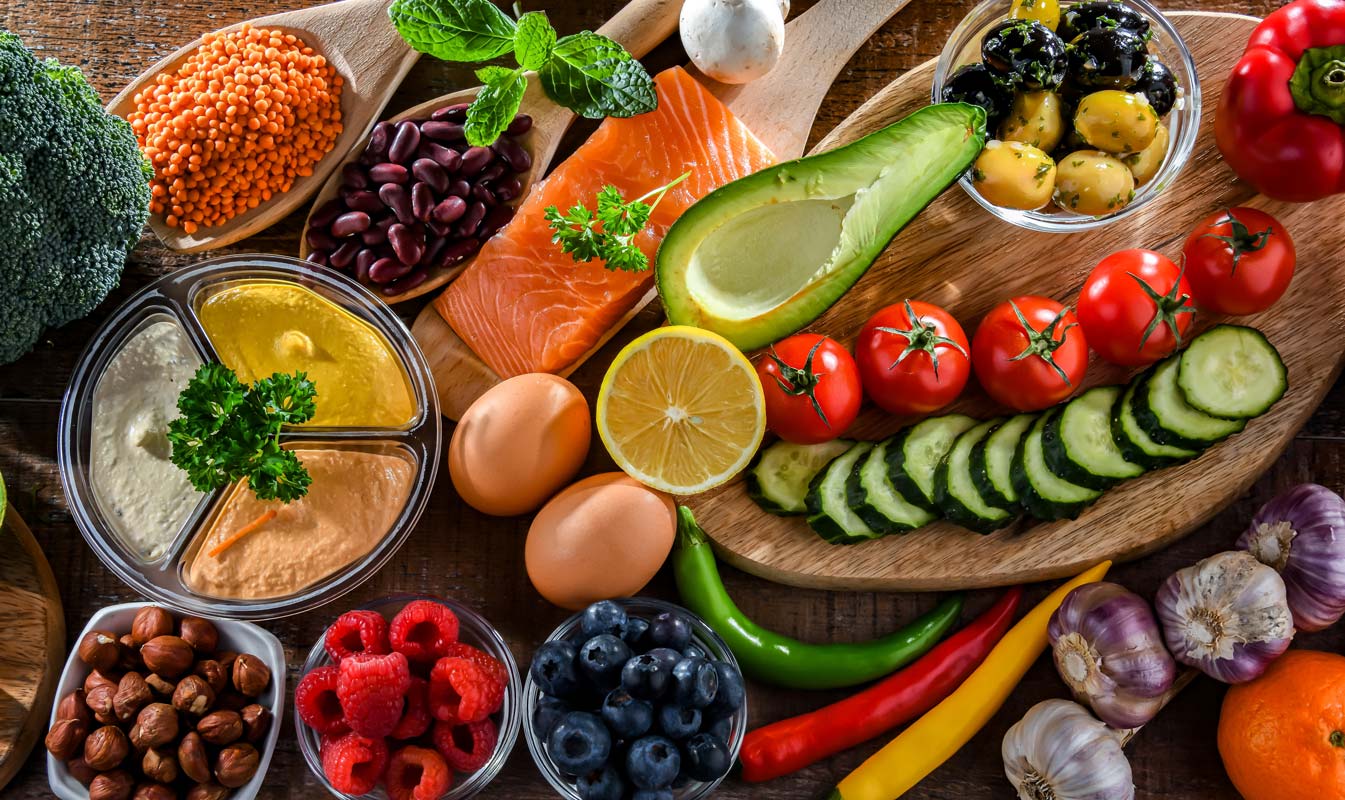
Members of the Fresh-Pressed Olive Oil Club are well aware of the benefits of extra virgin olive oil as part of the world-famous Mediterranean diet. Dozens of studies have assessed its health effects and its link to longevity, most commonly attributed to its improving heart health. But how the Mediterranean diet works its magic hasn’t been thoroughly understood. Investigators from Brigham and Women’s Hospital in Boston recently published the results of a long-term study that helps unravel this mystery. I’m thrilled to share their findings. And to start, here’s a recipe that highlights the plant-based approach that underscores the Mediterranean way of living.
There’s nothing more refreshing than a chilled soup for lunch or dinner during the dog days of summer, especially when there’s no cooking needed. I like to add a different kind of heat with a fresh hot pepper, but you can omit it if you aren’t a fan!
Ingredients
2 pounds cucumbers, about 2-3 large ones
1 small jalapeño, halved and seeded, optional
2 ripe Hass avocados
2 cups plain nonfat Greek yogurt or skyr
3 large scallions, trimmed
3 garlic cloves, peeled
1 cup packed of fresh parsley, dill, and chives
1/4 cup extra virgin olive oil, plus more for drizzling
Optional garnishes: thin slices of avocado, a dollop of yogurt or skyr, more fresh herbs
Directions
Halve the cucumbers lengthwise and use a large spoon to scoop out and discard most of the seeds; leave on the peel. Cut the cucumbers into chunks for easier puréeing. If using the pepper, halve it, scoop out the seeds and veins, and discard them along with the stem. Scoop all the flesh out of the avocados.
Step 2
Working in batches as needed, add the cucumbers, avocados, pepper if using, yogurt, scallions, garlic, herbs, olive oil, water, and vinegar to your food processor bowl or blender and process until puréed—the mixture should be fairly thick. If it’s too thick, add more water, 2 tablespoons at a time, until it’s pourable. Taste and season with salt and pepper as desired. Chill in the fridge for about an hour.
Step 3
To serve, ladle portions into soup bowls or glasses, garnish as desired, and drizzle with more olive oil.
Yields 8 servings
For Your Best Health
The Mediterranean Diet for Longevity
The study: “Mediterranean Diet Adherence and Risk of All-Cause Mortality in Women,” JAMA Network Open,2024.
The health benefits of a Mediterranean diet, on its own and when compared to other healthy ways of eating, are so strong that US dietary guidelines have repeatedly designated it as the healthiest recommended diet. It’s also gotten the nod from many health organizations around the globe, including the American Heart Association, European Society of Cardiology, and Australian National Heart Foundation. While these benefits aren’t in doubt, how it achieves them hasn’t been completely understood. This new study sought to better explain the various ways in which the body responds to the diet—how exactly closely following it lowers mortality risk. What’s more, the more than 25,000 participants were American women. In general, women aren’t included in the same numbers as men in most studies, and regarding research on the Mediterranean diet in particular, most studies have been done in the countries surrounding the Mediterranean Sea, where the diet is more of a way of life than in the US.
For the study, researchers from Brigham and Women’s Hospital, a founding member of the Mass General Brigham healthcare system, followed the women, who were all healthy at the start of the study, for up to 25 years. They found that participants who followed the diet most closely had up to 23% lower risk of all-cause mortality…and found evidence of biological changes to help explain why. They were able to detect and evaluate changes in approximately 40 biomarkers representing various biological pathways and clinical risk factors, both traditional ones and novel ones that hadn’t been used in prior studies. Biomarkers of metabolism and inflammation made the largest contribution, followed by triglyceride-rich lipoproteins, adiposity, and insulin resistance. Smaller contributions were seen from biological pathways relate to branched-chain amino acids, high-density lipoproteins, low-density lipoproteins, glycemic measures, and hypertension.
“For women who want to live longer, our study says watch your diet!,” said senior author Samia Mora, MD, a cardiologist and the director of the Center for Lipid Metabolomics at the Brigham. “The good news is that following a Mediterranean dietary pattern could result in about one quarter reduction in risk of death over more than 25 years with benefit for both cancer and cardiovascular mortality, the top causes of death in women (and men) in the US and globally.”
“Our research provides significant public health insight: Even modest changes in established risk factors for metabolic diseases, particularly those linked to small molecule metabolites, inflammation, triglyceride-rich lipoproteins, obesity, and insulin resistance, can yield substantial long-term benefits from following a Mediterranean diet,” said lead author Shafqat Ahmad, PhD, an associate professor of epidemiology at Uppsala University Sweden and a researcher in the Center for Lipid Metabolomics and the Division of Preventive Medicine at the Brigham. “This finding underscores the potential of encouraging healthier dietary habits to reduce the overall risk of mortality.”
How the Study Was Conducted
At the start of the study, blood samples, biomarker measurements, and dietary information were taken from the participants, who self-reported demographics and filled out a validated food-frequency questionnaire. The data collection period was from April 1993 to January 1996, and data analysis took place from June 2018 to November 2023.
Each participant was given a score for Mediterranean diet adherence, which ranged from 0 to 9. Eating a higher-than-median amount of each of a list of foods—vegetables (excluding potatoes), fruits, nuts, whole grains, legumes, and fish—earned 1 point. So did eating a good ratio of monounsaturated-to-saturated fatty acids such as olive oil compared to butter, a less-than-median amount of red and processed meat, and having an alcohol intake within the range of 5 to 15 grams a day (one 5-ounce glass of wine, a 12-ounce can of regular beer, or 1.5 ounces of liquor). Participants were then categorized into one of three levels: 0-3 or low, 4-5 or intermediate, and 6-9 or high. Women with scores of 6 or greater had a 23% lower relative risk of all-cause mortality than did women who scored 3 or less.
“The health benefits of the Mediterranean diet are recognized by medical professionals, and our study offers insights into why the diet may be so beneficial. Public health policies should promote the healthful dietary attributes of the Mediterranean diet and should discourage unhealthy adaptations,” said Dr. Mora.
There’s nothing more refreshing than a chilled soup for lunch or dinner during the dog days of summer, especially when there’s no cooking needed. I like to add a different kind of heat with a fresh hot pepper, but you can omit it if you aren’t a fan!
Ingredients
2 pounds cucumbers, about 2-3 large ones
1 small jalapeño, halved and seeded, optional
2 ripe Hass avocados
2 cups plain nonfat Greek yogurt or skyr
3 large scallions, trimmed
3 garlic cloves, peeled
1 cup packed of fresh parsley, dill, and chives
1/4 cup extra virgin olive oil, plus more for drizzling
Optional garnishes: thin slices of avocado, a dollop of yogurt or skyr, more fresh herbs
Directions
Halve the cucumbers lengthwise and use a large spoon to scoop out and discard most of the seeds; leave on the peel. Cut the cucumbers into chunks for easier puréeing. If using the pepper, halve it, scoop out the seeds and veins, and discard them along with the stem. Scoop all the flesh out of the avocados.
Step 2
Working in batches as needed, add the cucumbers, avocados, pepper if using, yogurt, scallions, garlic, herbs, olive oil, water, and vinegar to your food processor bowl or blender and process until puréed—the mixture should be fairly thick. If it’s too thick, add more water, 2 tablespoons at a time, until it’s pourable. Taste and season with salt and pepper as desired. Chill in the fridge for about an hour.
Step 3
To serve, ladle portions into soup bowls or glasses, garnish as desired, and drizzle with more olive oil.
A Trio of Deliciously Distinctive Chilean Olive Oils from the Country’s Premier Artisanal Producer Perfect for Your Summer Table
Each olive oil in this collection is a custom blend of outstanding varietals and unique in its own way.
Created to enhance summer’s bounty, these oils will elevate every one of your seasonal dishes.
All three were certified by an independent lab to be 100 percent extra virgin olive oil and rushed to the US by jet to preserve their tantalizing flavors and healthful properties.
These are Club exclusives, available nowhere else.
After dozens of trips to the Southern Hemisphere over nearly two decades, this intrepid traveler remains fascinated with South America and Chile in particular. Whenever I touch down in Santiago, I’m pleasantly reminded that there’s no jet lag from any time zone change, only the curious feeling of having the season I left up north turned upside down.
This year was quite special for your Olive Oil Hunter, because my wife Meghan and I visited Chile twice. A bucket-list vacation, a cruise to the Antarctic Peninsula, took us there in late January, when I witnessed the emergence of olives on tree branches at Agricola Pobeña, the farm of the Alonso family in Chile’s O’Higgins region—I immediately began to think of them as my babies. When I saw them again in May, they were at harvest plumpness. In between the two visits, an unusual series of natural events occurred, and I fretted about them just as any new parent would.
A Literal Firestorm
Only days after we left the olive groves in January, the worst wildfire in Chilean history burned through 18,000 hectares (roughly 70 square miles) of the Valparaiso, Maule, and O’Higgins regions. It’s hard enough to read about a tragedy of this scale as an outsider, but when you have friends who are directly impacted, it’s devastating. While Juanjo Alonso and his team worried about their neighbors and their land, we worried about them.
The wildfire unfolded against the backdrop of the continuing olive oil crisis raging through Europe, the details of which I have shared with you in my two previous Pressing Reports. I knew that Chilean oils were going to be more in demand than ever before because of the shortage in the Old World, due to the decimated 2023–2024 European harvest.
I also knew the cascading effect this would have: many Chilean olive growers would opt for quantity over quality and take measures like using heat and other mass-market extraction techniques to increase production for a quick profit…but not the Alonso family. I was confident that our close relationship and their commitment to creating the finest olive oils in the country would allow me to secure the liquid gold that Club members adore.
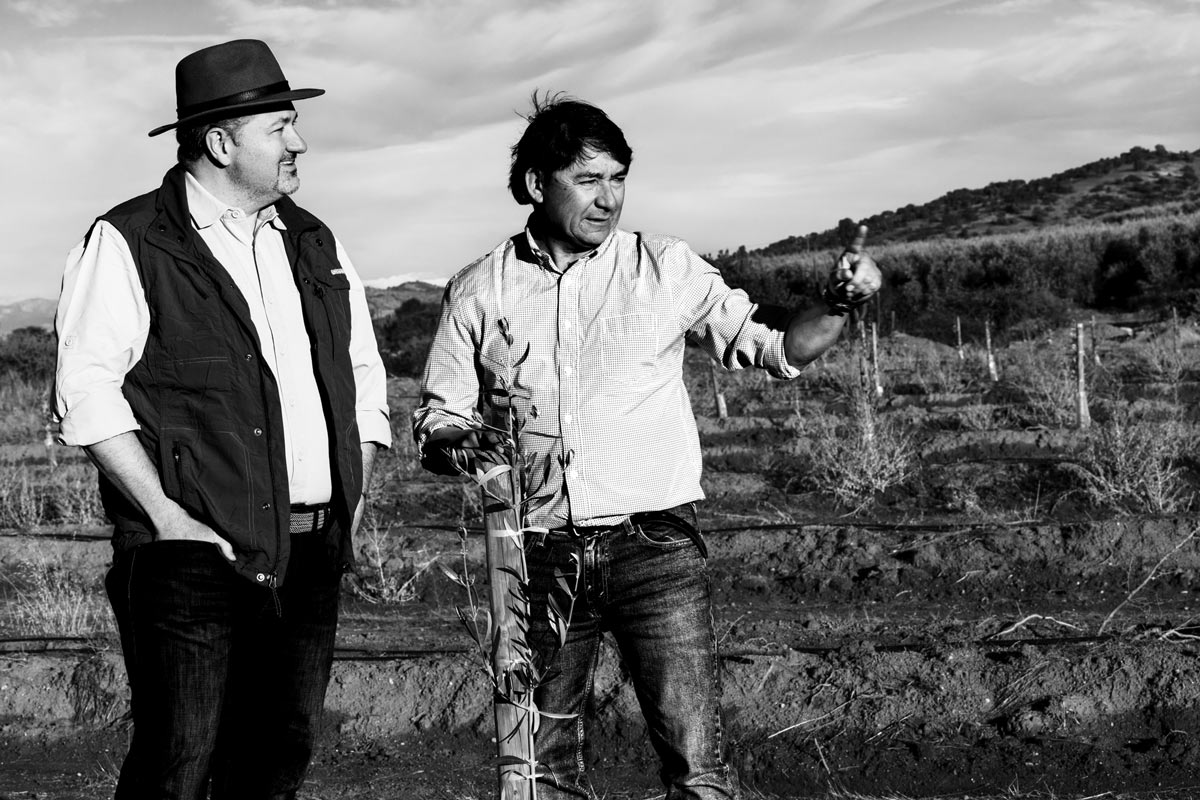
Duccio and I always start our visits by walking around the groves to select the best of the best fruit. Our “up close and personal” look allows us to make a detailed assessment—the first step in our quest to bring you, Club members, the finest oils on the planet. That swath of black behind us is where the Agricola Pobeña team created a buffer zone to redirect the path of the February wildfires and save the rest of the groves.
A Step—Many Steps—Above
From day one, more than 15 years ago, Juanjo (short for Juan José) and the team at Agricola Pobeña set their sights on crafting super-premium olive oils. To set themselves apart from other growers, they brought together these essential elements: an expansive farm with numerous microclimates suitable for a very wide selection of olive varietals, top-of-the line equipment, and some of the most skilled agronomists on the planet, led by Juan Carlos Pérez, the man in charge of Agricola Pobeña’s vast acreage. These are the core reasons they’re consistently named one of the top 20 producers in the world by Flos Olei, the bible of extra virgin olive oil.
Just as the wildfire and increasingly peculiar weather patterns would not distract them from their mandate, neither would the global olive oil shortage. And that’s why, for the second year in a row, three oils from Agricola Pobeña’s olives, each oil distinct, are the Club’s Chilean selections. Together, they represent a luscious range of varietals and reflect the meticulous crafting skills of my trusted Merry Band of Tasters, including EVOO authority Duccio Morozzo della Rocca and Chilean experts Juan Carlos Pérez and Denise Langevin. Longstanding Club members know them well, and you can catch up with them in the pages that follow.
Looking over the exquisite fruits of the harvest always fills me with childlike excitement for the taste of olive oil that’s just moments away. Because of the now constant threat of an early frost, the magic window for harvesting is getting shorter and shorter, and the team picks up the pace.
A Food Evolution
In many ways, Agricola Pobeña’s approach to quality mirrors the recent interest in health-conscious eating of many younger Chileans. Thanks to the Alonso family’s two local olive oil stores focused on educating consumers, you can argue that they’ve helped contribute to the dietary changes. “It used to be that if there wasn’t a protein on your plate, it wasn’t a real meal,” Juanjo told me. “Over the last five years, meat has become very expensive, and that helped open people’s minds to the idea that we don’t need to eat meat every day. We can have dishes like ceviche de porotos negros as a main course.” We enjoyed that dish of marinated black beans (it’s in the recipe section, so you, too, can savor it) at Cervecería Rural, a brew pub you’d expect to find in Santiago proper, but which is in the countryside. A lot of young families left the capital during the pandemic and moved to smaller towns, fell in love with them, and decided to stay. This created new opportunities for restaurants of all cuisines. Of course, Santiago itself is now considered an international food capital.
My Merry Band of Tasters, including Duccio Morozzo della Rocca, to my right, and Denise Langevin and my trusted colleague and dear friend Tjeerd Beliën, to my left, sampled dozens of contenders—different varieties of olive oils—to determine which would make the cut as we crafted this quarter’s collection. Then the hard work really began: we tasted, tested, and tweaked myriad blends, again and again, until we achieved perfection. From our tasting table to yours, enjoy!
Sushi, increasingly popular thanks to the region’s abundance of seafood, has been elevated to new heights at the restaurant Karai by Mitsuharu in the W Hotel, known for its Peruvian-Japanese fusion cuisine and some of the best nigiri I’ve ever had—chef Mitsuharu Tsumura is consistently ranked as one of the top chefs in Latin America. Fresh markets are getting a new spin of their own. Just outside of Santiago, the Mercado Urbano Tobalaba, known simply as MUT, is a lively mixed-use building that combines culture, cuisine, and sustainability—there are more restaurants than I had meals in which to try them! All my culinary experiences informed both the classic and the innovative dishes offered in this issue’s recipe section, featuring quintessential Chilean ingredients like beans, potatoes, corn, and avocado. I invite you to savor them with family and friends along with this quarter’s oils!
Happy drizzling!
T. J. Robinson The Olive Oil Hunter®
This Quarter’s First Selection
Producer: Denise Langevin Exclusive Selection, Agricola Pobeña, Comuna de La Estrella, O’Higgins Region, Chile 2024
Olive Varieties: Arbequina, Koroneiki
Flavor Profile: Mild
I always look forward to reuniting with Denise Langevin when I’m in Chile. As most Club members know, she’s an acclaimed international olive oil judge—in fact, she had just received 45 samples to grade and score remotely as one of 12 judges of the Monte Carlo Masters Olive Oil International Competition. Her nose and olive oil sensibility are exceptional, and I find her input when crafting Club selections invaluable. Yet I also enjoy simply spending time with her and her husband Luis and immersing myself in the Chilean way of life.
Denise welcomed us into her home on her late grandfather’s farm, where she raises crops. It’s an idyllic setting about an hour south of Santiago, framed by the snow-capped Andes. This is a rich agricultural area, well known for its cherries, which are shipped around the world. Denise had just replanted alfalfa, explaining that it can grow for five years at a stretch, then needs to be pulled so that the soil can have a yearlong rest. We know how painstaking the process of growing olives can be, but the challenge she faced was a surprising one: her latest farm addition, a sheep dubbed Pio Aurelio, had strayed from his grass-maintenance duties and eaten all the leaves from her newly planted, tender olive saplings. A stern reprimand followed, and his fate as a groundskeeper is currently in limbo.
After a trip to the local market for provisions—one of my favorite things to do wherever I travel—we sat down for a fabulous lunch that showcased land and sea. Denise prepared salmon tartare with lemon juice, chives, and avocado on lettuce, while Luis was in charge of a prime rib. The perfectly roasted meat was accompanied by a wonderful assortment of potatoes. There are 4,000 varieties in the Andes region! We feasted on white potatoes roasted with rosemary and olive oil and also on three varieties Denise had recently brought back from a trip to nearby Chiloé Island, each with its own distinctive flavor: a sweet purple one reminiscent of a Peruvian tater; a fat fingerling with a deep earthy flavor; and a sweet one with almost floral notes. With all three of this quarter’s olive oil selections on the dining table, we lavished them on each dish, noting how well they paired with the food.
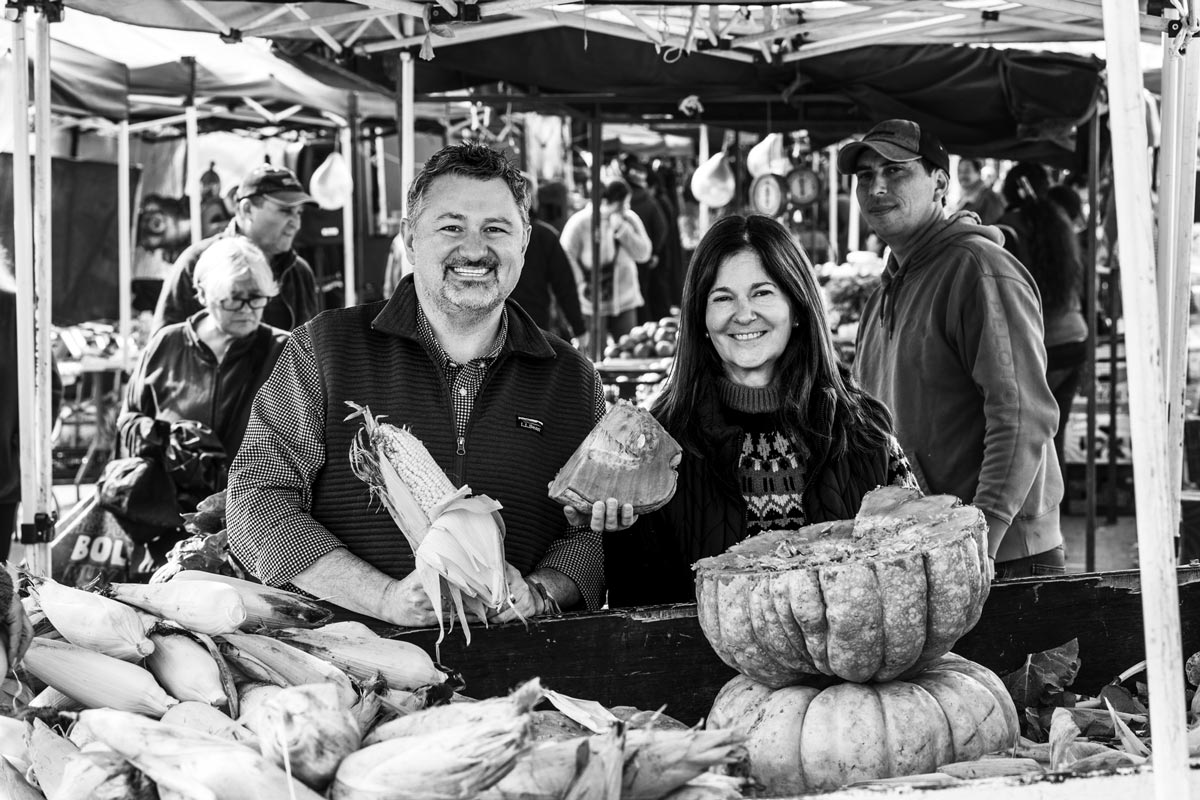
Give me a farmers’ market visit any day of the week! They certainly know how to do it right, here in Chile. Amid the fresh fruits, vegetables, and other foods at this market in Codegua, near Denise’s home, local singers and musicians delight the crowd, creating a party atmosphere. I could have stayed for hours just marveling over these amazing pumpkins, but there was lunch to prepare—and savor—back at her house.
Denise’s love of the earth and sustainable farming led her to expand the educational program she developed for local children from one to two primary schools—she teaches youngsters about healthy farm-to-table eating in a fun way they can understand, like growing their own vegetables in boxes made by Luis and visiting farms to learn about different plants, including a nut farm at harvest time. Plans include taking the kids to an olive mill during next year’s harvest to help them develop an appreciation for making fresh-pressed olive oil. It remains to be seen whether the kids will become as consumed as I am with details like the size of Koroneiki olives (I was delighted that this year’s crop had a much higher pulp-to-pit ratio) or how many Arbequinas must be sampled before the best one can be chosen, but, with Denise guiding them, they’re sure to have an early appreciation for their country’s dazzling olive oils.
This quarter’s mild oil embodies Denise’s personality, a gentle oil from a gentle woman—sweet, generous, and harmonious. It’s 90 percent Arbequina, from different parts of the Agricola Pobeña farm, and 10 percent Koroneiki, which brings out the characteristics of the Arbequina and makes for a beautiful, long finish with a crescendo of flavor. When expert tasters are evaluating olive oils, they often communicate with each other using non-spoken language. This is how I always feel when working with Denise. Duccio summed it up well: “It’s a great experience to taste with Denise—when you work with someone who knows how to taste olive oils, you have a different way of communicating. You share sensations and perceptions—you don’t even need words, the discussion is more telepathic, their expressions, their eyes can tell you so much. The collaboration evolves from seeing each other’s reactions.” I know you’ll be as pleased with the results as I am.
As a former chef, I love playing in the kitchen. Last year, when Denise gave me a small batch of her homemade merquén, a Chilean spice made from dried, smoked aji cacho de cabra (goat’s horn red pepper) ground with sea salt and coriander seeds, she told me we’d make it together upon my return. You can see how much fun we’re having! Try your hand at making merquén at home or buy it from your favorite spice store—it figures in many of this quarter’s recipes and can enliven a bevy of other dishes.
Impressions and Recommended Food Pairings
A deliciously full-flavored mild oil, this is a beautiful expression of Chilean-grown Arbequina and Koroneiki. It embodies the aromas of green grass, banana, Belgian endive, lettuce, walnut, cinnamon, citrus zest, nasturtium, white peppercorns, and fresh mint. On the palate, there’s the nuttiness of walnut, the bitterness of green tea and baby arugula, the sweetness of vanilla, and the lingering spiciness of celery leaf and white pepper.
It will elevate sweet corn gazpacho with avocado crema* and other fresh corn dishes; fruit salads; homemade mayonnaise and aioli; eggs, chicken, and pork; cod and other white fish, shrimp, and lobster; paella and other rice dishes; roasted parmesan carrots and other root vegetables; fruity vinaigrettes; and dulce de leche sundaes and yogurt parfaits.
*See the recipe section for bolded dishes.
This Quarter’s Second Selection
Producer: El Agrónomo, Agricola Pobeña, Comuna de La Estrella, O’Higgins Region, Chile 2024
Olive Varieties: Frantoio, Leccino, Coratina, Nocellara del Belice
Flavor Profile: Medium
El Agrónomo.” Sounds like the name of a bestseller, a hit movie, or a caped superhero, doesn’t it?
Actually, the latter isn’t far off the mark. This beautiful extra virgin olive oil pays homage to Agricola Pobeña’s heroic agronomist, Juan Carlos Pérez. This is the fourth year in a row we have recognized Juan Carlos’ Marvel-caliber skills with an eponymous oil.
In 2009, the Alonso family closed on the land they purchased near La Estrella to establish a top-tier olive farm. There was so much to be done, as Juanjo Alonso will tell you. One of the first priorities was to hire an agronomist. Now, there’s a long-running joke in Chile that you can’t throw an avocado without hitting an agronomist. What Juanjo didn’t know at the time was that even a weak underhanded pitch over the property’s fenceline could’ve introduced him to one of the most capable and experienced agronomists in Chile. As it was, Juan Carlos (who was literally working on the adjacent farm) made the first move by cold-calling Juanjo. The rest is history. How fortuitous for everyone involved, including us, dear Club member!
Now celebrating his fifteenth year with Agricola Pobeña, Juan Carlos characterizes it as a “successful marriage” and jokes that he’s no longer peeking over fences. Currently, he oversees some 1,100 acres of mixed olive varietals. We imagine he was quite offended when, early in his tenure, a visiting Italian consultant advised diluting all the oils, regardless of variety, to mute and homogenize their flavors for the mass market. (Juanjo told me this story.) Imagine! That would be like seasoning your food with five jars of spice, all of them containing the same flavorless thing. Anyway, Agricola Pobeña’s very distinctive oils were defiantly entered that year into a competition where they won awards. The first of many, I might add. Including inclusion in Flos Olei’s prestigious top 20.
Juan Carlos is justifiably proud of the amazing range of flavors he has been able to extract from the trees by capitalizing on the farm’s many microclimates. (This is how I can select for you three unique oils from the same property. The combinations and permutations are nearly endless.) But the pressure is on, year after year. “Show me the fruit!” succinctly summarizes Juan Carlos’ job. Because only with outstanding olive fruit can you make outstanding olive oils.
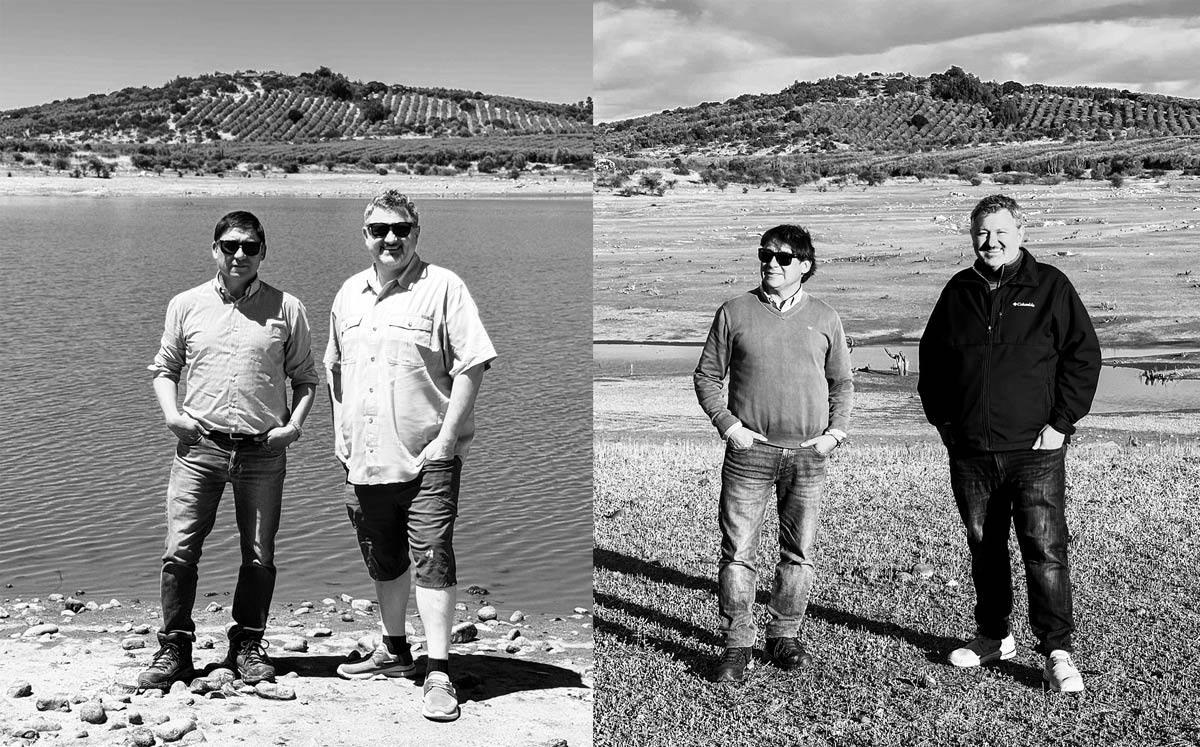
I was in the neighborhood! It’s true: my wife Meghan and I were on our way to Antarctica in January (the Chilean summertime) and stopped by to check on the developing olives as well as our friends at Agricola Pobeña. Juan Carlos Pérez was beyond excited about the depth of the lake—the deepest I’ve ever seen it. On the right is the same lake during the recent harvest: Juan Carlos and I are standing nearly in the middle. He’s hopeful winter rains will replenish the lake so he can water his olive trees at will.
This year was peculiar for a number of reasons. Fortunately, the stranglehold of the “megadrought” that’s been plaguing Chile for more than a decade appears to have been broken. (Fingers crossed.) The lake, which holds the equivalent of 400 Olympic-size swimming pools, was replenished by Mother Nature. This gave Juan Carlos water management options he hasn’t had for years, as conservation was always the goal. He seems to know exactly how much water each of his “children” needs to thrive, even concerning himself with the size of the pits—charmingly, he calls them “bones.” The pulp-to-pit ratio of an olive is important, of course.
The Chilean spring was fleeting this year and unusually cool, segueing awkwardly into a hot summer. Temperatures soared to 103 degrees in some areas, enabling catastrophic wildfires, at least two of which reached the farm. (Read more above.)
Because of the abbreviated spring, blossoms were slower to form, delaying the harvest season by two weeks to a month, depending on the olive variety. El Agrónomo tirelessly toured the groves to gauge ripeness: I doubt he got much sleep.
Informally called “the boss of the farm” by his colleagues, talented agronomist Juan Carlos Pérez was eager to show me his Coratina “nursery.” The saplings have been planted in what’s known as a 6×6 configuration, which means that approximately 20 feet separate each tree from the neighboring ones. The extra space benefits the trees by ensuring they have plenty of air and sunlight and their root systems have less competition for water. They’ll bear fruit in as little as five years.
Ever elusive, the “magic window” I chase each harvest season shrank significantly. (“Magic window” is my euphemism for the optimal moment to pick and mill the olives.) I wasn’t sure when to book my travel. As it turned out, my timing was perfect! Though under the threat of frost, my Merry Band of Tasters and I blended and secured for you these stunning and complex olive oils. Thank you, El Agrónomo, and the rest of the incomparable team at Agricola Pobeña! We will think of you as we splash this magnificently fresh oil on summer produce!
Never content to rest on his laurels (or anywhere else, for that matter), Juan Carlos is already looking ahead, eager to plant new tree stock, oversee the digging of new and deeper wells, begin pruning for robust tree health, and start renovations on select tracts of the groves. Always in the back of his mind are the motivating words, “Show me the fruit!”
Impressions and Recommended Food Pairings
This complex blend of Italian varietals has a Southern Hemisphere personality! On the nose, our tasters perceived almond, green apple, artichoke, Tuscan kale, black pepper, and chopped culinary herbs—rosemary, thyme, and oregano. On the palate, we noted the pleasant nuttiness of green almond and hazelnut together with fennel, sage and wild oregano, chicory and microgreens, the bitterness of arugula, and the spiciness of black pepper.
Splash this dazzling oil on pizza; tomato-based pasta dishes; cold orzo, couscous, and whole grains; caprese salad, fennel, oranges and black olives, and salads with nuts; and crudité and charcuterie platters. It will enhance beef, lamb, and duck; quinoa and black bean burgers* and other legume dishes; smashed potato canapes with smoked salmon; crusty breads and focaccia; and chiffon cake batters.
This Quarter’s Third Selection
Producer: Alonso, Agricola Pobeña, Comuna de La Estrella, O’Higgins Region, Chile 2024
Olive Varieties: Picual, Koroneiki
Flavor Profile: Bold
My Merry Band of Tasters and I always enjoy time spent with Juanjo Alonso, who oversees the family’s extraordinary olive farm, Agricola Pobeña. Juanjo’s positive energy, zest for life, and passion for producing olive oils of the highest quality make him very fun (and inspiring) to be around.
Many Club members may remember how the Alonso family came to be one of Chile’s top olive oil producers: Abel Alonso, the patriarch of the clan, arrived in Chile as a refugee from Spain’s Basque country. He became a successful entrepreneur in his adopted country but retained strong ties to his homeland. Nearing retirement, the father of five dreamed of establishing an olive grove and mill that produced world-class extra virgin olive oils, a legacy for his children and their progeny. But where to start?
Cue Juanjo, who was completing an advanced degree in fine arts and polishing his surfing skills off the California coast. Before you could say, “Hang ten,” Juanjo was home, searching for suitable land. He found it in the fertile O’Higgins region. (Local dowsers confirmed the presence of water, a non-negotiable condition of the sale.)
You might wonder why a young man would sacrifice his own plans for his father’s vision. Loyalty to home, a concept known as exte, is important in the Basque culture. Juanjo and his siblings wanted to make Abel’s dream a reality, come hell or high water. Both arrived this year.
It was a nightmarish scene when wildfires struck the region the first week in February— just after my January visit. (The fires were not unexpected, given the Chilean summer’s blistering hot temperatures and the air’s low humidity.) Juanjo and his team had three hours to prepare for the conflagration. Just after 8:30 p.m., the wind-driven flames reached the farm. Armed with shovels and flanked by tractors towing tanks of water, the men fought the fire all night long and into the next day, building firewalls and frantically beating out errant embers—easy to see in the dark, Juanjo said. Deliriously tired, one of Juanjo’s men (“Jimmy”) mindlessly parked his truck just a few feet from the leading edge of the fire. Alarmed, Juanjo insisted Jimmy get a few hours of rest before returning. “You’re a hero,” Juanjo told him. “You saved the farm!”
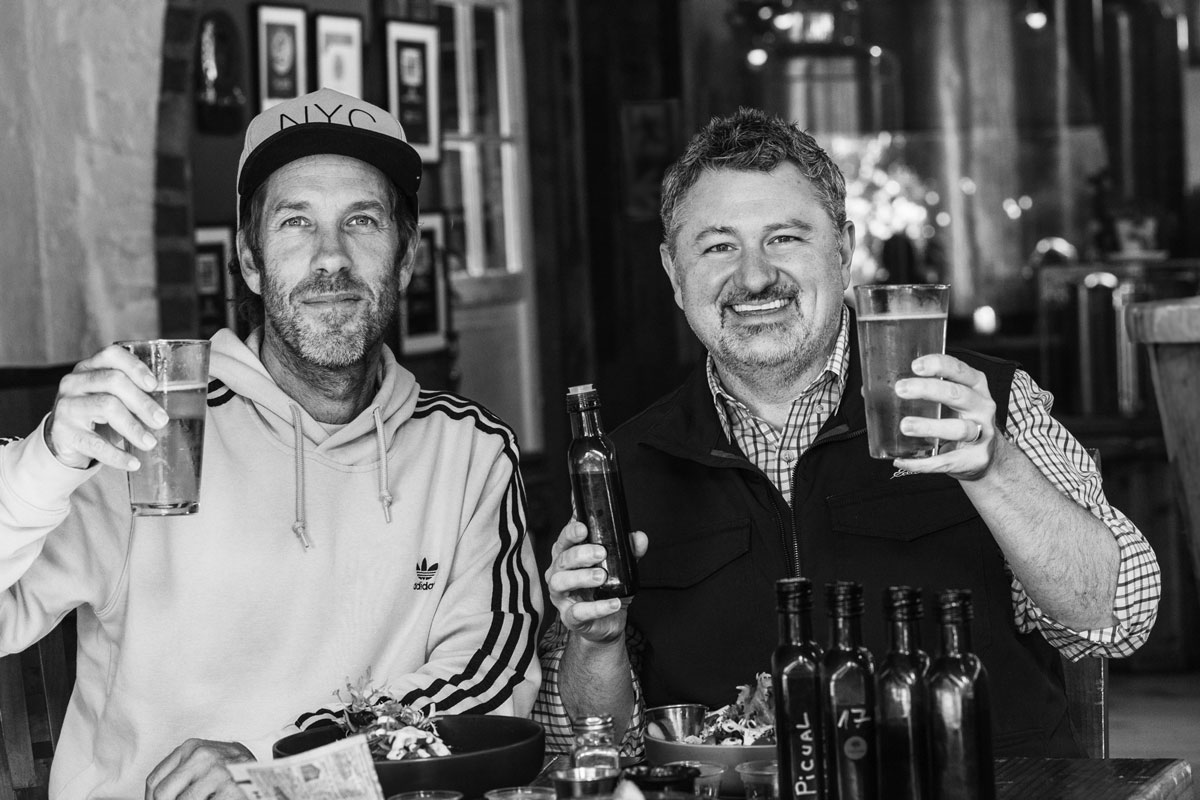
Artist, surfer dude, and olive oil producer Juan José Alonso (“Juanjo”) and I enjoyed a light lunch—we always like to try our fresh blends on food—at a great little brew pub called Cervecería Rural in Litueche. The longer I know this remarkable family, the more I’m impressed with its unshakable commitment to quality, its resilience, and its efforts to educate consumers about the benefits of adding premium EVOOs to their diets.
While much of the 1,100-acre property was at risk, including valuable 10- to 12-year-old trees, the fire damage was happily restricted to less than 20 acres. At some point on the second day, the flames leapfrogged over the groves. Juanjo then dispatched his team to save local houses.
Always the optimist, Juanjo expects winter rains, like the drought-busting ones that fell on Central Chile this past season, will quickly rejuvenate the scorched trees. The rainfall-dependent farm also needs to replenish its 55-acre lake (see the photo above) and two reservoirs. In the meantime, the family is digging more wells in the bedrock to ensure their precious olive trees have enough water for years to come. The Alonso family is definitely playing the long game.
Juanjo and I discussed this during my last visit to the Pobeña farm. He noted the opportunities for greater profits, now that a global shortage of olive oil has doubled or tripled its prices and producers in his country are being courted by a handful of bulk buyers in Spain and Italy. “The bad guys came to Chile,” he said ominously, meaning that the focus continues to shift from quality to quantity. The Alonso family will continue its unwavering commitment to premium olive oils and valued customers by reinvesting profits, he assured me.
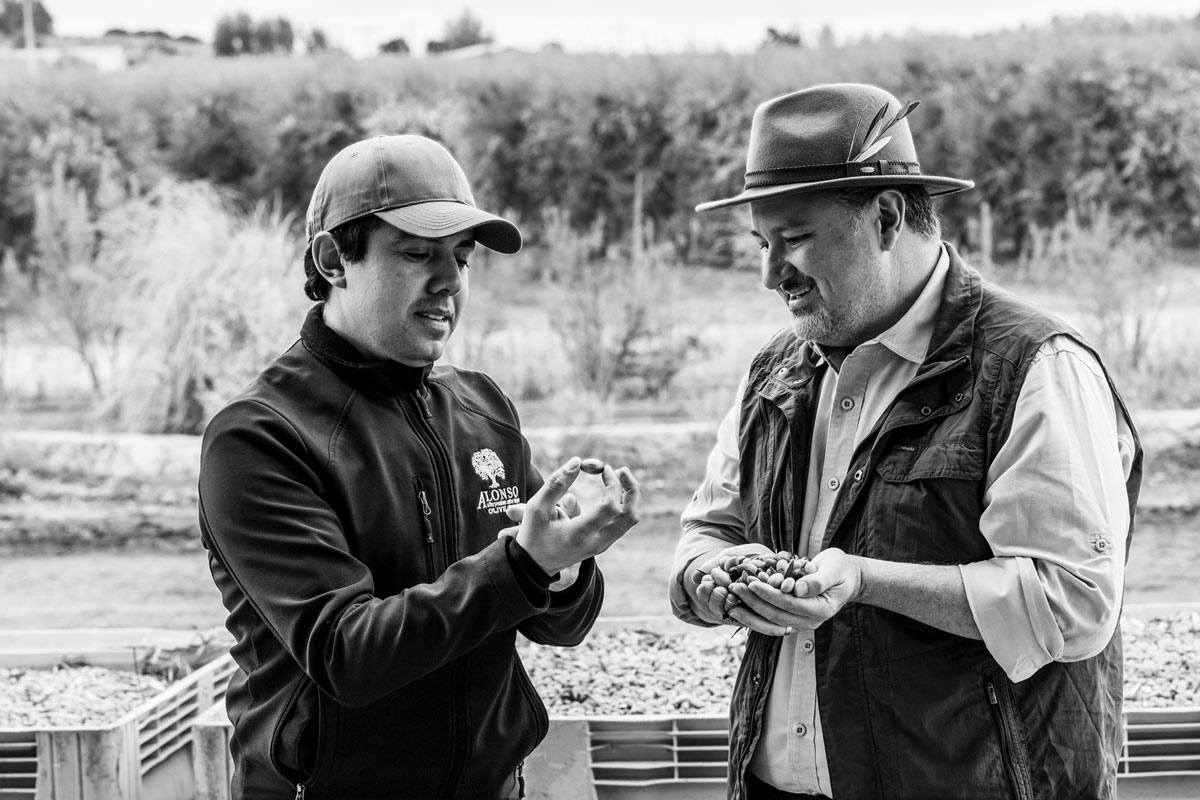
Though only in his early 30s, mill manager Juan Francisco González, a key member of the team, is an accomplished olive miller: he has been with Agricola Pobeña for over 10 years. Depending on the olive fruit that’s delivered to the mill, Juan makes hundreds of discrete decisions during the harvest in order to coax the best traits from each varietal. Here, we examine Picual olives that will be milled (and ready to taste) in less than 45 minutes.
From the very beginning, he said, his father insisted on investing in the best. An example? Juanjo shared the story of his 2009 visit to Italy to check out milling equipment, something he admits he knew nothing about at the time. (An advantage, as it turns out.) But he was most impressed by the oils milled with machinery from Alfa Laval, a high-end Swedish manufacturer. On the trip home, he pondered how to sell this option to his father. (“Because I wasn’t the owner of the money!” Juanjo joked.) But, after asking a few pointed questions, Abel endorsed the purchase—a great one, in hindsight, as the equipment has been issuing award-winning oils for many years. You’re about to taste one of them!
Now approaching 90, Abel (who still visits the farm occasionally) and the rest of the family are extremely proud to know their finest oils are reaching discerning palates like yours, dear Club member. I’m thrilled with this intriguing blend, and can’t wait for you to try it!
Impressions and Recommended Food Pairings
This vibrant, early-harvest Picual, complemented by a splash of Koroneiki, is a robust expression of these varietals. Its intense, intoxicating aroma is redolent of tomato leaf, celery, wheatgrass, baby spinach, kiwi, pear, parsley, basil, and wild mint. Sense the healthful polyphenols dancing on your palate. This olive oil is rich with notes of celery, kale, rosemary, and walnuts; the bitterness of radicchio and lime zest; the fruitiness of green apple and pear; and the spiciness of Sichuan peppercorns and ginger root…with a long and persistent finish.
It’s perfect with panzanella and other tomato-based salads and sauces; flank steak with avocado chimichurri* and other grilled beef; grilled leg of lamb basted with salt water; tuna, salmon, and octopus; mushrooms, grilled radicchio, and green beans; wild rice; and chocolate-based desserts like mousse and brownies.
*See the recipe section for bolded dishes.
Olive Oil and Health
Half a tablespoon of olive oil a day significantly lowered the risk of dementia-related death
Reference: Tessier A-J, Cortese M, Yuan C, et al. Consumption of olive oil and dietary quality and risk of dementia-related death. JAMA Network Open. 2024;7(5):e2410021. doi:10.1001/jamanetworkopen.2024.10021.
A recently published analysis of two large, long-term studies found that consuming half a tablespoon or more of olive oil per day lowered the risk of dying of dementia by up to 34% in both women and men. The protective effect of olive oil consumption was even greater in women.
More than 92,000 participants from the Nurses’ Health Study (NHS) and the Health Professionals Follow-Up Study (HPFS) were included in this analysis. The NHS started in 1976 and enrolled 121,700 female registered nurses (ages 30–55). The HPFS began in 1986 as a similar study in men, enrolling 51,525 male healthcare professionals (ages 40–75).
Study participants responded every other year to detailed food frequency questionnaires (FFQ) about their consumption of specific foods. Questions about olive oil were added in 1990. Total olive oil intake was determined by three responses: olive oil used for salad dressings, olive oil added to food or bread, and olive oil used for baking or frying at home.
Olive oil intake frequency was categorized as follows:
• Never, or less than once per month • Less than 4.5 grams (about one teaspoon) per day • Between 4.5 and 7 grams per day • More than 7 grams (about half a tablespoon) per day
About two-thirds of the study participants (65.6%) were women, about a third (34.4%) were men, and the average age at the start of the study was 56 years. Each participant’s FFQs from 1990 to 2014 (or for as long as the participant remained in the study) were totaled and averaged. Average olive oil intake was 1.3 grams per day in both studies.
Participants in the highest olive oil intake group—half a tablespoon or more of olive oil per day— reduced their risk of dying of dementia by 28% to 34%, compared to study participants who never or very rarely consumed olive oil. These results were regardless of other dietary habits and factored in socio-demographic and lifestyle differences.
Deaths due to dementia were confirmed by physician’s review of medical records, autopsy reports, or death certificates of study participants.
It has been proposed that consuming olive oil may lower the risk of dementia-related death by improving blood vessel health, yet the results of this analysis were not impacted by hypertension or high cholesterol in participants.
Limitations of this analysis include its predominantly non-Hispanic white population of healthcare professionals, which reduces the ability to generalize these results across more diverse populations. Also, the FFQs did not dis-tinguish among types of olive oil, which differ in their amounts of polyphenols and other bioactive compounds.
Kudos from Club Members
You guys are awesome. I never really thought much about oils. I had no idea they could make such a difference since I didn’t spend much time in the kitchen, lol. That’s all changed now! I hope I can keep getting them, they’ve made a huge difference.
Janet N.Pacific Grove, CA
I love every bottle I’ve ever tried. I have the subscription with the large bottles and I’ve begun to use the oil more and more with new recipes, etc. I ran out of oil before the next shipment for the first time! I’m absolutely in love with it! I hope you will always continue to do the work, to bring us these awesome oils from all over the world. Thank you for all your hard work!
P.S. I love your recipes, so keep them coming!
Doreen I.Milton, FL
Can’t wait! Your oils are always spectacular! Will never go back to store-bought. NO comparison.
Lin J.San Diego, CA
Recipes
Cordero al Asador with Herbed Salmuera (Grilled Leg of Lamb Basted with Salt Water)South Americans usually take a simple approach to their meats. This salt- and herb-based liquid, called salmuera (the precursor to chimichurri), was used by gauchos, the nomadic cowboys of South America, to baste proteins when cooking over live fire. Ingredients 1 1/2 cups water 2 tablespoons coarse salt (kosher or sea) 1 1/2 teaspoons freshly… view recipe
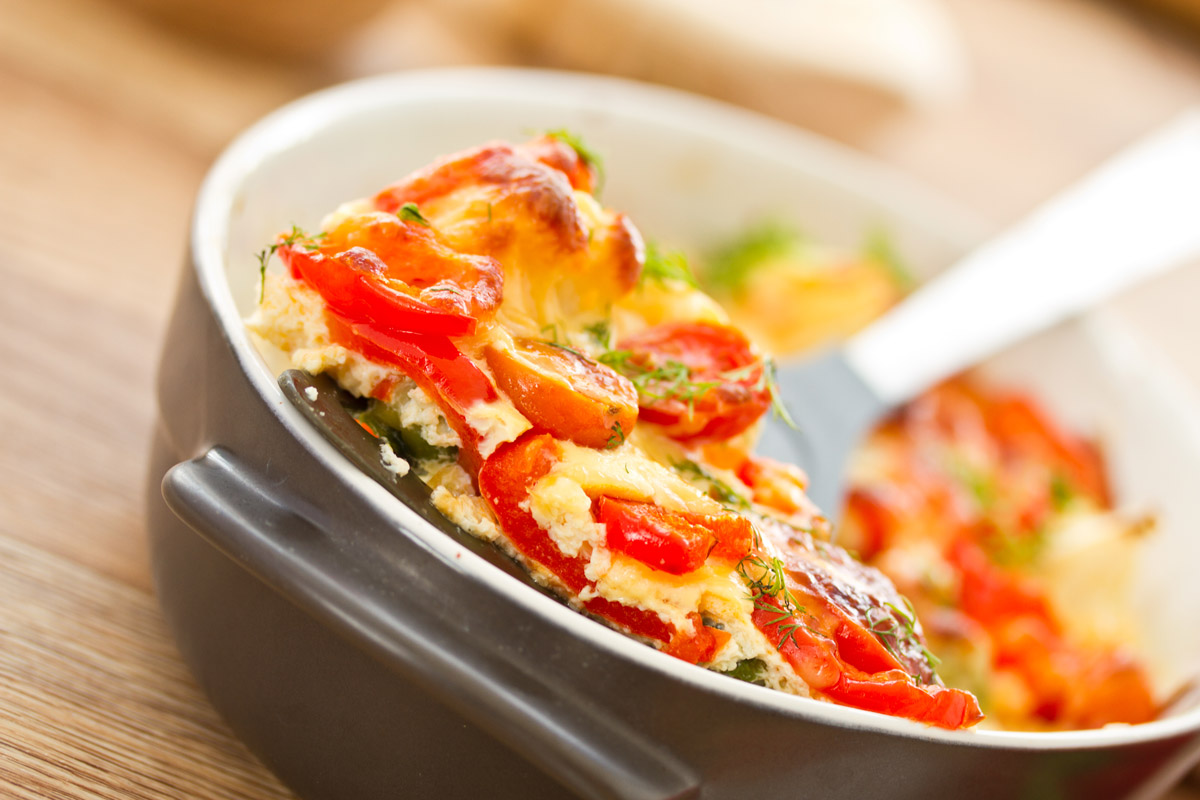
Eggs with Basquois PiperadePiperade, a vegetable stew–like concoction popular in Basque country (which straddles northern Spain and southern France) is similar to Sicilian caponata or Middle Eastern shakshuka. This version is from the Alonso family, whose patriarch is Basque, though he has lived in Chile for many years. Instead of scrambling the eggs, you can break them right… view recipe
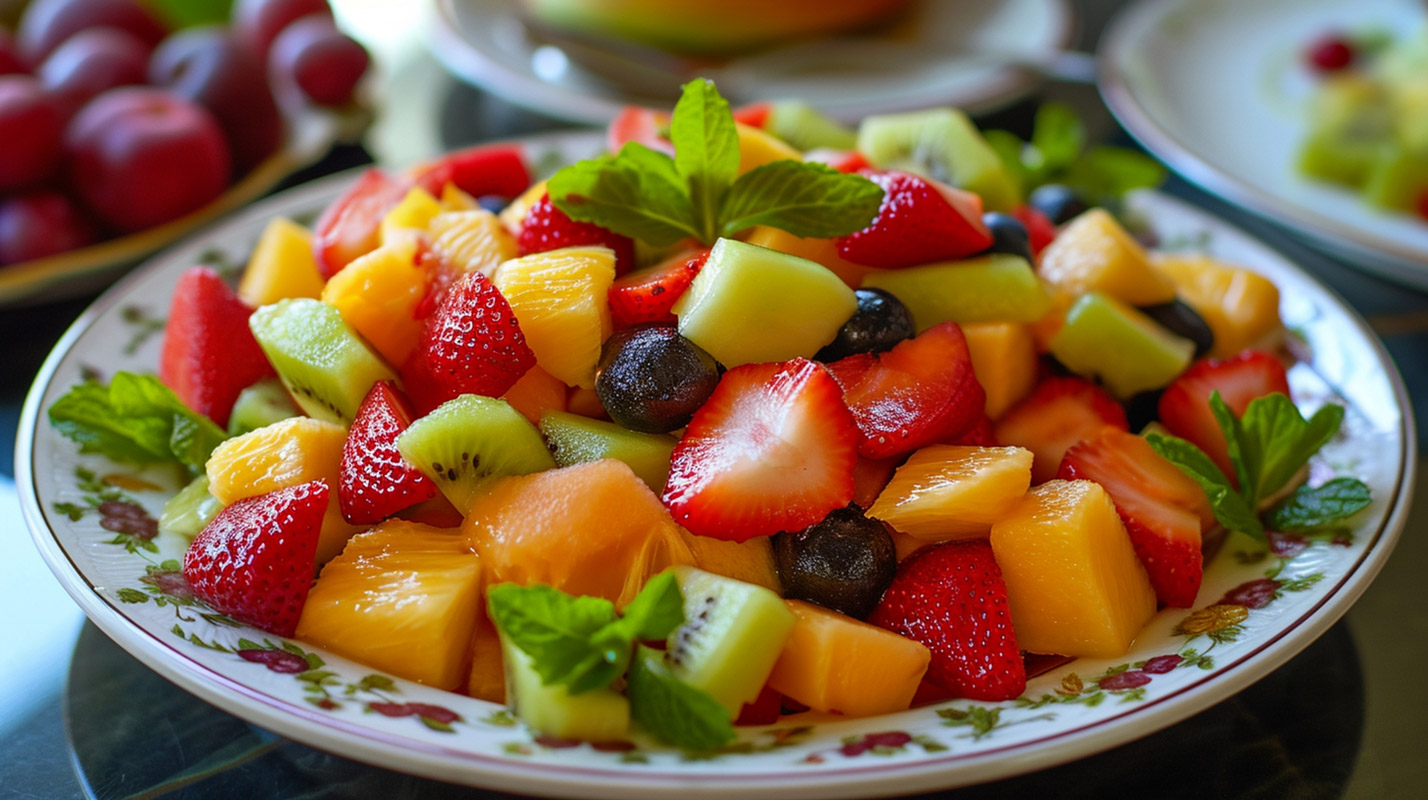
Brunch Fruit Salad with Honey-Lime-Mint VinaigretteFor a bright brunch dish, serve the dressed fruit salad over thick Greek yogurt or Icelandic skyr. Ingredients 4 cups mixed fruit, such as chunks of melon and mango, sliced strawberries, red grapes, blueberries, and pineapple cubes 3 tablespoons extra virgin olive oil 2 tablespoons honey, preferably orange blossom Zest and juice of 1 medium lime … view recipe
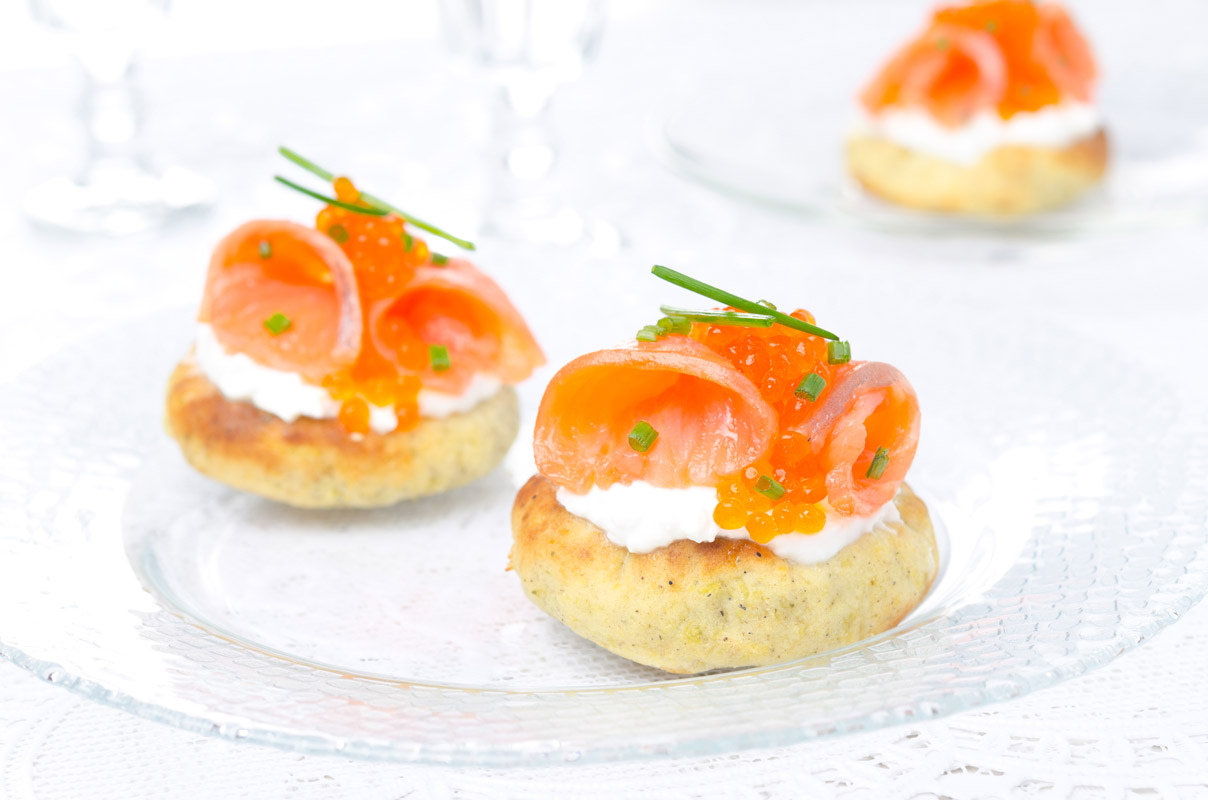
Smashed Potato Canapes with Smoked SalmonWe’ve all eaten smoked salmon on bagels or toast points, but for something different, try this delicacy on crispy smashed potatoes. In place of smoked salmon, use salmon roe or another domestic caviar. Elegant! Ingredients For the potatoes: 12 small Yukon gold potatoes, each about 1 1/2 to 2 inches in diameter Extra virgin olive… view recipe
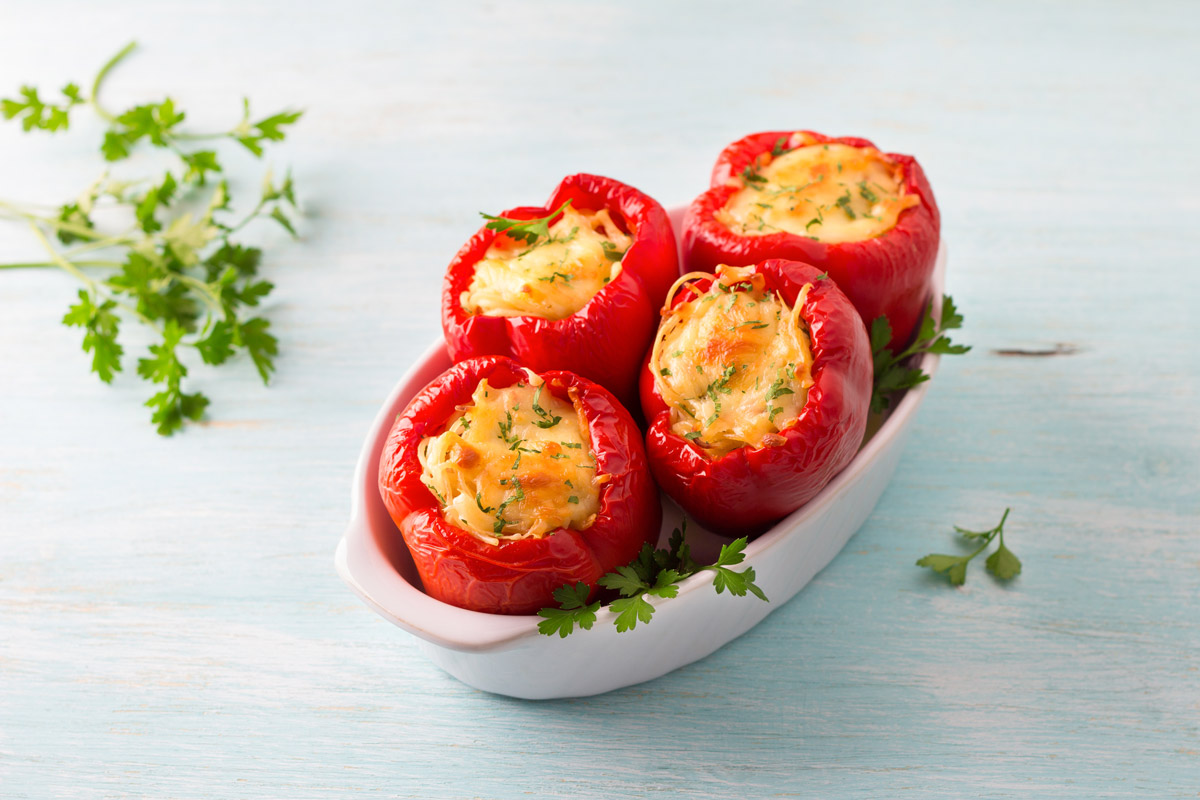
Bell Pepper “Empanadas”This take on empanadas de queso is perfect when you want melted cheesy goodness but would rather skip the dough. Preferred in Chile is the very buttery queso chanco, a cheese that’s close in taste and texture to our Muenster. Though not traditional in empanadas, merquén adds a nice zest (you can substitute pimentón if it’s… view recipe
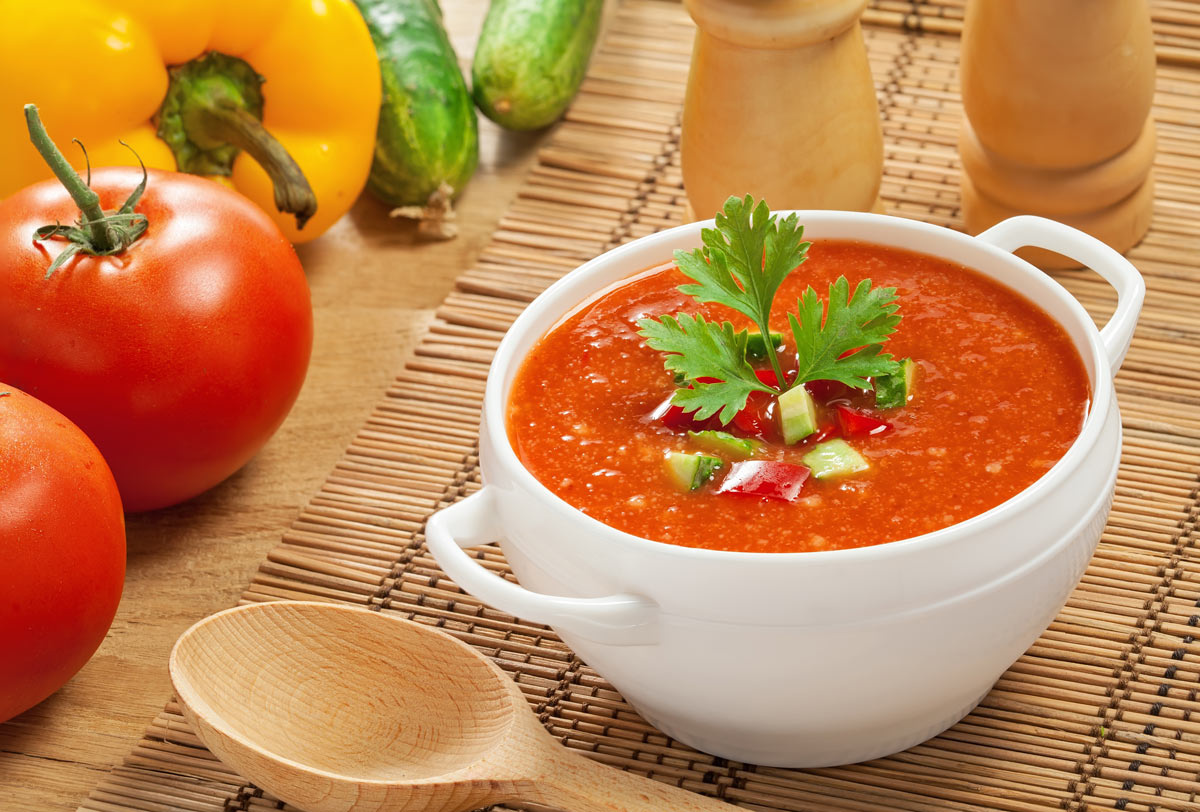
Sweet Corn Gazpacho with Avocado CremaThis unusual twist on gazpacho takes advantage of tender sweet corn at its peak. As you’ll see from the recipe, we’re emphasizing corn’s gorgeous yellow color. When buying, look for ears with fresh stems (like cut flowers)—not brown or dessicated. Like flowers, you can recut the ends and store the ears upright in sugared water… view recipe
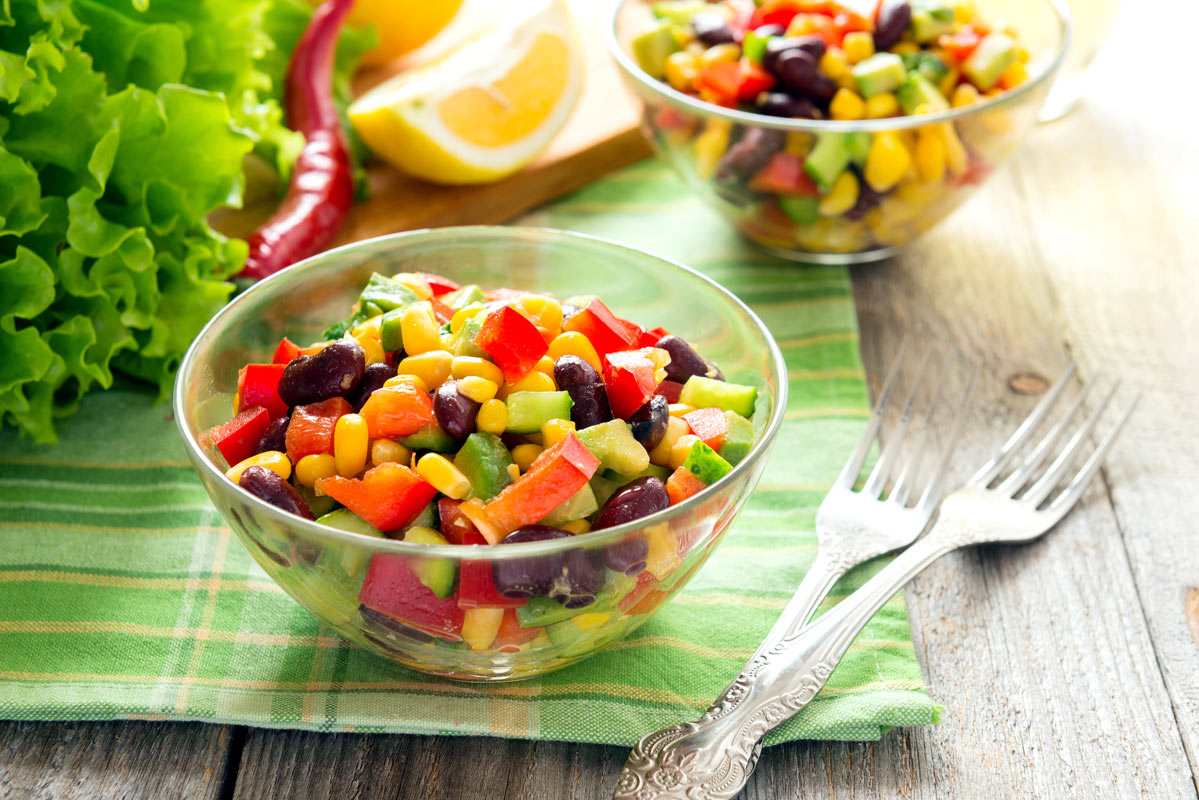
Ceviche de Porotos Negros (Black Bean Ceviche)I enjoyed this dish at the wonderful Cervecería Rural in Litueche. It’s a salad of black beans (red kidney beans make a great alternative) dressed in the style of a ceviche marinade. Some versions have all the ingredients tossed together, but Rural’s chef presented it as a beautifully composed salad. Ingredients For the dressing: 1… view recipe
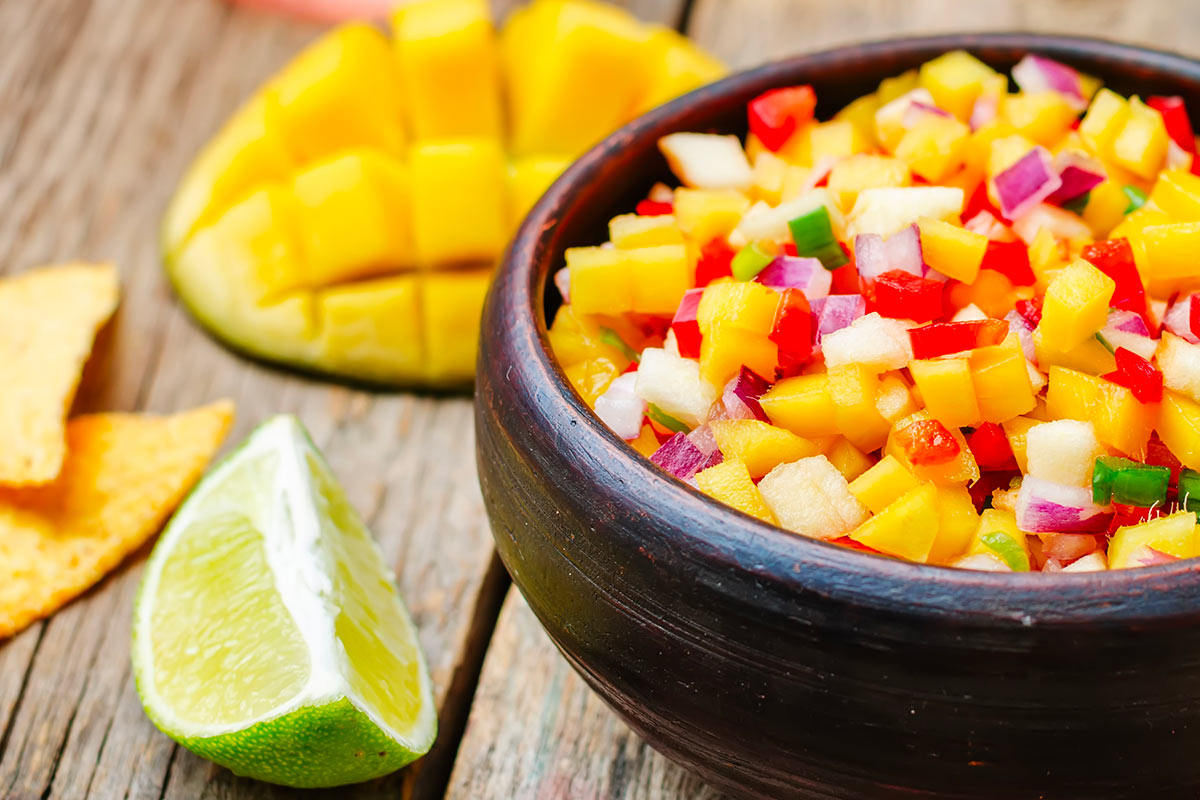
Roasted Chicken with Mango and Nut SalsaRoasted chicken is the little black dress of the table, welcome on the menu of a dinner party or a weeknight meal. The following bright-tasting salsa is also terrific with fish, a popular entrée in Chile, a country with over 2,000 miles of Pacific coastline. Dice the vegetables extra fine and serve the salsa with… view recipe
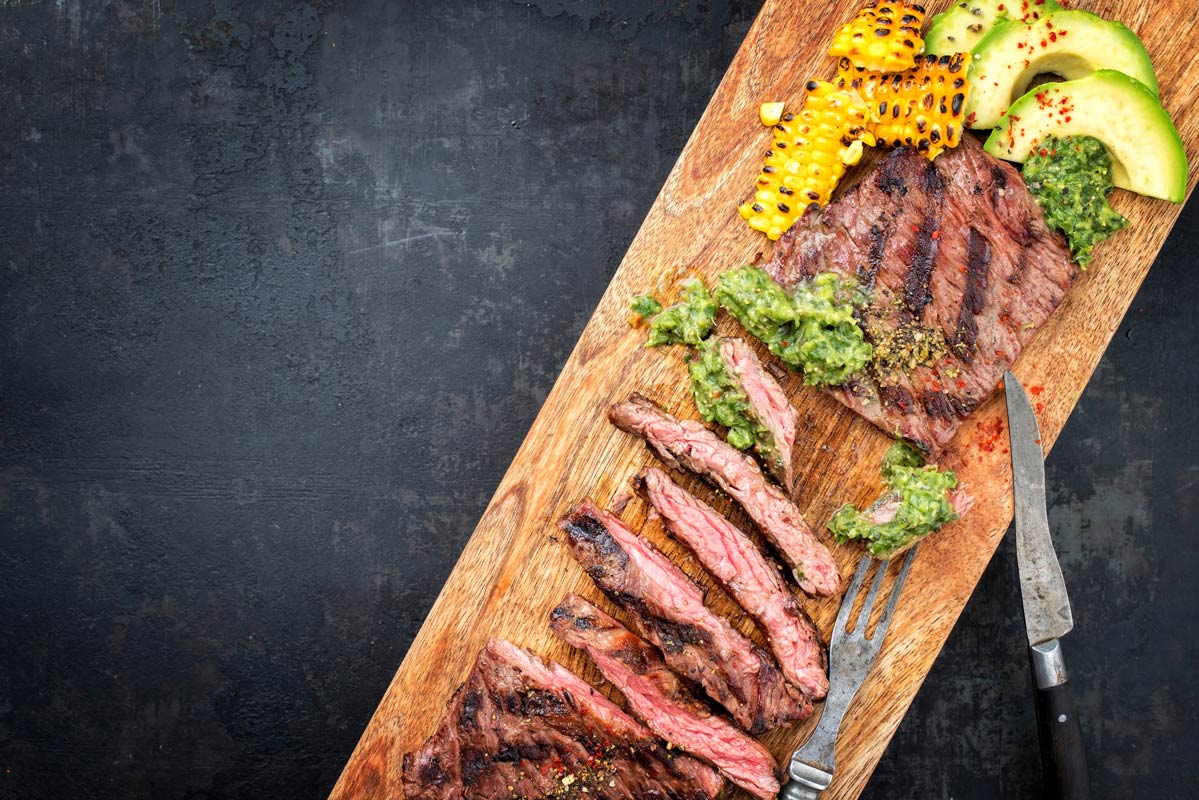
Flank Steak with Avocado ChimichurriTo make this lean cut of beef tender, three steps are needed: a long marination, a fast grilling, and slicing against the grain—in the opposite direction of its meat fibers. Ingredients For the steak: 2 tablespoons extra virgin olive oil 2 tablespoons red wine vinegar 1/2 teaspoon coarse salt (kosher or sea) 1/2 teaspoon freshly… view recipe
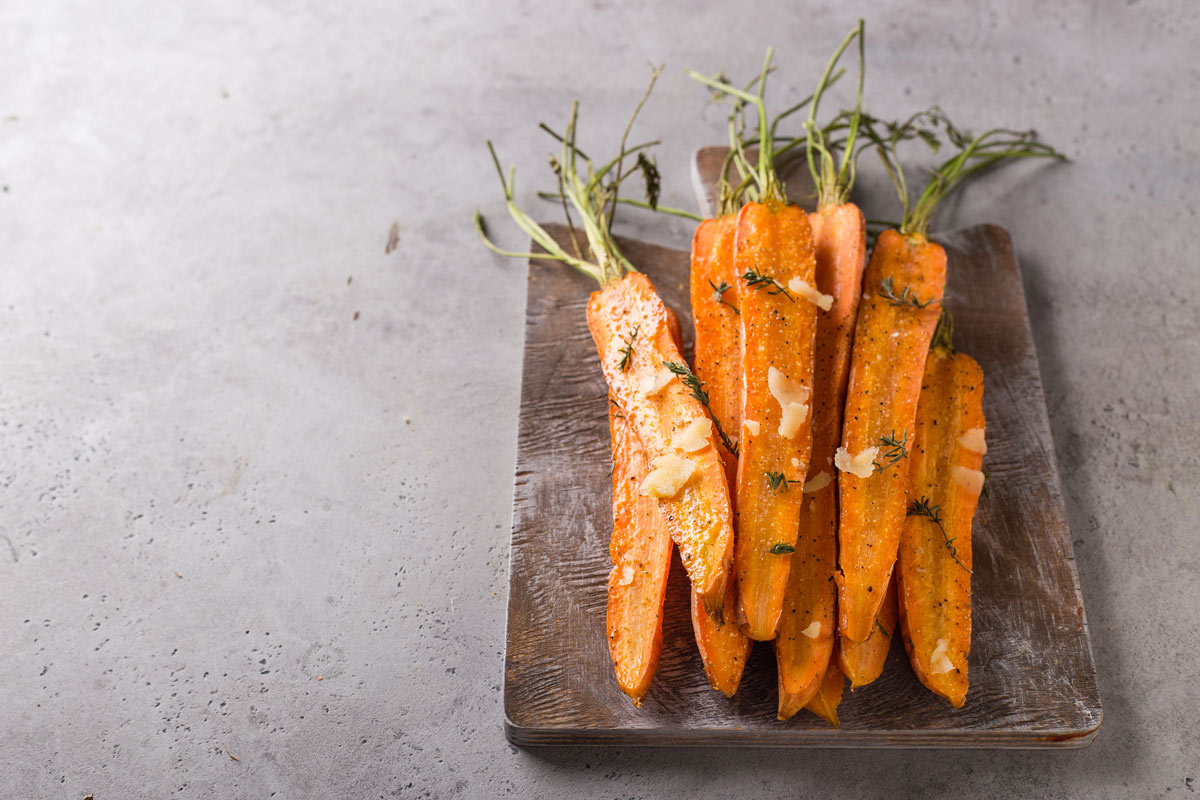
Roasted Parmesean CarrotsThis might be my new favorite way to eat carrots, which, like most vegetables, grow huge in Central Chile’s fertile soil. Marinated in olive oil and spices, then coated in freshly grated Parmesan cheese, the carrots are roasted until tender. They’re great with chicken, pork, or lamb. Ingredients 8 large carrots, peeled and trimmed 3… view recipe
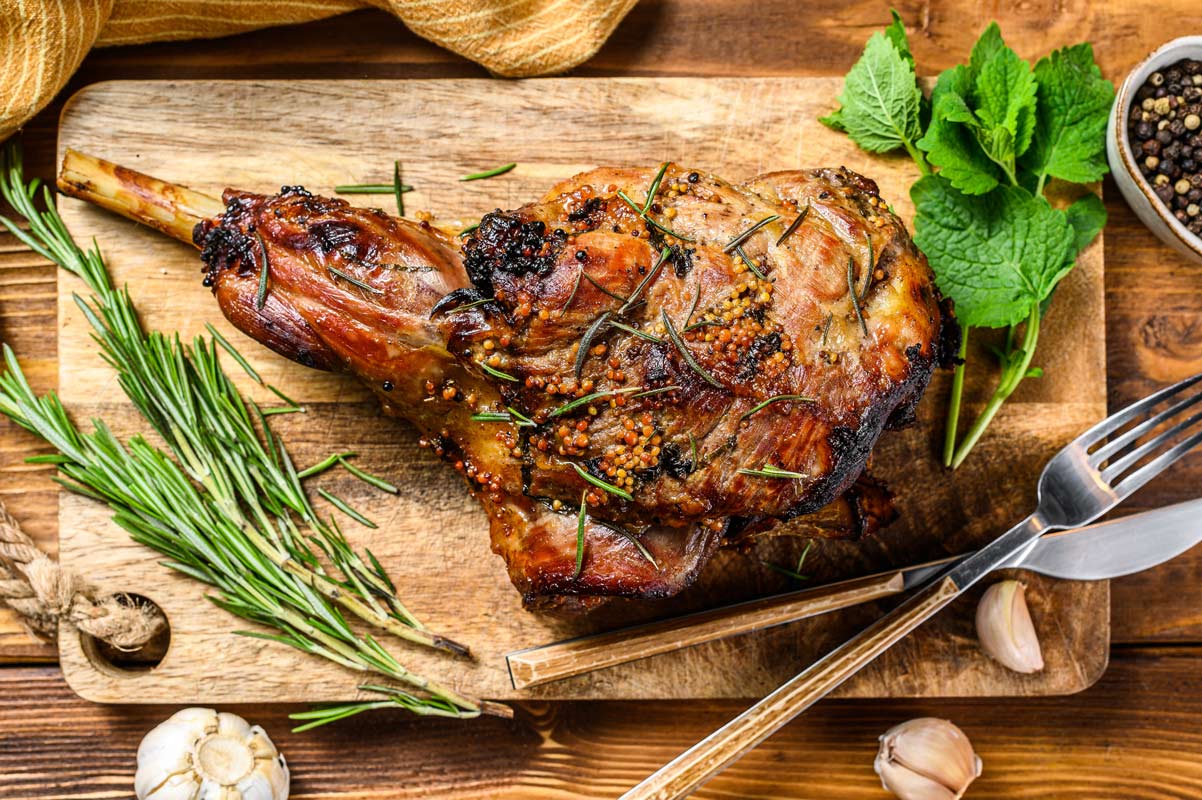
South Americans usually take a simple approach to their meats. This salt- and herb-based liquid, called salmuera (the precursor to chimichurri), was used by gauchos, the nomadic cowboys of South America, to baste proteins when cooking over live fire.
Ingredients
1 1/2 cups water
2 tablespoons coarse salt (kosher or sea)
1 1/2 teaspoons freshly cracked black peppercorns
3 cloves garlic, peeled and smashed
1/4 cup chopped fresh herbs, such as mint, rosemary, or thyme
1/2 teaspoon hot red pepper flakes One 5- to 6-pound leg of lamb Extra virgin olive oil
Directions
Combine the water and salt in a small saucepan and bring to a boil. Stir until the salt dissolves. Add the peppercorns, garlic, herbs, and hot red pepper flakes. Let cool. In the meantime, build a medium fire using charcoal or wood. (You can cook the lamb on a gas grill, too.) Generously oil the lamb on all sides with olive oil. Arrange on the grill grate. Grill the meat, turning occasionally, until the lamb is done to your liking, about 2 to 2 1/2 hours, basting often with the salmuera. Carve the lamb, then serve with more olive oil.

 Cold Avocado and Cucumber Soup