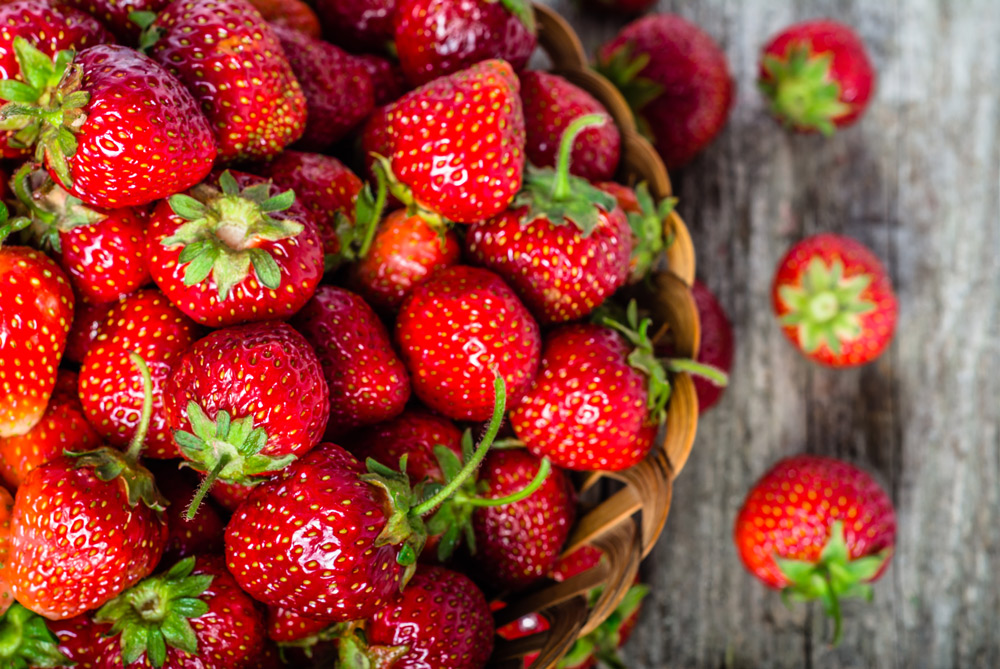
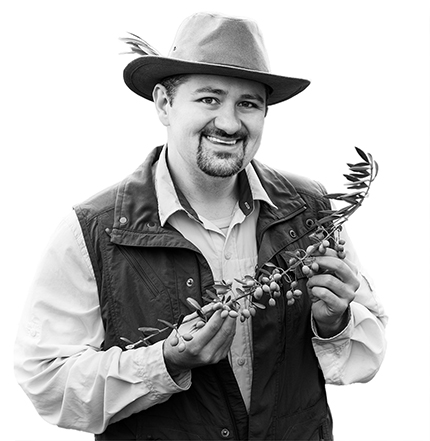
My wife, Meghan, and I enjoyed this simple salad on the first day of our first Chilean olive oil expedition, and we recreated it as soon as we returned home. For an equally delicious variation, substitute blueberries and chopped walnuts for the strawberries and almonds.
Ingredients
6 strips thick-cut bacon, diced
10 ounces fresh spinach, sliced into thin strips
1 quart ripe strawberries, hulled and sliced
1/2 cup extra virgin olive oil
Juice of one lemon
1 teaspoon honey or more to taste
Coarse kosher or sea salt to taste
Freshly ground black pepper to taste
1/4 cup sliced almonds
Directions
Step 1
Place the bacon in a cold skillet and bring the heat to medium. Cook the bacon until the fat is rendered and the bacon is crisp, 6 to 8 minutes. Drain the bacon on paper towels and set aside. Arrange the spinach and strawberries in a large serving bowl.
Step 2
Make the dressing: Combine the olive oil, lemon juice, honey, and salt and pepper in a small bowl. Whisk to mix. Taste and add more honey or salt or pepper as needed. Just before serving, drizzle the dressing over the salad, tossing gently to mix. Top with the reserved bacon and the almonds.
Perfect for Your Summer Table, Three Astonishingly Good Extra Virgin Olive Oils
from an Award-Winning Chilean Producer
Among the best I have ever tasted, these vibrant custom blends are incredible on fresh produce (especially vine-ripened tomatoes), grilled meats, breads, and much more.
All are Club exclusives, available nowhere else.
As always, all have been certified by an independent lab to be 100 percent extra virgin.
These just-pressed oils were rushed to the US by jet to preserve their amazing flavors, aromas, and healthful polyphenols.
“Hi, Tee-JAY! Yeah, so good to hear from you in these crazy times…” So begins an upbeat message left on my voicemail in late March by my friend, the irrepressible Juan José Alonso; he and his brother, Ignacio, are among Chile’s most passionate premium olive oil producers.
He was very optimistic about the upcoming harvest (which was more than a month away) and hoped that I could visit, having been
grounded in 2020. Perhaps it was magical thinking, but I dared to believe I might travel to Chile this quarter, my first international
trip as the Olive Oil Hunter in over a year.
However, soon after Juan José’s call and before travel plans were made, a surge in coronavirus cases in the Southern Hemisphere forced Chile to close its borders for a second time.
Sure, I was disappointed. Chile has long been a key player in my plan to supply Club members with award-winning fresh-pressed extra virgin olive oils year-round. I miss the warm, friendly people, the colorful late fall foliage, the festive harvest parties, tasting the fragrant, just-pressed oils with producers, and watching dueling breezes from the Andes and the Pacific Ocean tease the silvery leaves of the olive trees.
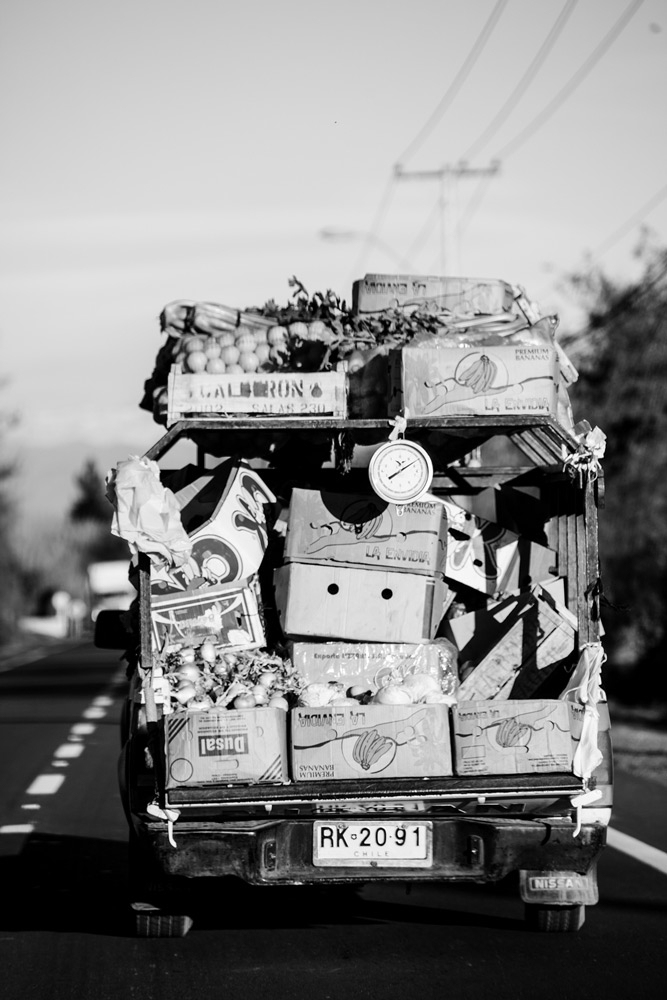
Traveling the Ruta Cinco from Santiago to Central Chile, my Merry Band of Tasters and I often found ourselves trailing slow-moving produce trucks. Precariously loaded with boxes of fresh fruit and vegetables, this mobile mercado service to rural towns and villages. The size and quality of the food crops grown here always astounds me. I love to prowl markets and roadside stands looking for new foods and flavors.
Why Chile, Why Now?
But I knew the strong relationships I’ve built over the years, such as the one with the award-winning Alonso family, were enough to overcome this season’s challenges.
When I founded the Fresh-Pressed Olive Oil Club, I knew little about Chile, which hangs like a slender necktie on the western edge of South America. Its 2,600-mile length includes seven major
climatic subtypes and innumerable microclimates. The Mediterranean climate of Central Chile, with its hot dry summers, mild winters, and high daytime/nighttime temperature differentials, has made the
country an agricultural powerhouse: it is known worldwide for its wines and alternate-season fruits and vegetables. Surprisingly, olea
europaea wasn’t planted commercially in Chile until the 20th century. Since 2005, I have met and worked with the country’s top New World producers. Quality-obsessed, they are determined to do everything right, even if it means breaking with Old World traditions.
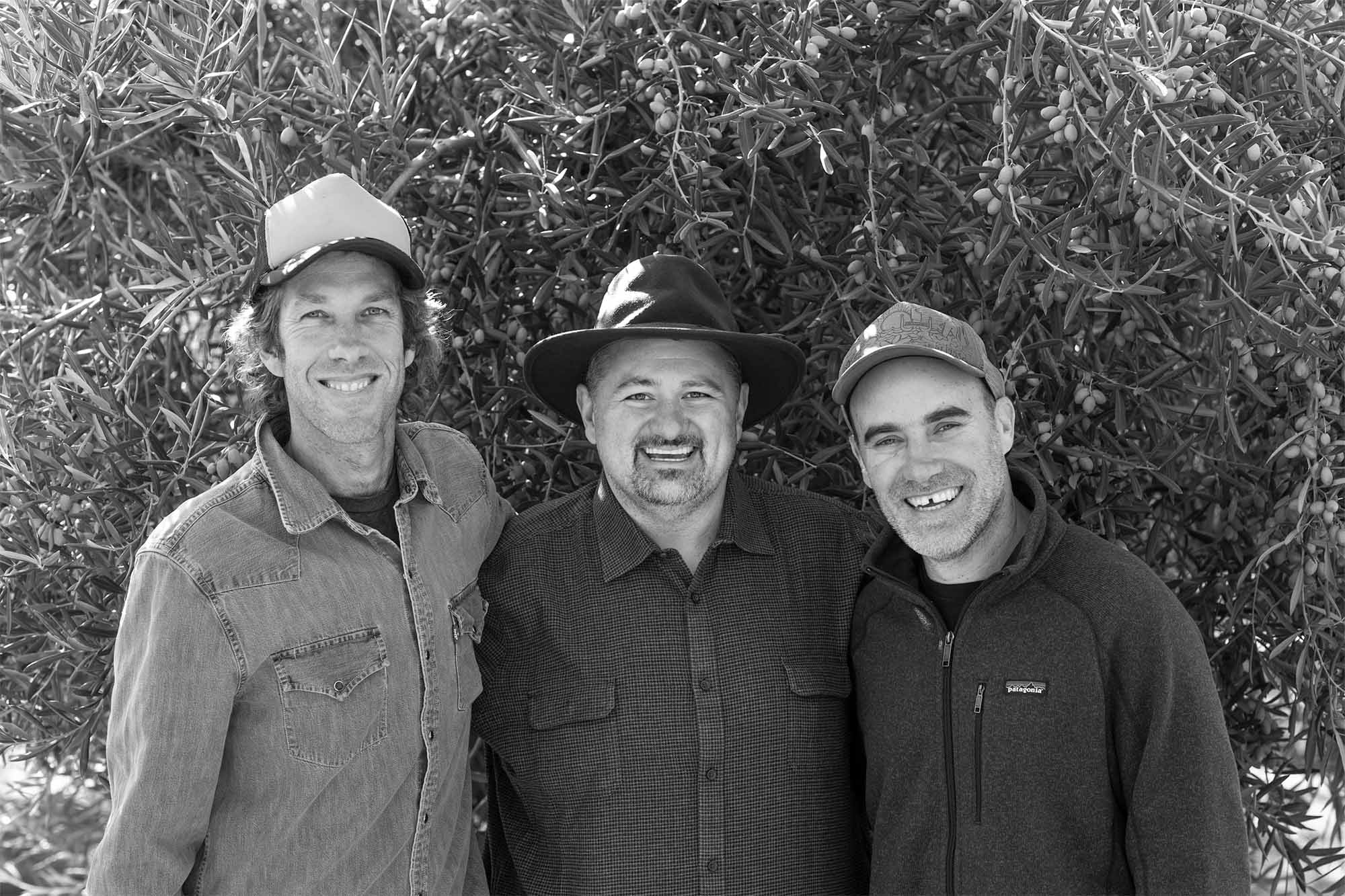
Taken in 2019, this photo reminds me yet again of the enormous importance in the premium olive oil world of relationships. Juan José (left) and Ignacio Alonso (right) are like my brothers from another mother, intuitively knowing what’s needed to satisfy the evolved palates of my Club members, even when thousands of miles separate us. I’m hopeful that next year we can resume our in-person collaborations, our visits to the Pobeña farm, and our casual olive oil-soaked suppers. In the meantime, the family is thrilled to share with you one of their best harvests in years.
And Why This Producer?
The Alonso family is among them. They manage some 1,100 acres of olive trees, a state-of-the-art mill, and two trendy brick-and-mortar stores in Santiago. Last year’s virtual collaboration with the farm—called Pobeña—was so successful, I decided to reprise it for the recent harvest. The property’s many microclimates and multiple olive varieties enabled us to create three outstanding and also very distinct oils.
In his voicemail and in subsequent Zoom conversations, Juan José (known to family and friends as “Juanjo”) confirmed that he and his staff were eager to translate my high expectations to another trio of exceptional extra virgin olive oils, regardless of whether I was able to visit in person. “Don’t worry about the oils,” he said reassuringly. “Everything will be as usual…better than usual!”
He was especially cheered by the fact that the groves received
much-needed rainfall during the growing season, interrupting an
epic drought (the worst in a millennium) that has plagued the country for more than a decade: the fruit, he reported, was
gorgeously plump and abundant.
Juanjo is well acquainted with my strong preference for green,
early harvest oils with high polyphenol levels,
but he advised me that the olive fruit—actually,
all fall fruits grown in Central Chile—was 1 to 2 weeks slower to ripen this season due to a bout of unseasonably cold weather during the Chilean summer. He and his team, which I trust implicitly, opted to delay the harvest until each olive varietal reached its flavorful and nutritional peak. Not only was that fine with me, but the extension gave us more time to handle the logistics of selecting and shipping fresh sample oils between hemispheres, creating
unique blends, reserving premium air cargo space, and taking care of other details. In the meantime, the Alonso crew sent me videos—lots of videos!—so I could follow the action.
I worked closely with José Manuel Reyes, Alonso’s general manager; Juan Carlos Pérez, the company’s agronomist (read more about him below); and Juan Francisco González, who absorbed the responsibilities of master miller Miguel Ángel Molina when Molina left to pursue opportunities closer to his home. I also recruited (again) the indispensable help of Chilean olive oil expert Denise Langevin (read more about her below). She traveled to the Pobeña farm—some two hours on rural roads from her home—to be my proxy, and, via Zoom, joined me in evaluating the sample oils and perfecting the blends. Luckily, we have similar palates.
Liquid Gold, Meet Summer Produce
To me, it’s an antipodal miracle that you can be splashing these outstanding just-pressed extra virgin olive oils on fresh summer produce (tomatoes, sweet corn, and more!), when Chile is battening the hatches for winter. As you treat yourself and your friends and family to these exquisite examples of “liquid gold,” please take a moment to reflect on the dedicated people you’ll meet in the following article, who invested so much of themselves in these oils and are very proud to put them on your table. Enjoy all three in good health.
Happy drizzling!
T. J. Robinson The Olive Oil Hunter®
This Quarter’s First Selection
Producer: Denise Langevin, Agricola Pobeña, Comuna de La Estrella, O’Higgins Region, Chile 2021
Olive Varieties: Arbequina, Frantoio, Leccino
Flavor Profile: Mild
If you were to meet Denise Langevin, the multitalented and gracious namesake of this quarter’s mild selection, you’d understand what I mean when I describe this oil as embodying characteristics of her personality: sweet and amiable yet also complex, gently sophisticated, and spicy at times.
Denise, an international olive oil judge and expert consultant, was indispensable last year as my “palate on the ground” in Chile, and I was honored that she enthusiastically agreed to assist our Club for the second year in a row. On a spirited Zoom call with me and my Merry Band of Tasters, she proclaimed, “I am a #1 fan of the Fresh-Pressed Olive Oil Club,” making me blush and also sigh with relief.
During the global pandemic, the only way the Fresh-Pressed Olive Oil Club has been able to uphold its mission of providing you with the world’s finest, freshest olive oils is through the relationships I have cultivated over time with the talented, passionate, and resourceful artisans described in each quarter’s Pressing Report. In this challenging past year, my gratitude has deepened, to a degree I might not have believed possible, for this supportive network that connects us across the world through our passions and pursuits.
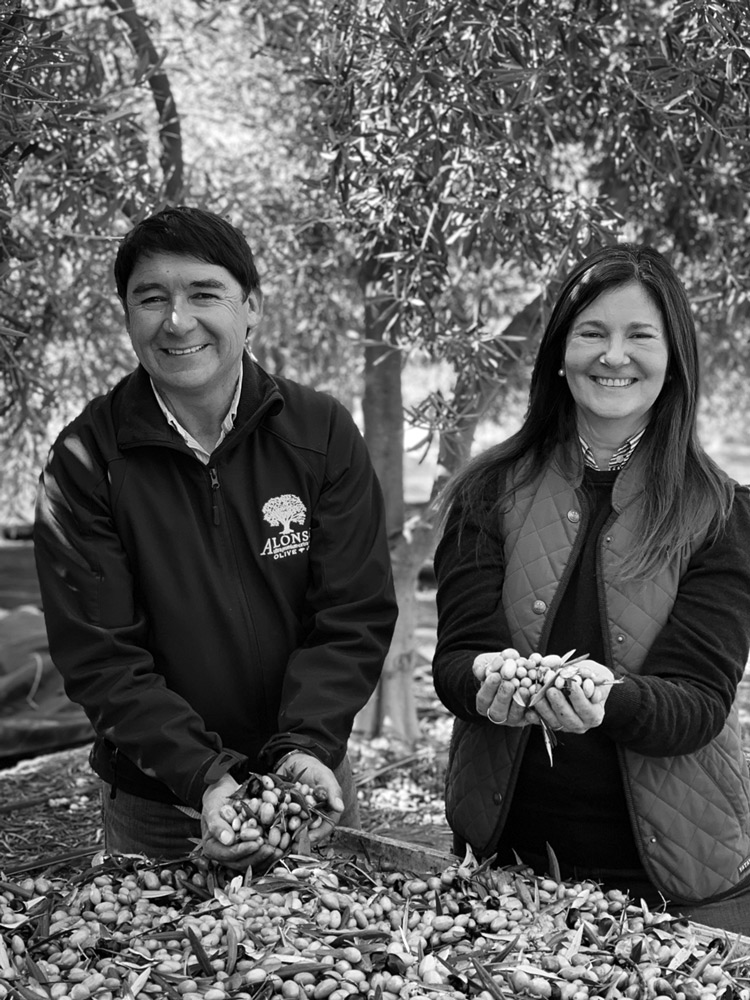
Juan Carlos Pérez (left), the agronomist at the Pobeña farm, and Denise Langevin, my Chilean “palate on the ground” (right), cradle beautiful just-picked olives that will soon be pressed at the mill. Delighted to be my representative in Chile for the second year in a row, Denise made numerous trips to the farm to assess the fruit and sample the just-pressed oils. The entire Alonso production team rallied enthusiastically to provide her with everything she needed to help me secure this quarter’s Club selections.
I met Denise eight years ago at the Don Rafael Estate, one of Chile’s pioneering ultra-premium olive oil producers, where she was working as the director of exports. A native Chilean, Denise’s family is of French and English ancestry; the name Langevin comes from Normandy. Her expertise is in demand the world over as a judge of olive oil competitions from Tokyo to Berlin.
As the Chilean top-quality olive oil world is a small one, Denise has known the Alonso family for a decade. She is very familiar with Pobeña, the expansive, award-winning Alonso farm, and its ingenious practice of cultivating olive varietals in different microclimates, which allows for the development of distinct flavor profiles, even in the “same” olive.
Acting as my proxy, Denise made the two-hour drive from her home to the Pobeña farm several times to collaborate with the Alonso harvest team and taste samples of their most promising just-pressed oils, which were overnighted to me in North Carolina. Then I engaged the genius of master miller Duccio Morozzo della Rocca, in Italy, my trusted collaborator and longtime friend of the Club. The three of us conducted tri-continental Zoom blend sessions, testing and tinkering for (delicious) hours, to create the one-of-a-kind oils you have just received. (I never thought I’d write the phrase “tri-continental Zoom blend sessions,” but clearly there’s a first time for everything!)
Denise noted that the welcome spring rains—which, at least for now, ended Chile’s decade of drought—resulted in more complex, more rounded oils this season. (Remember that spring in the Southern Hemisphere is our autumn.) She was smitten by two Arbequina oils, pressed from fruit grown in separate microclimates, that were intriguingly divergent, like identical twins with contrasting personalities—one gentle, one stronger, both lively. We opted to blend them with a pair of herbal, aromatic Italian varieties, Frantoio and Leccino. “They all bring something to the party,” Denise noted.
I like imagining the different olive varieties, intermingling as though at a harvest party. A great blend is a celebration as well as a collaboration—not only among the individuals who make it but also among the olive varieties. As Denise observed, super-astutely, “When making a blend you don’t always need ‘the best actor.’ You need the right actor.”
Denise, her husband, and their four children live on a picturesque small farm of about five acres, with rabbits, a horse, an alfalfa field, lemon trees, and a bountiful garden. When she’s not helping to produce extraordinary olive oil, Denise crafts mouth-watering artisanal foods, including oil-cured sun-dried tomatoes and Limoncello liqueur.
“T. J.,” she confided, “I was so sure you would be able to travel that I made extra sun-dried tomatoes just for you.” As if I weren’t missing Chile enough already!
When I asked Denise how she’d sum up the exquisite blend we created, she paused, then said, ever so thoughtfully, “All the qualities you find in the fruit, you find in the bottle.” She’s absolutely right, and I can’t wait for you to experience it for yourself.
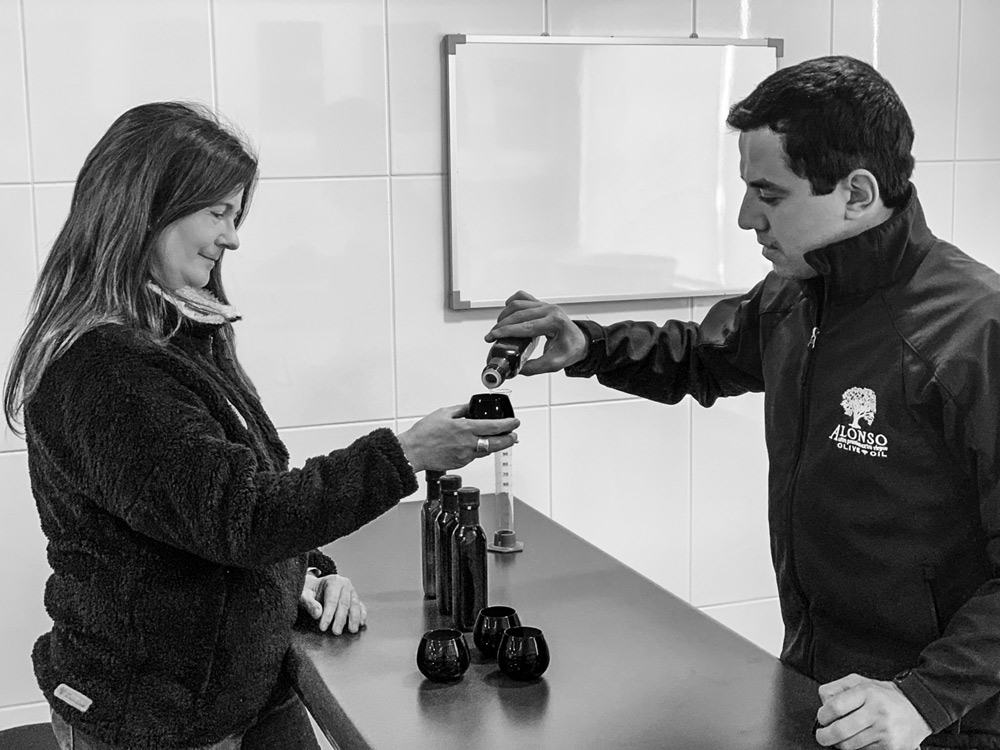
Juan Francisco González, the mill manager, pours Denise Langevin a sample of that day’s liquid gold. (Note the dark color of the glasses to allow the taster to focus entirely on olfactory impressions rather than on the oil’s color.). Seeing this photo transported me to the mill and to that very table, where my Merry Band and I have tasted oils many times in harvests past. It’s an exciting, anticipatory thrill to first “meet” the fresh-pressed oils that will become key players in our blends.
Impressions and Recommended Food Pairings
Golden green in the glass, this multifaceted oil combines the Spanish varietal Arbequina with two Tuscan varietals, Frantoio and Leccino. It’s surprisingly complex on the nose, very grassy. My tasters and I detected green apple, green banana, almonds, vanilla and sweet baking spices, celery, and butter lettuce. Round and luxurious in the mouth, evoking artichoke, melon, hazelnuts, a ginger-like spiciness, and the throat-tickling pepperiness of watercress. Straddles fruitiness and bitterness with finesse. Expect a protracted, spicy finish.
Pair this versatile olive oil with eggs or dairy, including yogurt, smoothies, or vanilla ice cream; mild fin fish, such as cod or sole; shrimp or lobster; simple pasta dishes, such as cacio e pepe; mild cheeses; chicken; fresh corn; melon and prosciutto; boiled potatoes; and white rice. We’d bake with it, too—quick breads and lemon bars, for example.
This Quarter’s Second Selection
Producer: Alonso, Agricola Pobeña, Comuna de La Estrella, O’Higgins Region, Chile 2021
Olive Varieties: Picual, Koroneiki, Arbequina
Flavor Profile: Medium
Since I became the Olive Oil Hunter, I’ve heard surprisingly similar stories in Spain and Portugal: a father, nearing retirement, announces he wants to start producing high-quality extra virgin olive oil with his adult children. And just like that, educational plans are put on hold, career paths are redirected, and lives ultimately change.
Chilean Juan José Alonso can relate. In 2008, he and his Master of Fine Arts degree were figuratively plucked from the California surf (he was likely still clinging to his surf board), deposited in the fertile O’Higgins Region in Central Chile, and given the task of finding a suitable property for growing olive trees. His father, Abel, a successful shoe magnate, wanted to create a separate legacy business for his five children, and was inspired by the olive groves in his native Spain. So “Juanjo” (with a soft “j”) and his brother Ignacio dutifully took on the job of creating and running the olive farm. The family named it Pobeña after Abel’s beloved village in Basque country.
Today, the Alonso label is highly respected by producers and in-the-know-consumers alike for its premium extra virgin olive oils. In fact, the New York International Olive Oil Competition (NYIOOC) just awarded Alonso another gold medal, this time for its 2020 Picual. Alonso has also been recognized by Flos Olei, the prestigious annual guide to the world’s best olive oils.
In a Zoom call, Juanjo (who resembles a young Dennis Quaid) reiterated his family’s ongoing dedication to quality. Whereas other producers might delay harvesting their olives to maximize the oil content, aiming for as much as 18 percent, Alonso harvests early, while the olives are still green and polyphenol-rich, and is satisfied with 11 or 12 percent. Juanjo said, “I have a lot of beautiful fruit this year, which will yield high-quality oil.” He laments that so many other small Chilean producers have bowed to market forces and now sell their fruit to bulk producers. Referring to quality, he added, “I don’t like the way things are going.”
Currently, the Pobeña farm is celebrating a record harvest. Which is wonderful, because from year to year, farmers never know what surprises Mother Nature (or other forces) has in store for them.
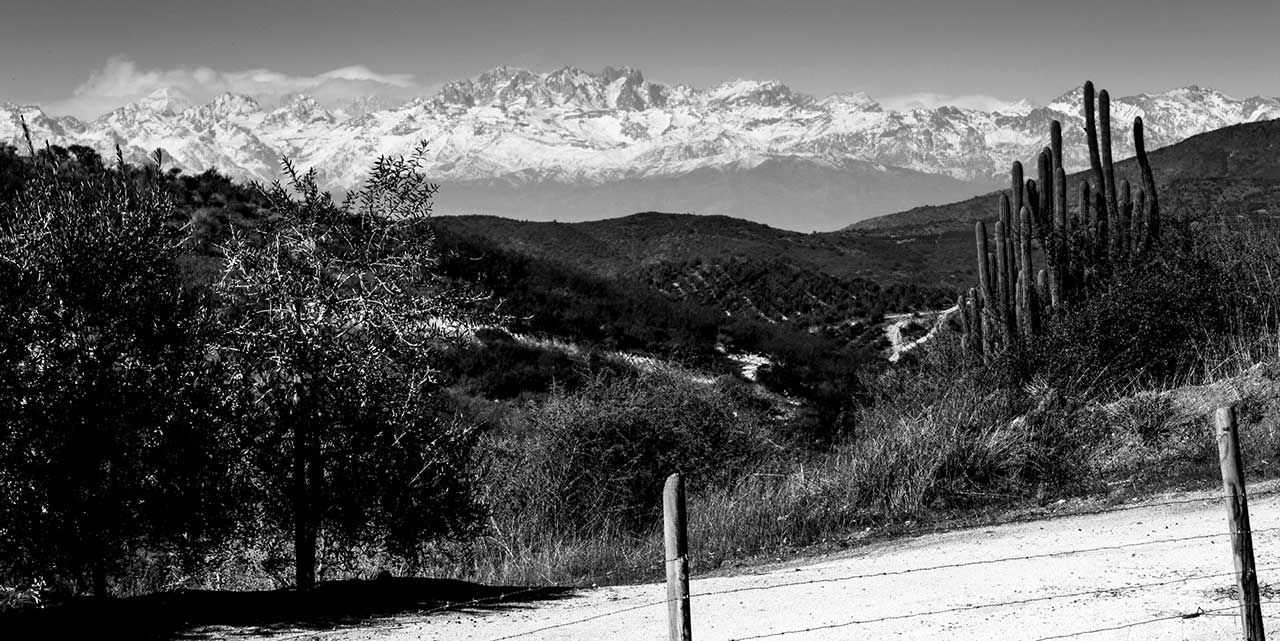
Many people would envy my current springtime view—the beautiful Blue Ridge Mountains —and not comprehend my longing for the majestic snow-capped Andes, standing like sentries over an otherworldly, late fall landscape. More than others in my archive, this photo illustrates Chile’s disparate climates. Notice the desert cacti and olive trees. Chile’s extreme geography protects the olive trees from disease and pests, one reason why the Alonso family consistently produces high-quality olive oils.
Last year, lack of rainfall was the big challenge for Pobeña. Strict, targeted water rationing sustained the trees. Fortunately, well-timed rains fell this season, a huge relief for Juanjo and his crew. (His 85-year-old father even supervised the digging of trenches in the groves to divert precious run-off to the farm’s reservoirs and 55-acre lake, all of which have been depleted by a decade-long drought.)
This year brought a different type of challenge. A key member of the team, master miller Miguel Ángel Molina, unexpectedly left for an opportunity closer to home. Even I was concerned about that. But I needn’t have been: it turns out there’s plenty of talent on the Alonso bench.
For starters, there’s the conscientious general manager, José Manuel Reyes. For the second year in a row, he coordinated the efforts of everyone involved in putting these exclusive olive oils on your table. It was not uncommon to receive emails or other communications from him at 11:30 p.m. (Though 5,000 miles apart, Chile and North Carolina are in the same time zone.) “Go to bed,” I implored him. “Get some rest!” He worked tirelessly to keep me apprised of everything, spent hours on the road ferrying my olive oil samples to the airport, and pestered the local DHL office with phone calls until he knew they’d been safely delivered. I can’t thank him enough for the important role he played in my collaboration with Alonso.
Then there’s the farm’s humble agronomist, Juan Carlos Pérez. (Read more about him below.) In the wake of Miguel’s departure, Juan Carlos has come into his own, taking on the mantle “Boss of the Farm,” meaning he has the last word when it comes to the health of the olive trees and their fruit. Twenty-nine-year-old Juan Francisco González has been with the Pobeña farm since the beginning. “He was involved with everything,” said Juanjo. Despite his youth, Juan Francisco has years of experience and training behind him (some of it in Italy). He is now in charge of the state-of-the-art Alfa Laval mill, one of the finest and best maintained in Chile. His talent as a miller is formidable.
The distinctive Alonso label fronts a very special blend of Picual, Koroneiki, and Arbequina. The former two olives, which hail from Spain and Greece, respectively, are rare transplants in Chile. Both represent less than 3 percent of the country’s olive varietals. It is an intriguing, well-balanced Club exclusive that will pair well with your seasonal menus. See below for specific suggestions.
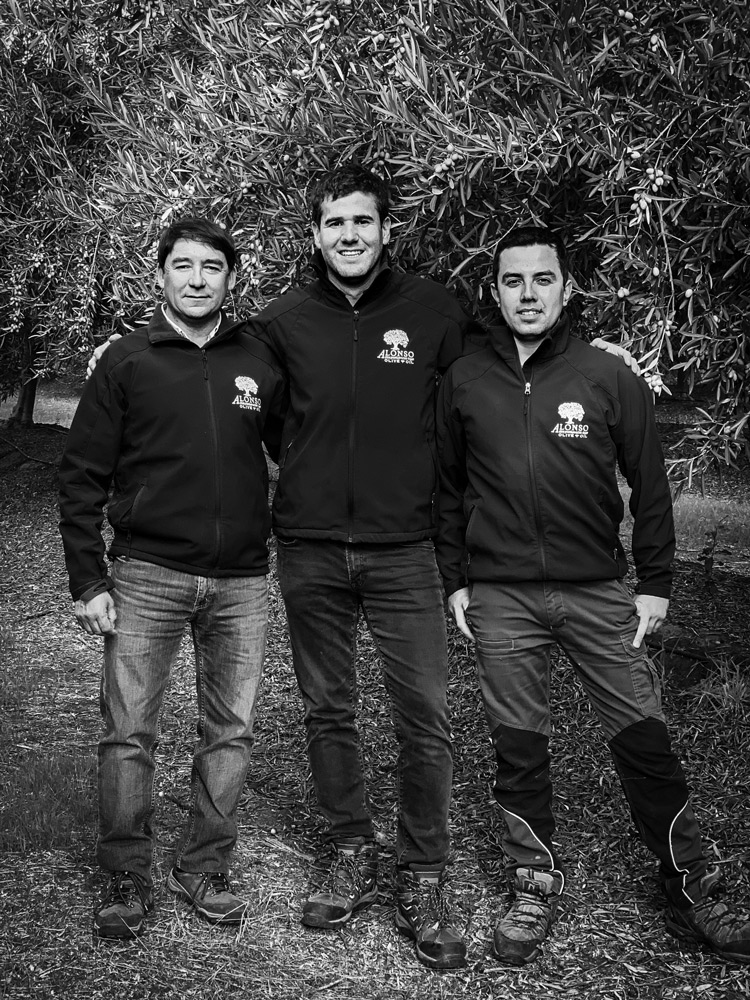
Meet three men who worked tirelessly to put the Pobeña farm’s finest extra virgin olive oils on your table. Agronomist Juan Carlos Peréz (left) is the conscientious steward of the olive trees. Juan Francisco González (right) is a longtime employee who is now in charge of Alonso’s state-of-the-art mill. Then, there’s the indefatigable José Manuel Reyes, sales director and logistician extraordinaire. He liaised between all players to ensure my expectations for Club members’ extra virgin olive oils were met. Please remember these gentlemen when you taste these phenomenal oils!
Impressions and Recommended Food Pairings
Emerald green and simply intoxicating. Tomato leaf, sweet basil, lime zest, fennel, kiwi, arugula, and green peppercorns waft from the tasting glass. This oil is even more exciting in the mouth, proffering fresh baby spinach, radicchio, pesto, rosemary, wild foraged greens, pine nuts, and Szechuan peppercorns. A spectacular, perfectly calibrated oil that will tempt you to drink it straight from the bottle or flaunt it at the farmer’s market.
Imagine it on vine-ripened tomatoes or their derivatives, like tomato sauce, gazpacho, bruschetta, eggplant parmigiana, or pizza. Try it in pesto; on dark leafy greens; grilled beef or pork; white beans; artichokes; roasted potatoes or root vegetables; sourdough bread; and cooked grains.
This Quarter’s Third Selection
Producer: El Agrónomo, Agricola Pobeña, Comuna de La Estrella, O’Higgins Region, Chile 2021
Olive Varieties: Coratina, Frantoio, Leccino
Flavor Profile: Bold
The story of how Juan Carlos Pérez came to the Pobeña farm has the feel of a fairy tale or a fable. One day, a talented agronomist peered with curiosity through the fence bounding the olive grove he tended and saw another farm on the other side that was just starting out. Seeking greater opportunity, he opened the gate in the fence and walked into a new position that changed his life.
And that’s pretty much how it happened. A native of the central Estrella province, Juan Carlos studied agricultural science and embarked on his career in the early 2000s with a highly esteemed farm in the north, at the time the most advanced producer of high-quality Chilean olive oil. He then transitioned to another quality-focused olive farm to be closer to his family home. At both posts Juan Carlos learned a great deal, but he lamented that their systems were already in place when he arrived. To some, that would be a relief and a comfortable way to build a career, but Juan Carlos craved a personal and professional challenge. His family was squarely behind him: “If you think you can do it, go for it,” they encouraged, as he debated whether he should take the compelling job over the fence.
Joining the Alonsos’ brand-new project in 2009, Juan Carlos was excited to start from scratch—he eagerly took on responsibilities that included planting trees, brainstorming methods of irrigation, and, overall, managing the grove’s ecosystem. With his quiet confidence and measured insight, he earned the honorific bestowed on him by his colleagues, “Boss of the Farm.”
The olive trees Juan Carlos planted have developed beautifully since the very first Alonso harvest, in 2011. One of the things I prize most about this grove is its depth: there are very few other farms in the world from which I could taste a dozen different harvest-fresh olive oils and pronounce 10 of them superlative enough to grace my table. That consistency and diversity of excellence is the result of Juan Carlos’s work. “He built this place,” said José Manuel, the general manager, when the three of us debriefed recently over Zoom.
Juan Carlos triumphed over Chile’s decade of drought with innovation and hard work.
He oversaw the transplanting of about 120 acres of high-density tree growth in order to cultivate more drought-resistant olive varieties. While high-density groves are easier to harvest and, in years with ample rain, can yield more fruit, lower density plantings provide more space between trees for the roots to seek water
in dry periods. His team also pruned some trees quite radically last year—“bonsai-style,” he quipped—which, he predicts, will give them more years of life. “Next year, we hope to publish a paper about this process,” he announced.
El Agrónomo (“the agronomist”) in his native habitat: Juan Carlos Pérez inspects one of the beloved Coratina olive trees he planted at the outset of the Alonso project in 2009. An agronomist, in the broad definition of the title, studies the cultivation of plants. For Juan Carlos, it means that he oversees the development of the olive trees on the Pobeña farm and works to create the best possible fruit for the award-winning Alonso olive oils.
With knowledge of every craggy corner of the farm’s many microclimates, Juan Carlos has identified hidden pockets where water accumulates during the winter rains. Rather than allowing the precious moisture to evaporate, he “harvests” the water for use in the parched summer months.
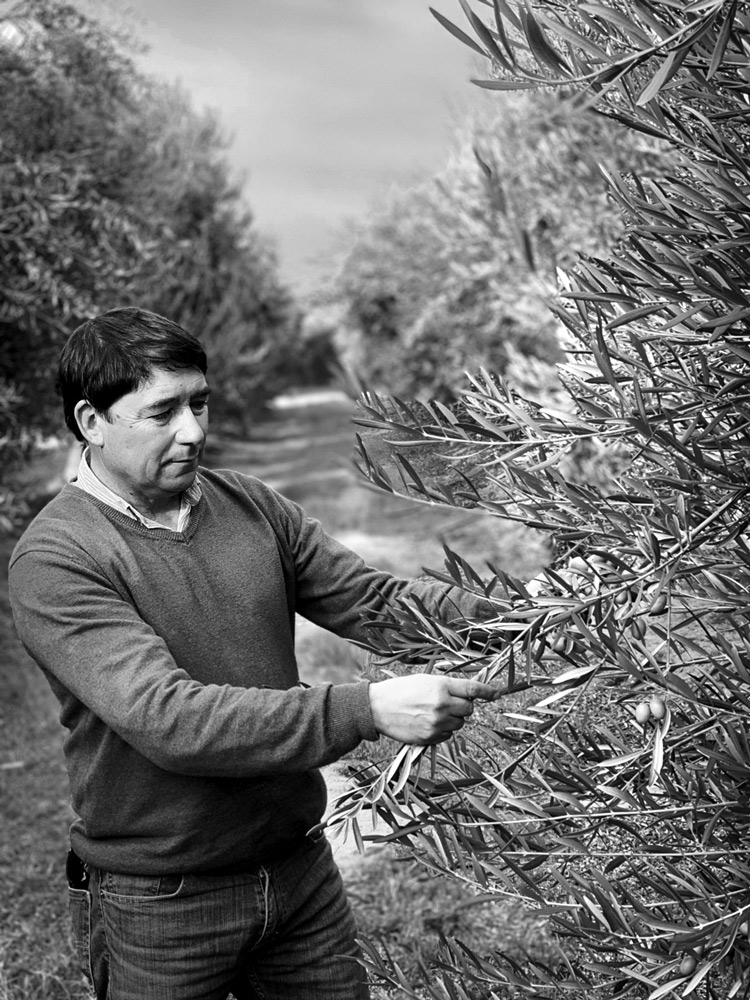
A day in the life of El Agrónomo (“the agronomist”) begins early, with a meeting of the 80-member harvest team, at which Juan Carlos lays out the tasks of the day. After the morning meet-up, he makes a thorough tour of the farm to plan the following day. Sampling the olives from every sector, Juan Carlos adjusts his plan as the fruit matures, up to the minute and down to the individual planting.
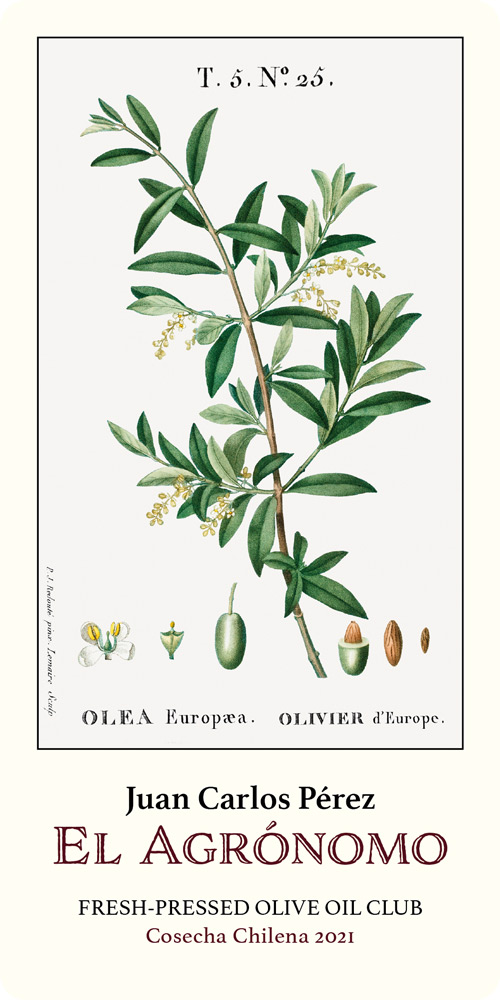
Knowing my preference for early-harvest olive oils, Juan Carlos moved his team mid-day to another part of the field as the olives there entered the “magic window,” the point of maturity when they are at the peak of flavor and polyphenol content. He identified two different plantings of Coratina, harvested separately, that provide the backbone of this spectacular, robust blend, which attains perfect harmony in the company of two other Italian varietals, Frantoio and Leccino. Juan Carlos expressed deep pleasure at having his name on the label, which features a vintage illustration of an olive plant—I could see the smile radiating through his reserved demeanor, even over Zoom. The whole team is proud of him.
With his 12-year tenure at Pobeña, the loyal and committed Juan Carlos is an anomaly in Chile, where people change positions and occupations frequently. El Agrónomo’s relationship with his trees is “like a marriage,” he says—a happy, healthy marriage. “I’m not looking over the fence,” he added, with gentle humor.
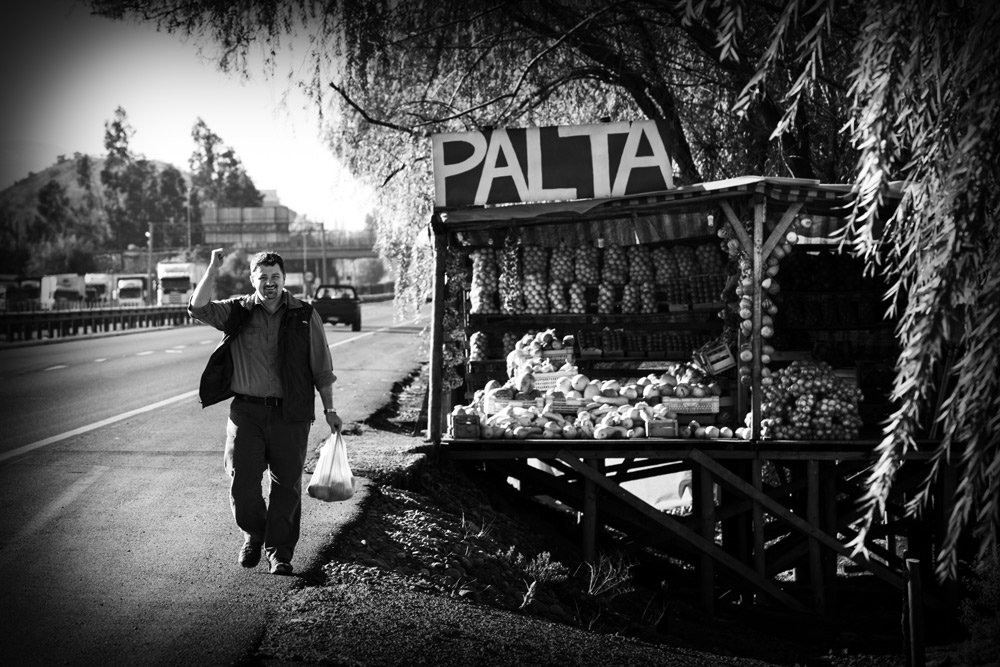
¡Gol! as the Chileans cheer when they score in soccer. In this photo from the Chilean trip a few years ago, I have just scored a sack of gorgeous avocados (palta); it perfectly captures my jubilation at having scored three exquisite fresh-pressed olive oils for you, my Club members. It also reassures me that I’ll be back in Chile next year to re-experience its friendly people, striking landscapes, bountiful fresh produce, and the thrill of the olive oil hunt on your behalf.
Impressions and Recommended Food Pairings
This chartreuse-colored oil is herbaceous and delightfully grassy on the nose. Inhale, and enjoy the fragrant interplay of almonds,
celery, artichoke, arugula, and dark leafy greens. Very harmonious on the palate, summoning associations of fresh hops, basil, lime zest, green tomato, celery, nasturtiums, walnuts, chopped flat-leaf parsley, and pungent white pepper. The latter flavors the long finish.
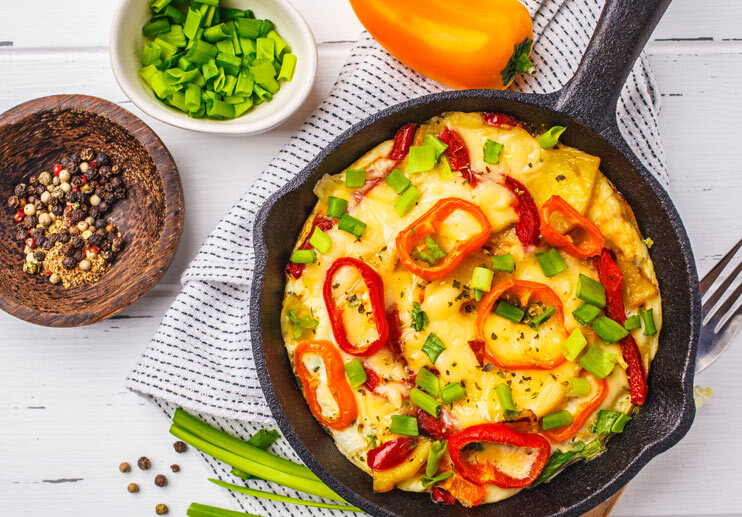
Eggs and bell peppers will be among the first things I try with this bold, beautiful oil. Perhaps paired with a salad of baby kale and walnuts. Other delicious options include pasta puttanesca or ratatouille; tuna, sardines, or salmon; duck; game meats; lamb; aged cheeses; and grilled or roasted vegetables.
Olive Oil and Health
Does eating a Mediterranean diet protect against memory loss and dementia?
Adapted from an article from the American Academy of Neurology, May 6, 2021
Eating a Mediterranean diet that is rich in fish, vegetables, and olive oil may protect your brain from protein buildup and shrinkage that can lead to Alzheimer’s disease, according to a new study. The research is published in the May 5, 2021, online issue of Neurology.
The study looked at abnormal proteins called amyloid and tau. Amyloid is a protein that forms into plaques, while tau is a protein that forms into tangles. Both are found in the brains of people with Alzheimer’s disease but may also be found in the brains of older people with normal cognition.
The Mediterranean diet includes high intake of vegetables, legumes, fruits, cereals, fish, and monounsaturated fatty acids such as olive oil, and low intake of saturated fatty acids, dairy products, and meat.
“Our study suggests that eating a diet that’s high in unsaturated fats, fish, fruits and vegetables, and low in dairy and red meat may actually protect your brain from the protein buildup that can lead to memory loss and dementia,” said study author Tommaso Ballarini, PhD, of the German Center for Neurodegenerative Diseases (DZNE) in Bonn, Germany. “These results add to the body of evidence that show what you eat may influence your memory skills later on.”
The study involved 512 people. Of those, 169 were cognitively normal, while 343 were identified as being at higher risk of developing Alzheimer’s disease. Researchers looked at how closely people followed the Mediterranean diet based on their answers to a questionnaire asking how much they ate of 148 items over the previous month. People who often ate healthy foods typical of the Mediterranean diet, like fish, vegetables, and fruit, and only occasionally ate foods not typical of the Mediterranean diet like red meat, received the highest scores, for a maximum score of nine.
Cognitive skills were assessed with an extensive test set for Alzheimer’s disease progression that looked at five different functions, including language, memory, and executive function. All the participants had brain scans to determine their brain volume. In addition, the spinal fluid of 226 study participants was tested for amyloid and tau protein biomarkers.
Researchers then looked at how closely someone followed the Mediterranean diet, and the relationship to their brain volume, tau and amyloid biomarkers, and cognitive skills. After adjusting for factors like age, sex, and education, researchers found that in the area of the brain most closely associated with Alzheimer’s disease, each point lower people scored on the Mediterranean diet scale equated to almost one year of brain aging.
When looking at amyloid and tau in people’s spinal fluid, those who did not follow the diet closely had higher levels of biomarkers of amyloid and tau pathology than those who did. When it came to a test of memory, people who did not follow the diet closely scored worse than those who did.
“More research is needed to show the mechanism by which a Mediterranean diet protects the brain from protein buildup and loss of brain function, but findings suggest that people may reduce their risk for developing Alzheimer’s by incorporating more elements of the Mediterranean diet into their daily diets,” Ballarini said.
Reference: Ballarini T, van Len DM, Brunner J, et al. Mediterranean diet, Alzheimer disease biomarkers and brain atrophy in old age. Neurology. 2021; doi.org/10.1212/WNL.0000000000012067
Kudos from Club Members
Blessed It really is the best in the world. I feel blessed to have found this club. Not only is it incredibly healthy for you, but so very delicious.
Deb S.Sugar Land, TX
Absolutely delicious Hi — Just a short note to let you know how much I love the olive oils you are choosing and sending. They are absolutely delicious and I refuse to share them other than for a taste. I use them every day in my cooking and with a variety of foods. I never knew that olive oil had a taste or that it should have flavor. Every time I taste they remind me of new-mown hay or what a fat honey-filled clover blossom tastes like.
Mary G.Jackson, MI
The best olive oil ever! We joined the Club, got the first shipment this week, tonight a delicious salad with the amazing Alonso Olive Oil, it was the best olive oil ever! Makes each dish stand out.
Larry B.Fort Lauderdale, FL
Your oil is nectar of the gods I’m mad at you! You, sir, have spoiled me. This is some of the most beautiful, divine, delicious stuff I have ever experienced…your oil is nectar of the gods. And now, I find myself actually bringing a bottle with me when I travel. Because nothing compares to what you are offering! You’ve ruined any other oil for me. Keep up the great work!!! Seriously, I love this stuff! With gratitude for having found you!
Christine L.Vashon, WA
Noticeably enriched flavor I’m loving them so far! Everything I’ve made with them has had a noticeably enriched flavor. I also love having the 3 different types to choose from depending on what I’m making.
Alegra O.Virginia Beach, VA
I love you, Olive Oil Hunter! I can’t begin to describe how much I love being a member of the Olive Oil Hunter’s Club. My husband and I are vegetarians and salads are a staple part of our lives. These incredibly flavorful and delicious olive oils are a mainstay in our meals. My father had
an olive ranch in Northern California when I was a child, so the taste of real olive oil, tasting like real olives, is a part of my DNA. Over the years I have despaired because olive oils have become no more than the equivalent of barely digestible engine oil.
When the first batch of olive oil arrived, I seriously almost wept. No olive oil sold in stores these days anywhere—and I mean ANYWHERE—can compare in flavor or aroma as these small-ranch pure olive oils. We so look forward to when our oil shipment arrives. We set it up to taste-test, and then as I prepare dinner, my husband reads to me the description and background information the Olive Oil Hunter writes for each olive oil that he offers, so we know exactly what we’re getting, from where, and by whom. This olive oil subscription is the best thing I’ve discovered in a long, long time! I love you, Olive Oil Hunter!
Alexis H.Santa Fe, NM
In love Dear Sir,
I am in love with your company and your olive oils as they have changed my life in terms of adding just the right touch to the culinary delights I produce, from appetizers to main dishes and even some desserts! I use your products faithfully every day, much to the delight of my family, friends, and my physician as my heart health has never been better! Unfortunately I always run out completely before my next order is due, and I anticipate receiving the e-mail I just did that my order has been shipped. Nothing I can find in the finest gourmet stores even comes close to your selections, and I have now added several other friends to your customer list.
Thank you, Beverly M.Powell, OH
I refuse to share Hi — Just a short note to let you know how much I love the olive oils you are choosing and sending. They are absolutely delicious and I refuse to share them other than for a taste. I use them every day in my cooking and with a variety of foods. I never knew that olive oil had a taste or that it should have flavor. Every time I taste they remind me of new-mown hay or what a fat honey-filled clover blossom tastes like.
Mary G.Jackson, MI
Great pressing report Compliments and kudos!!! I just want to start off this morning by thanking you for the wonderful olive oil and the great pressing report about your hard work and dedication! Because of your great oil, nothing compares to staying at home and trying new recipes!
Bonnie H.Minot, ND
Abundance in a bottle I’m so sad…I just used the very last drop of my bottle of Finca Galvez Picual oil sent several months ago. I’d love another bottle or 2 if you have any extra stock! This oil is perfect with a summer salad of fresh herbs and baby greens from the garden. Addictive even.
I joined because of Dave Asprey’s recommendation (“Bulletproof” guy) and at first didn’t have any idea what I was going to do with all that oil. Having little exposure to good olive oil, I must confess I just didn’t get the EVOO craze. Store-bought oil didn’t smell or taste good to me, and that’s all I’d ever really experienced.
So I decided to enroll because Dave is a compelling guy and I trust him. I figured I’d try it and cancel my subscription in a few months. But over time, as I read your quarterly booklet (love it!!) and tasted the different oils, I began to feel so lucky and looked forward to finding recipes just for the oils. I’ve given bottles as gifts (including a copy of your write-up so the receiver knows just how special that bottle is!) to rave reviews.
I’ve even taken to using the wonderful oils on my skin—the color and aroma are an amazing lift and olive oil is second to none as a moisturizer! Total luxury. I hope you are not insulted by this!
Thanks for offering these oils for subscription. I love that the oils come from small growers dedicated to quality. The places you visit sound amazing (a travel blog would be fascinating)! Someday, if you ever decide to offer excursions to outsiders, I can think of nothing more interesting than visiting olive groves. “Olive Oil Hunter Excursions”? Has a nice ring. Bucket list!
You’ve made me a fan. So appreciate what you do—it has such incredible value to us and brings a bounty of simple delight with each pour. Abundance in a bottle. Thanks again!
Kristen H.Oak Park, IL
Recipes
Wine-Braised Potatoes with Garlic and ChilesThe humble potato, a native of South America, takes on a sophisticated persona in this satisfying dish. Ingredients 2 pounds Yukon gold or red potatoes, peeled and cut into 1- to 1 1/2-inch chunks2 medium garlic cloves, peeled and minced1 bay leaf1/2 teaspoon hot red pepper flakes1 1/4 teaspoons merquén or smoked paprikaCoarse salt (kosher… view recipe
Celery and Greens Salad with Lemony VinaigretteCelery, usually a wan understudy on a platter of crudités or a bit player in soups, takes on a starring role in this refreshing salad. A rather strong-flavored vegetable, it really benefits from a short soak in olive oil and lemon juice. Ingredients Zest and juice of 1 lemon (preferably Meyer) or lime3 tablespoons extra… view recipe
Frittata with ArugulaThis infinitely customizable recipe is good for breakfast, lunch, or dinner—warm or at room temperature. The following version is vegetarian, but you can add cooked sausage, diced ham, or crispy bacon to the mix. Serve with toasted country-style bread if you’re not watching your carbs. Ingredients 5 ounces fresh baby arugula (about 4 big handfuls),… view recipe
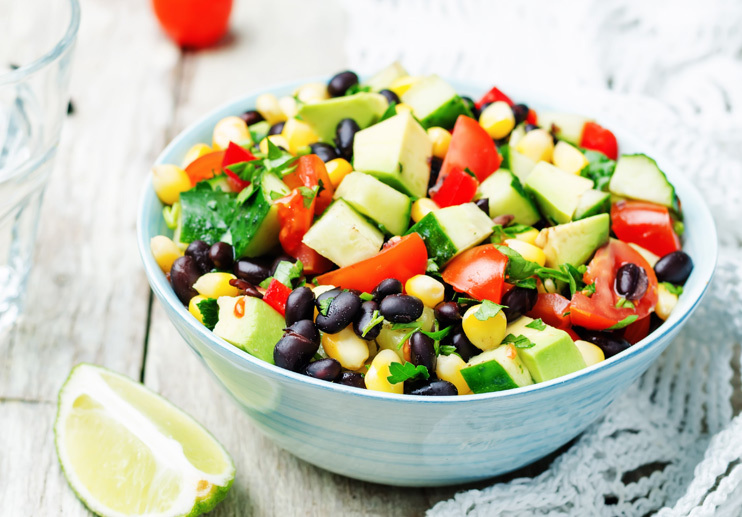
Avocado Corn SaladThis vibrant salad, which features several of Chile’s iconic ingredients, is a great companion to barbecued meats. Stir in cooked pasta (shells or rotini), and it can serve as a colorful and healthful main course. Ingredients For the salad: 1 pound grape or cherry tomatoes, red, yellow, or a mix, halved3 ears of cooked sweet… view recipe
Chili-Rubbed Skirt SteakRed meat is a staple in Chilean homes, with asados (barbecues) being a popular form of entertainment for families. Here, beefy-tasting skirt steak is marinated for several hours, then quickly grilled (preferably to medium-rare for maximum tenderness). Before serving, anoint it with additional fresh-pressed olive oil—Mother Nature’s perfect sauce. Pour a Chilean Cabernet Sauvignon. Ingredients… view recipe
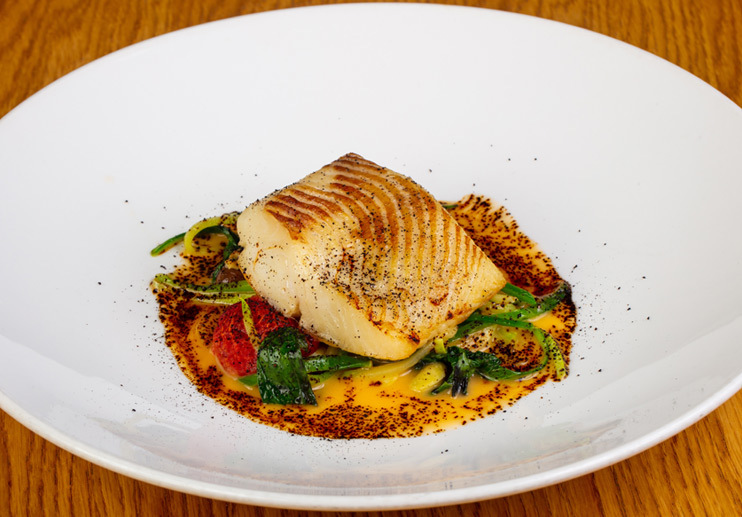
Pan-Roasted Halibut with Jalapeño VinaigretteWith its clean, mild taste, firm texture, and payload of omega-3 fatty acids, halibut pairs beautifully with robust extra virgin olive oils. It is among the largest flat fish in the world, weighing up to 500 pounds! Ingredients 2 tablespoons apple cider vinegar2 tablespoons very finely chopped shallot or red onionCoarse salt (kosher or sea)1… view recipe
Shrimp with Avocado Cilantro SauceShrimp preparations are a specialty of Chile’s small coastal villages. If you don’t want to fuss with skewers, grill the shrimp in a grill wok or grill basket. The sauce is best when made shortly before serving. Ingredients For the shrimp and marinade: 2 pounds jumbo shrimp, peeled and deveinedJuice of one large lime3 tablespoons… view recipe
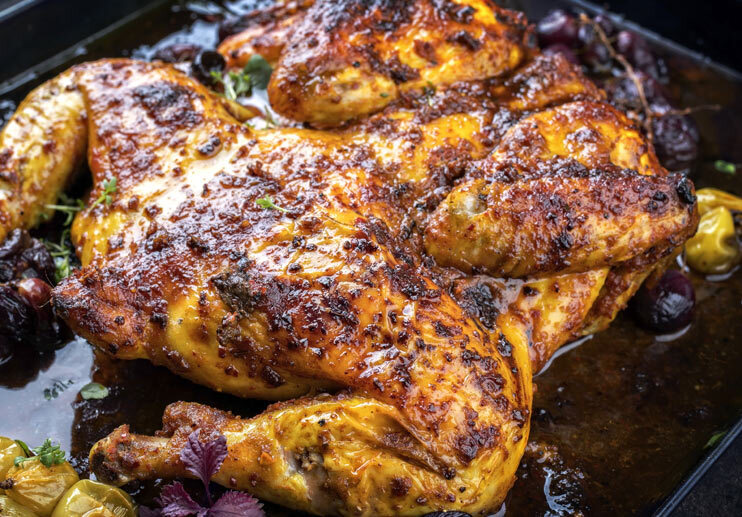
Spatchcocked Chicken with Cracked Olives and HerbsIf you’re intimidated by butterflying the chickens (spatchcocking), simply buy chicken halves for this recipe. They’ll cook faster than whole chickens. The chicken can be roasted in an oven (even a pizza oven) or grilled. Ingredients 2 roasting chickens, each 3 1/2 to 4 poundsCoarse salt (kosher or sea) and freshly ground black pepper6 garlic… view recipe
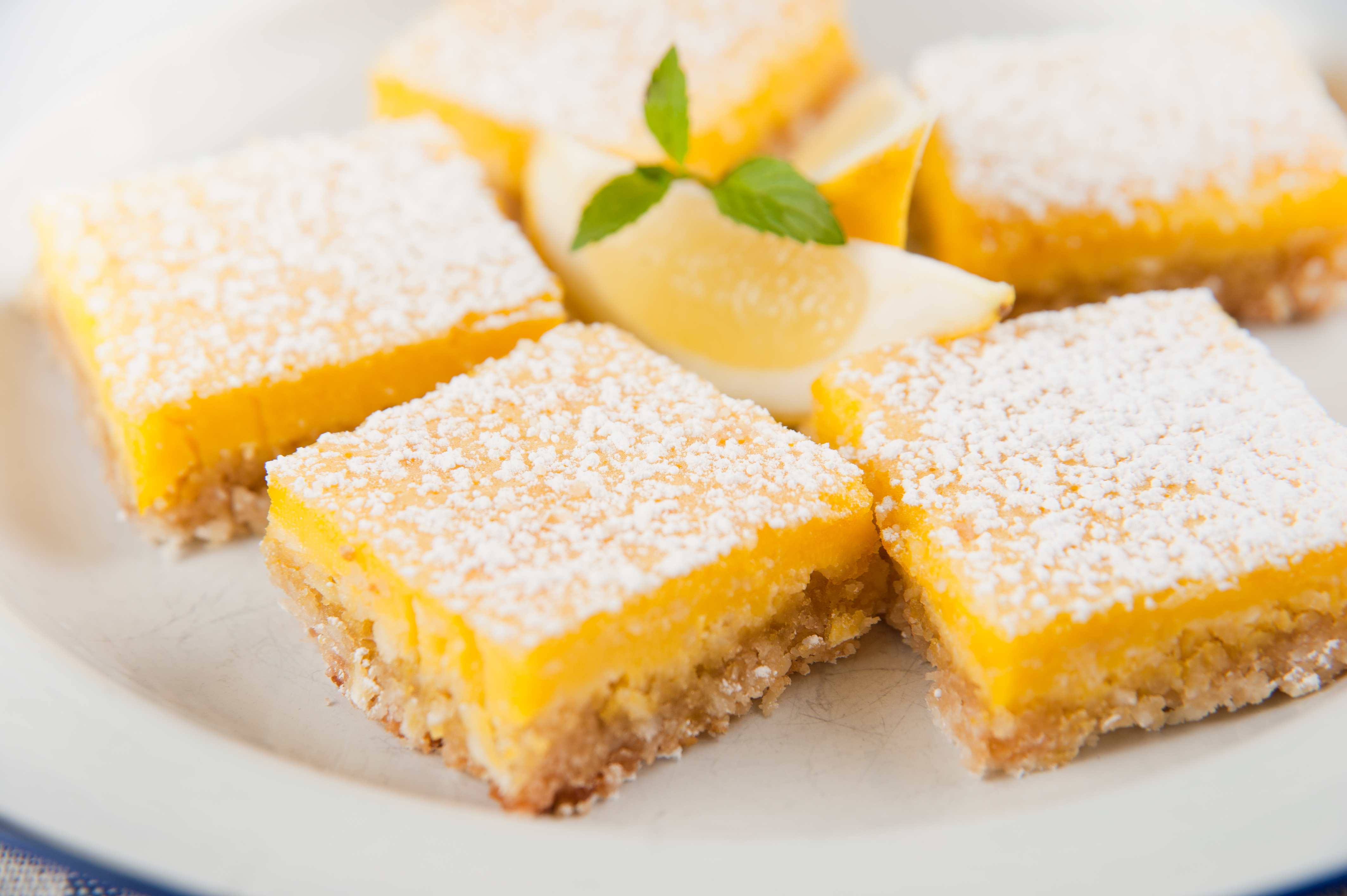
Lemon Bars with Olive Oil and Sea SaltOlive oils with sweet notes can be used for baking and are especially good in quick breads and bars like these. Ingredients For the shortbread crust: 1 1/4 cups all-purpose flour1/4 cup granulated sugar3 tablespoons confectioners’ sugar1 teaspoon finely grated lemon zest1/4 teaspoon fine sea salt10 tablespoons cold unsalted butter, cut into cubes For the… view recipe
Grilled Carrots with Avocado and MintChile is one of the world’s largest exporters of avocados (called palta), after the Quechuan word for “hanging weight”, but some 30 percent of the crop stays in the country and is used in many dishes. The pairing of grilled carrots with palta may seem unusual, but extra virgin olive oil presides over a beautiful… view recipe
The humble potato, a native of South America, takes on a sophisticated persona in this satisfying dish.
Ingredients
2 pounds Yukon gold or red potatoes, peeled and cut into 1- to 1 1/2-inch chunks
2 medium garlic cloves, peeled and minced
1 bay leaf
1/2 teaspoon hot red pepper flakes
1 1/4 teaspoons merquén or smoked paprika
Coarse salt (kosher or sea) and freshly ground black pepper
1/4 cup extra virgin olive oil
1 small Spanish onion, peeled and finely chopped
3/4 cup dry white wine, preferably Chilean
3/4 cup low-sodium chicken broth
1/4 cup lightly packed fresh flat-leaf parsley, chopped
Directions
Step 1
In a medium bowl, toss the potatoes with the garlic, bay leaf, hot red pepper, paprika, 1/4 teaspoon salt, and 1/2 teaspoon black pepper.
Step 2
In a large saucepan over medium heat, warm the olive oil until shimmering. Add the onion and 1/2 teaspoon of salt, then cook, stirring occasionally, until fully softened, 7 to 10 minutes. Stir in the potato mixture, then add the wine and broth. Bring to a boil over medium-high heat, then cover. Reduce the heat to medium and simmer, stirring occasionally, until a skewer inserted into the potatoes meets no resistance, about 30 minutes.
Step 3
Uncover and continue to cook, now stirring more often and adjusting the heat to maintain a gentle simmer, until the liquid has thickened and lightly coats the potatoes, about 7 minutes. Remove from the heat. Cover and let stand for about 5 minutes. Remove and discard the bay leaf and stir in the parsley. Taste and season with salt and black pepper. Note: Don’t stir the potatoes too vigorously or they’ll break apart and make the sauce gluey. Also, don’t reduce the sauce too far; as the potatoes sit off heat, they’ll continue to absorb the sauce.
Celery, usually a wan understudy on a platter of crudités or a bit player in soups, takes on a starring role in this refreshing salad. A rather strong-flavored vegetable, it really benefits from a short soak in olive oil and lemon juice.
Ingredients
Zest and juice of 1 lemon (preferably Meyer) or lime
3 tablespoons extra virgin olive oil
Coarse salt (kosher or sea) and freshly ground black pepper
10 medium celery stalks, strings removed, thinly sliced on the diagonal (about 4 cups)
2 cups lightly packed fresh flat-leaf parsley leaves, torn if large
1 medium head frisée, chicory, or escarole, cored and torn into bite-size pieces
1/2 cup hazelnuts or walnuts, toasted and finely chopped
Directions
In a large bowl, whisk together the zest and juice as well as the olive oil, then season with salt and pepper. Add the celery and toss, then let the mixture stand for 10 minutes. Add the parsley, frisée, and nuts, then toss again. Season to taste with salt and pepper.