Fresh-Pressed Olive Oil Club

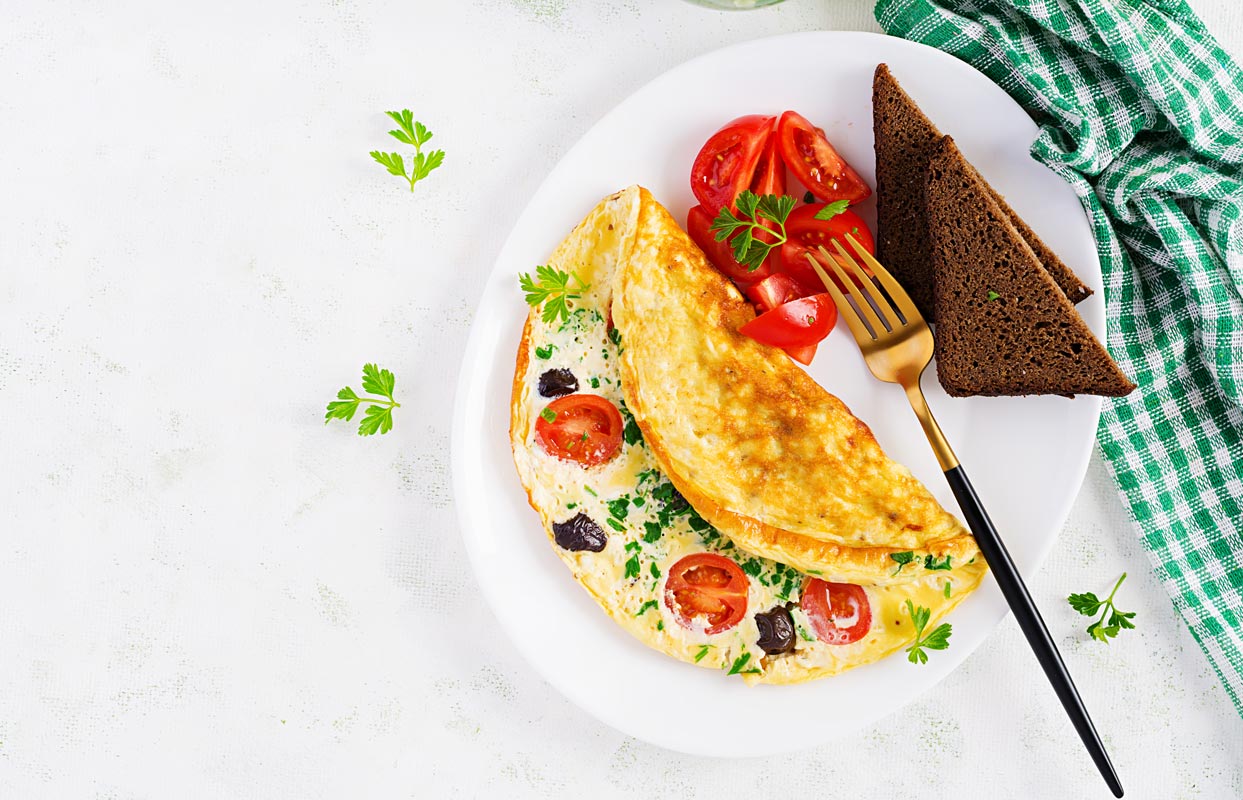
Mediterranean Omelet

I remember well from my days as a culinary student the importance of making a perfect omelet. It’s always on the final test! If you are out of practice, feel free to make scrambled eggs, topping them with the colorful vegetable mixture. Use two eggs for smaller appetites and three for heartier ones.

Ingredients

  • 1/3 cup diced pancetta or bacon
  • 4 to 6 large eggs, preferably room temperature Coarse salt (kosher or sea) and freshly ground black pepper
  • 3 tablespoons extra virgin olive oil, divided use 8 ounces cherry tomatoes, halved
  • 2 cups fresh baby spinach leaves, loosely packed
  • 1/4 cup kalamata olives, pitted and coarsely chopped
  • 3 tablespoons fresh flat-leaf parsley leaves, coarsely chopped
  • 2 teaspoons chopped fresh mint or chives 1/4 cup crumbled feta cheese

Directions

Step 1

Crack the eggs in a bowl (2 or 3 per omelet) and whisk them until frothy with salt and pepper.

Step 2

Heat an 8-inch skillet over medium heat. Add 1 1/2 tablespoons of olive oil. Add the spinach, cherry tomatoes, kalamata olives, and herbs. Sauté until the spinach wilts. Transfer to a plate and keep warm. Add 1/2 tablespoon of olive oil to the oil remaining in the pan.

Step 3

Pour in half the whisked eggs for one omelet. Let the mixture set for a minute or two. You have an option to keep it like a plain crepe or give it a little stir with a fork or rubber spatula to make it more like a classic omelet. Cook until the eggs are barely set (do not allow them to brown). Transfer to a plate. Quickly cook the remaining egg mixture in the remaining tablespoon of olive oil using the same method. Top each omelet with half the veggie mixture and sprinkle with the crumbled feta cheese. Fold in half to serve. 

Serves 2 — Recipe adapted from gypsyplate.com
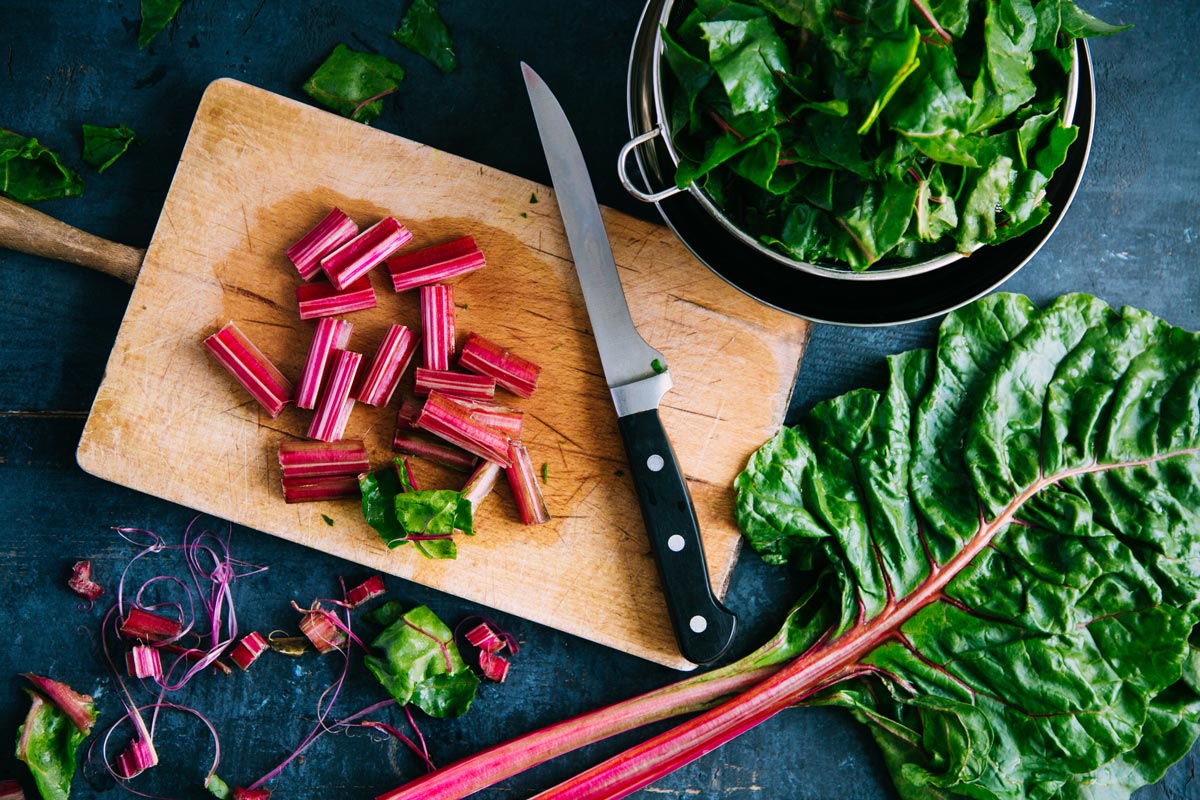
Rainbow Chard with Olive Oil and Pine Nuts

This is an easy, healthful, and colorful side dish.

Ingredients

  • 1 bunch (12 ounces) rainbow chard
  • 2 garlic cloves, peeled and smashed
  • 3 tablespoons extra virgin olive oil
  • 1/4 teaspoon coarse salt (kosher or sea), or more to taste
  • Freshly ground black pepper
  • 2 tablespoons freshly grated asiago or Parmigiano-Reggiano cheese
  • 2 tablespoons toasted pine nuts

Directions

Step 1

Wash and dry the chard leaves. Remove the stems and roughly chop the chard leaves; thinly slice the tender part of the stems and add that to the mix (discard the large tough parts of the stems).

Step 2

Heat a large skillet over medium-high heat. Add the olive oil. Add the smashed garlic and chard and cook for 4 minutes, stirring frequently, until wilted and bright green.

Step 3

Discard the garlic cloves and serve immediately. Serve with asiago and pine nuts.

Serves 4 — Recipe adapted from acouplecooks.com

Pasta with Roasted Cauliflower and Blue Cheese

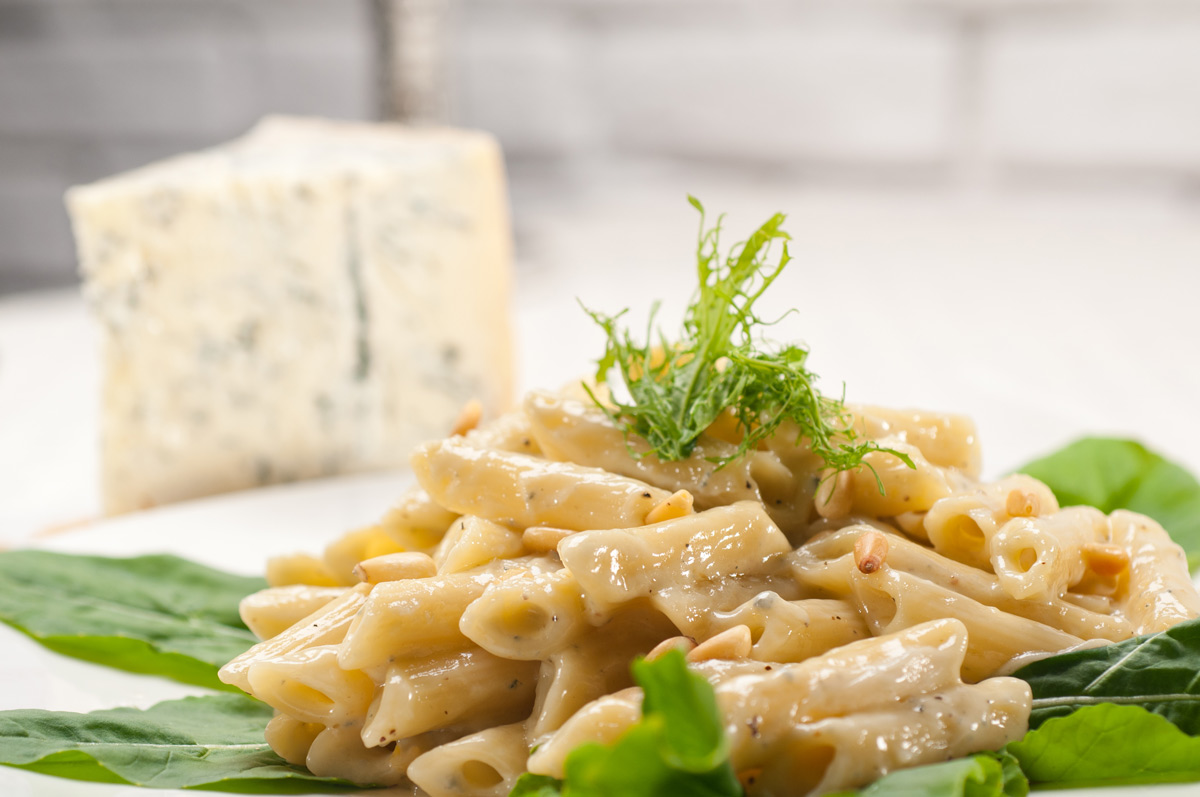
Gorgonzola dolce is a soft blue cheese from northern Italy. Unlike traditional blue cheeses, gorgonzola dolce is mild-flavored and buttery-tasting with a soft, spreadable texture. It’s a house favorite!

Ingredients

  • 1 head cauliflower, cut into 3/4-inch florets
  • 1/4 cup extra virgin olive oil
  • 3/4 teaspoon coarse salt (kosher or sea), or more to taste
  • 1 teaspoon freshly ground black pepper
  • 1 large or 2 small leeks, halved, white and light green parts thinly sliced crosswise
  • 2 cloves garlic, peeled and thinly sliced
  • 1 tablespoon fresh thyme leaves, plus more for serving
  • 8 ounces short pasta such as campanelle, orecchiette, conchiglie, farfalle, or fusilli
  • 3 tablespoons unsalted butter, cubed, at room temperature
  • 6 ounces Gorgonzola dolce, crumbled, at room temperature
  • Fresh lemon juice, to taste
  • 2 tablespoons chopped chives, for serving

Directions

Step 1

Heat the oven to 425°F. In a large bowl, toss the cauliflower with the olive oil, salt, and 1/4 teaspoon pepper. Spread onto a rimmed baking sheet in an even layer and bake for 20 minutes.

Step 2

Add the leeks, garlic, and thyme to the cauliflower on the sheet pan,
then roast another 20 minutes, tossing the vegetables halfway through, until they are very tender and deeply caramelized.

Step 3

Meanwhile, bring a large pot of heavily salted water to a boil. Cook the pasta until it is 1 minute shy of being al dente. (It will continue to cook in the residual heat of the pot.) Scoop out about 1 cup of pasta water (a coffee mug is good for this), then drain the pasta. Return the pasta to the empty pot, along with the butter, Gorgonzola, the remaining 3/4 teaspoon of pepper, and 1/2 cup of pasta water, stirring to melt the cheese.

Step 4

Toss the roasted vegetables into the pasta, then stir in the lemon juice and salt and pepper to taste. Add pasta water if the mixture looks dry. To serve, spoon into bowls and top with chives and a sprinkle of thyme leaves.

Serves 3 to 4 — Recipe from nytimes.com

Yale Symposium Discusses Olive Oil’s Many Health and Planetary Benefits

Adapted from an article by Colin Poitras, September 21, 2022

Leading experts involved in research and education related to the olive tree and its products gathered in Rome recently to discuss the positive health benefits of olive oil during the Fourth Annual Yale Symposium on Olive Oil & Health, September 15–18, 2022.

Organized by Vasilis Vasiliou, PhD, and Tassos C. Kyriakides, PhD, of the Yale School of Public Health, the four-day symposium addressed a variety of themes central to olive cultivation and the future of olive oil as it pertains to human and planetary health.

Laura Di Renzo, of the University of Rome Tor Vergata, focused attention on the role of high-quality extra-virgin olive oils in preventing non-communicable chronic degenerative diseases (NCDDs) and the health benefits of a sustainable Mediterranean diet. NCDDs include obesity, cardiovascular disease, diabetes, chronic kidney disease, inflammatory bowel diseases, rheumatoid arthritis, chronic respiratory diseases, and many cancers. They have been the most frequent causes of prolonged disability and death worldwide.

Di Renzo highlighted the role of the sustainable Mediterranean diet in the prevention and treatment of NCDDs, including the antioxidant and anti-inflammatory effects of extra virgin olive oil (EVOO).

Attendees praised the symposium for helping to raise awareness of the health benefits of olive oil. Vasiliou and Kyriakides have been leading international advocates for the promotion of olive oil as an important part of a healthy diet.

Kyriakides, an olive oil sommelier, not only constantly tastes oils from all over the world, he consumes copious amounts of olive oil daily in his cooking in addition to his daily morning extra virgin olive oil shot.

It’s a delicious natural and healthfully nutritious food. The olive tree and olive oil have been bringing people together for thousands of years; as public health professionals it is our task to maintain and safeguard the olive tree and its numerous positive effects on human and planetary health. The olive tree can serve as a vehicle in our pursuit for sustainable and planet-friendly agricultural practices.

—Tassos C. Kyriakides, PhD, of the Yale School of Public Health

Evidence accumulated over the past six decades shows that olive oil promotes good health, Kyriakides said. A daily intake of 20 grams of olive oil (about two tablespoons) contains a polyphenol (at least 5 mg of hydroxytyrosol and its derivatives) that assists in the protection of blood lipids from oxidative stress. The finding has been supported by the European Food Safety Agency. The US Food and Drug Administration also supports a qualified health claim that consumption of oleic acid (the main component of olive oil) may reduce the risk of coronary heart disease.