Fresh-Pressed Olive Oil Club

Mediterranean Diet Can Reduce Risk of Both Stroke Types in Women

Stroke ranks as the second-leading cause of death worldwide as well as the third-leading cause of death and disability combined.1 Women have a greater lifetime risk of stroke than men—in part because women live longer, on average, than men do, and because stroke risk in women rises sharply after menopause.2

A substantial body of evidence shows that the Mediterranean Diet (MeDi) reduces stroke risk in both women and men, but little has been published on the MeDi’s effects by stroke type in women.3 In
the US, about 80% of strokes are ischemic—a clot blocks blood flow to or within the brain—and the remainder are hemorrhagic, in which a blood vessel in the brain ruptures and bleeds.4

The journal Neurology Open Access recently published an analysis of data from the California Teachers Study (CTS), which followed more than 130,000 women for more than 25 years, starting in 1995.3 This analysis excluded those with a history of stroke or with missing dietary data, for a total cohort of 105,614 women. Average age at the study’s outset was 52.3

At the start of the study, participants answered a validated dietary questionnaire that asked how often they consumed 103 food and beverage items/groups during the previous year, and in what quantities
(small, medium, large serving size). Responses were converted to a score that reflected adherence to the Mediterranean Diet (MeDi), ranging from 0 to 9. Participants were stratified by MeDi scores into low (0–2), moderate (3–5), and high (6–9) MeDi adherence groups: 12.5% low, 57.5% moderate, 30% high.3

MeDi is typically characterized by high intake of fruits and vegetables, legumes, and whole grains, with olive oil as the primary source of fat; a moderate intake of fish; and minimal intake of meat and dairy products. Some versions of the MeDi include moderate alcohol consumption.3

During the 25 years of follow-up, the CTS study population experienced a total of 4,083 stroke events: 3,358 ischemic and 725 hemorrhagic.3

Participants with high adherence to the MeDi had a 23% lower overall stroke risk compared with the low-adherence group. When results were adjusted for patient characteristics, including smoking, BMI, and demographics, overall stroke risk was still reduced by 18% with high adherence to the MeDi. Even a one-unit increase in MeDi adherence was associated with a significant decrease in stroke risk.3

When analyzed by stroke subtypes, higher adherence to the MeDi resulted in a significant decrease
in stroke risk for ischemic stroke as well as for hemorrhagic stroke. This effect was seen across premenopausal, menopausal, and postmenopausal women in the study, including participants taking hormone treatment.3

This study, with strengths including a large population, long-range follow-up, and analysis by stroke subtype, adds to the body of evidence of the preventative health benefits of the MeDi and helps identify dietary choices that can help reduce stroke risk in women.3

References: 1. Feigin VL, Brainin M, Norrving B, et al. World Stroke Organization (WSO): Global stroke fact sheet 2022 [published correction appears in Int J Stroke. 2022;17(4):478. doi:10.1177/17474930221080343]. Int J Stroke. 2022;17(1):18–29. 2. Rexrode KM, Madsen TE, Yu, AYX, Carcel C, Lichtman JH, Miller EC. The impact of sex and gender on stroke. Circulation Res. 2022;130(4):512-528. 3. Sherzai AZ, Cuble EL, Spielfogel ES, et al. Mediterranean diet and the risk of stroke subtypes in women. Neurol Open Access. 2026;2:e000062. 4. Prabhakaran S, Gonzales NR, Zachrison KS, et al. 2026 guideline for the early management of patients with acute ischemic stroke. Stroke. 2026; doi:10.1161/STR.0000000000000513. Online ahead of print.


Mediterranean Diet is Linked to Significant Reduction in Breast Cancer Risk

Greatest effects among postmenopausal women

Closely following the Mediterranean Diet (MeDi), which emphasizes fruits, vegetables, whole grains, legumes, limited lean protein, and healthy fats such as olive oil and nuts, has been linked to a reduced risk of chronic diseases, including several forms of cancer. Numerous studies have shown associations between lower breast cancer risk in women and MeDi adherence. To clarify whether the the MeDi exerts a significant effect on breast cancer risk, researchers conducted a systematic review and meta- analysis that compiled and analyzed the existing evidence across a large international group of studies.

Methods: After a comprehensive literature search, 31 high-quality observational studies were selected for the final analysis (12 cohort studies and 19 case-control studies). Studies were published between 2006 and 2023 and conducted in the Americas, Europe, and Asia, with the majority in the United States and Spain. A total of 1,347,446 women were evaluated, grouped as overall, postmenopausal, and premenopausal. Participants’ ages ranged from 20 to 104 years. Follow-up duration varied between 8 and 33 years in cohort studies.

  • A cohort study is an observational study with an active group and control group, allowing researchers to calculate the occurrence of a disease in a population over time.
  • A case-control study identifies individuals with a specific disease or condition and assigns “matched controls”—people with the same demographic characteristics who are not part of the study—which enables researchers to evaluate the differences between these groups.

Results: The overall pooled analysis found a clinically significant 13% reduction in breast cancer risk in participants who adhered to the MeDi. The effect was greater in postmenopausal women across all studies and in participants of studies conducted in Asia. A subgroup analysis showed that moderate alcohol use (red wine) did not affect breast cancer risk in the overall group, but an additional reduction in breast cancer risk was seen in postmenopausal women.

Discussion: These results indicate that adherence to the MeDi may help prevent breast cancer, especially in postmenopausal women. It has been suggested that the polyphenols in olive oil and moderate amounts of red wine may contribute to the cancer-protective effects of the MeDi. In addition, phytoestrogens from vegetables and fruits may interact with the body’s estrogen production, thus helping to prevent certain types of breast cancer from developing. The sites of hormone production during the postmenopausal period (fat tissue rather than ovaries) may also account for the increased effect of the MeDi in preventing breast cancer in that population.

Conclusion: Adherence to the MeDi significantly reduced women’s breast cancer risk in a large meta-analysis of international observational studies involving more than a million participants. Future research will help identify the specific anti-cancer mechanisms of the MeDi and illuminate its varying effects across life stages and geographic regions.

Reference: Karimi M, Asbaghi O, Hooshmand F, et al. Adherence to Mediterranean Diet and Breast Cancer Risk: A Meta-Analysis of Prospective Observational Studies. Health Sci Rep. 2025;8(4):e70736.

Olive Oil Hunter News #211

Butterflied Leg of Lamb Recipe, Spotlight on Rosemary, and Protecting Against Cardiovascular Diseases After Menopause

Lamb is a celebratory dish in so many cultures, yet the idea of preparing a leg of lamb at home can be intimidating. One way to simplify the process plus cut the roasting time is with a butterflied leg—your butcher removes the bone and opens the lobes of meat to create a flat butterfly shape, which allows fast and even cooking. Also in this issue you’ll read about a caution concerning raw milk and a successful two-pronged approach to reduce inflammation, the root cause of so many diseases.

Butterflied Leg of Lamb

  • sliced leg of Lamb with rosemary Butterflied Leg of Lamb

    A roasted butterflied leg of lamb makes a beautiful presentation and is a breeze to carve either at the table or in the kitchen. The olive oil and lemon marinade adds great flavor—if possible, marinate the lamb the day before you plan to cook it.

    Ingredients

    • 1 sprig fresh rosemary or 1 teaspoon dried leaves
    • 6 garlic cloves
    • 2 teaspoons coarse sea salt
    • 6 tablespoons extra virgin olive oil, divided use
    • Juice of 1 lemon
    • 1 teaspoon freshly ground black pepper
    • 1 leg of lamb, between 4 and 5 pounds, butterflied and trimmed of excess fat

    Directions

    Step 1

    Strip the leaves from the rosemary, place them on a cutting board along with the garlic and salt, and mince them together. Transfer to a small bowl and add 4 tablespoons olive oil, the lemon juice, and the black pepper. Place the lamb, boned side up, on a platter large enough to hold it and brush the marinade all over both sides of the meat; cover and refrigerate for three hours or overnight. 

    Step 2

    When ready to cook, preheat your oven to 425°F. Place the lamb in a roasting pan and drizzle on the remaining 2 tablespoons of olive oil. Roast in the center of the oven until an instant-read thermometer reaches 135°F for medium, about 30 to 35 minutes, or 145°F for medium-well, about 35 to 40 minutes. Let the lamb rest for 10 minutes before slicing (its internal temperature will rise another 5 degrees).

    Yields 8 servings

Healthy Ingredient Spotlight: Rosemary

Healthy Ingredient Spotlight

Rosemary

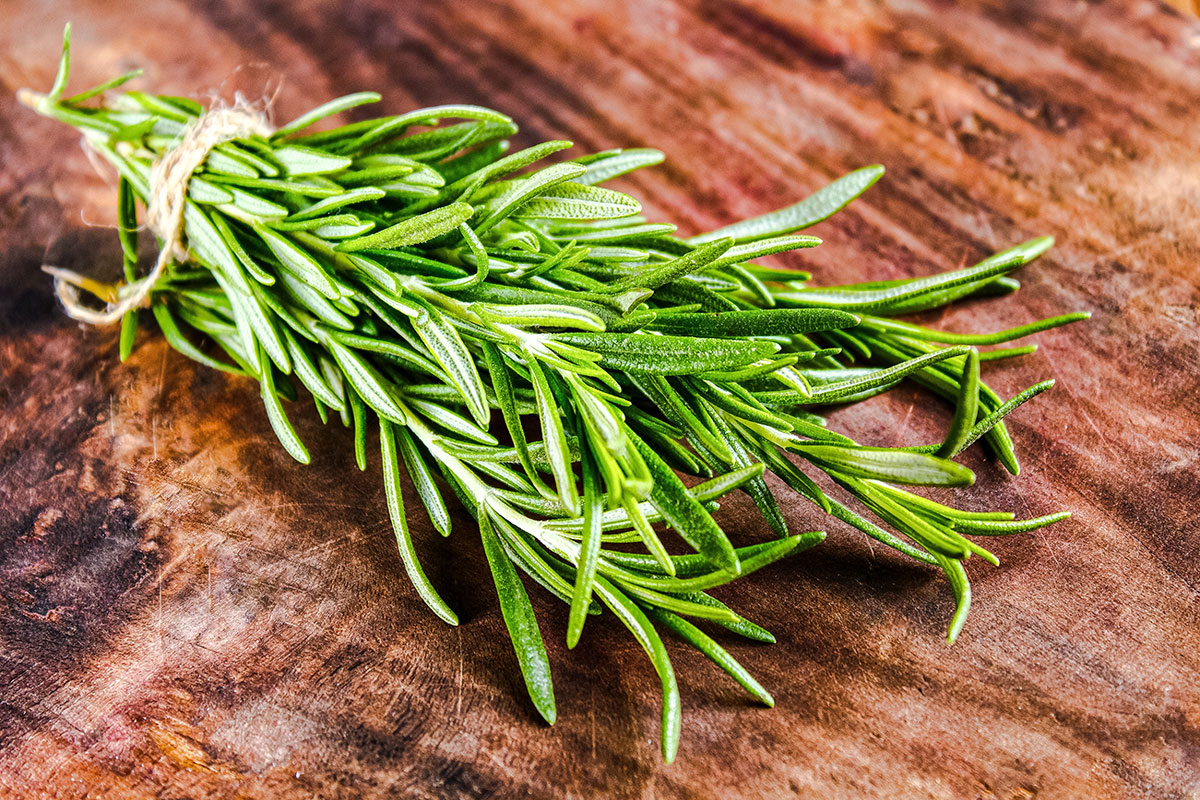
An herb strongly associated with the Mediterranean cuisines, rosemary, or Rosmarinus officinalis,is endemic to the dry, rocky areas of the region, especially along the coast. According to the Herb Society of America,Rosmarinus comes from Latin ros and marinus,which translate to “dew of the sea.” Rosemary makes a fragrant addition to your outdoor herb garden and is very hardy, but bring any plants indoors for the winter. The herb lends a very distinctive taste to foods, from roasted lamb to potatoes. A little goes a long way—use it judiciously so that it doesn’t overpower the finished dish.

Rosemary sprigs
Quick Kitchen Nugget: Freezing Rosemary

Quick Kitchen Nugget

Freezing Rosemary

Got leftovers? Rosemary sprigs will keep for a week or two when wrapped in a paper towel and placed in the vegetable drawer of your fridge. But you can also freeze them for future use. First, freeze the sprigs. When frozen, use your fingers to strip off the leaves, working from the top of the sprig downward; place them in an airtight, freezer-safe container and then return them to the freezer.   

Fitness Flash: Protecting Against Cardiovascular Diseases After Menopause

Fitness Flash

Protecting Against Cardiovascular Diseases After Menopause

Healthy senior woman cooking

Researchers at the University of Jyväskylä’s Faculty of Sport and Health Sciences in Finland have found that women with a disordered eating behavior, such as restricting food to control weight or body shape, and low physical activity tend to have more central body fat and a higher risk of metabolic low-grade inflammation. This, in turn, increases the risk of cardiovascular diseases, which become more prevalent after menopause. Body fat distribution changes as menopause progresses and estrogen levels decrease, causing the adipose tissue concentrated in the hips and thighs to gradually shift to the midsection as harmful visceral fat. 

The researchers investigated the connections between this inflammation and health behaviors—sleeping, eating, and physical activity—and found that the combined effect of exercise and healthy eating offers the most effective protection against inflammation and may also reduce it after menopause.

“In line with previous studies, a higher amount of visceral fat was, as expected, associated with low-grade inflammation,” said Hannamari Lankila, a doctoral researcher at the Faculty of Sport and Health Sciences. “Visceral fat accumulated in the midsection secretes cytokines that increase inflammation, and this can increase the risk of metabolic diseases.”

When eating and physical activity were examined together, higher physical activity was associated with lower visceral fat, especially in those women who did not display disordered eating behavior. “The connection was weaker, meaning that the protective effect of even a high amount of exercise was less, if the individual had eating-related difficulties,” Lankila continued. “Surprisingly, sleep was not a significant factor in this equation.”

The combined effects of health behaviors during menopause have not previously been studied. The menopause phase is significant, as women live more than a third of their lives after menopause, on average. During this period, the risk of metabolic and cardiovascular diseases increases significantly.

“It’s good to remember that even after menopause, it is possible to reduce the accumulation of harmful visceral fat and thus prevent metabolic and cardiovascular diseases that may result from it,” Lankila concluded.

The study is part of the larger EsmiRs (estrogen, microRNAs, and the risk of metabolic dysfunctions) study, which was carried out from 2018 to 2022 at the Gerontology Research Center at Jyväskylä. The study participants were women living in Central Finland who were between the ages of 51 and 59. 

Get More Recipes In Your Inbox!