
Black Dal Recipe, Spotlight on Black Lentils, How to Store Lentils, Sorbitol and The Liver, and More Muscle, Younger Brain
When it comes to dark leafy greens, kale occupies a heightened position thanks to its wide range of nutrients. And yet, shockingly, researchers have found that the body doesn’t absorb as many of them as hoped…unless you eat it with a healthy fat source, like extra virgin olive oil. I’m also sharing the trick to make this hearty green more tender, which also involves olive oil. It’s another reason why these two ingredients are a match made in heaven.
Black Dal
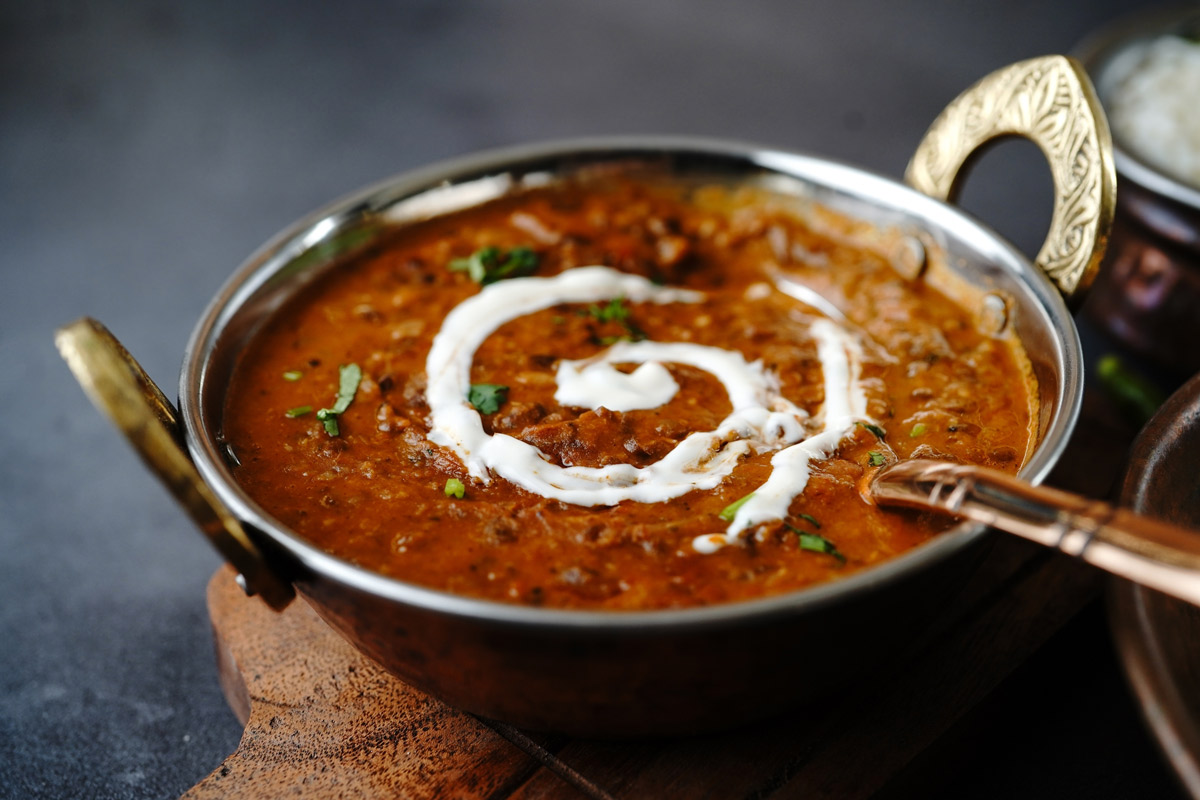 Black Dal
If you’re new to lentils, this flavorful recipe makes a great introduction. I’ve streamlined the number of spices used in traditional recipes because garam masala already incorporates the essentials—coriander, black pepper, cardamom, cinnamon, cloves, ginger, and nutmeg, among others. This makes a hearty meatless meal, a soup, or a side dish—scoop it up with a piece of your favorite Indian bread.
Ingredients
- 2 cups black lentils
- 3 tablespoons extra virgin olive oil, plus more for drizzling
- 1 small onion, minced
- 2-inch piece ginger, minced
- 2 garlic cloves, minced
- One 6-ounce can tomato paste
- 2 teaspoons garam masala
- 1/2 teaspoon cayenne pepper
- 1 cinnamon stick
- 1 cup homemade or store-bought low-sodium chicken or vegetable broth
- 2 tablespoons unsalted butter
- 1/2 cup heavy cream
- Optional garnish: chopped fresh cilantro
Directions
Step 1
Rinse the lentils, and then put them in a stockpot or Dutch oven. Add enough cold water to cover them by 2 or 3 inches. Bring to a rolling boil and cook for 5 minutes, then lower the heat to a simmer. Cook for about 45 minutes, stirring occasionally, until the lentils are tender but still hold their shape. (If the water level gets too low, add more water as needed to keep them covered). Drain if needed and transfer to a bowl.
Step 2
Rinse the pot and heat over medium-high heat. When it’s hot, add the olive oil and onions; cook until they become translucent, and then add the minced ginger and garlic and cook until fragrant. Push the vegetables to the sides of the pot and add the tomato paste in the center. Cook, stirring constantly, until the paste deepens in color, then mix into the vegetables. Add the garam masala, cayenne pepper, cinnamon stick, broth, and cooked lentils. Simmer for 15 minutes, stirring frequently, to infuse the lentils with the spices. Then stir in the butter and cream and simmer for 2 minutes. Serve with a drizzle of olive oil and a sprinkle of cilantro if desired.
Yields 6 main servings, 6 side servings

Healthy Ingredient Spotlight
Black Lentils
Lentils belong to the broader family of legumes, which includes beans and dried peas. But unlike those others, lentils don’t need an overnight soak in water, so there’s less prep needed. Also available in red, green, and yellow, lentils are rich in protein, fiber, and iron, along with dozens of other nutrients. Because of their deep color, round shape, and tiny size, black lentils are often called caviar or beluga lentils. Black dal traditionally uses urad dal, a mung bean that’s not a true lentil, though it is a legume. However, black lentils—which you can find at specialty markets or online—work extremely well for dal and many other recipes.


Quick Kitchen Nugget
How to Store Lentils
Like other legumes, lentils keep best in a cool, dry cabinet, either in their original packaging or a tightly sealed glass container. They’re most flavorful (and take less time to cook) when used within a year of packaging. Before cooking, check them for any debris, like tiny stones, and rinse with cold water, then drain.

For Your Best Health
Sorbitol and The Liver
Sweeteners such as aspartame, found in Equal packets, sucralose (Splenda), and sugar alcohols are widely promoted as healthier options than foods made with refined sugar (glucose). Many people turn to them hoping to reduce health risks linked to sugar and cut calories. But new scientific evidence is now calling that into question. Recent findings suggest that the sugar alcohol sorbitol in particular may not be as harmless as it is often assumed to be.
The findings come from a study published in Science Signaling that builds on years of research from the laboratory of Gary Patti, PhD, at Washington University in St. Louis into how fructose affects the liver and other organs. Dr. Patti, the Michael and Tana Powell Professor of Chemistry in Art & Sciences and a professor of genetics and medicine at WashU Medicine, has previously shown that fructose processed by the liver can be diverted in ways that fuel cancer cell growth. Other studies have linked fructose to steatotic liver disease, a condition that now affects about 30% of adults worldwide.
One of the most unexpected results of the new study is that sorbitol is essentially “one transformation away from fructose,” according to Dr. Patti. Because of this close relationship, sorbitol can trigger effects similar to those caused by fructose itself.
Using zebrafish as a model, Dr. Patti and his team showed that sorbitol, commonly found in low-calorie candies and gums and naturally present in stone fruits, can be produced inside the body. Enzymes in the gut can generate sorbitol, which is then transported to the liver and converted into fructose.
The team also discovered that the liver can receive fructose through multiple metabolic routes. Which pathway dominates depends on how much glucose and sorbitol a person consumes as well as the specific mix of bacteria living in their gut.
Most earlier studies of sorbitol metabolism focused on disease states such as diabetes, where high blood sugar leads to excess sorbitol production. Dr. Patti explained that sorbitol can also be created naturally in the gut after a meal, even in people without diabetes.
The enzyme responsible for making sorbitol does not bind easily to glucose, meaning glucose levels must rise significantly before the process begins. That is why sorbitol production has long been linked to diabetes. However, the zebrafish experiments showed that glucose levels in the intestine can become high enough after you eat to activate this pathway even under normal conditions. “It can be produced in the body at significant levels,” said Dr. Patti. “But if you have the right bacteria, turns out, it doesn’t matter.”
Certain Aeromonas bacterial strains are able to break down sorbitol and convert it into a harmless bacterial by-product. When these bacteria are present and functioning well, sorbitol is less likely to cause problems. “However, if you don’t have the right bacteria, that’s when it becomes problematic. Because in those conditions, sorbitol doesn’t get degraded, and as a result, it is passed on to the liver,” he said.
Once sorbitol reaches the liver, it is converted into a fructose derivative. This raises concerns about whether alternative sweeteners truly offer a safer option than table sugar, especially for people with diabetes and other metabolic disorders who often rely on products labeled as sugar-free.
At low levels, such as those typically found in whole fruits, gut bacteria are usually effective at clearing sorbitol. The trouble begins when the amount of sorbitol exceeds what these microbes can handle. This overload can happen when large amounts of glucose are consumed, leading to an increased production of sorbitol from glucose, or when the diet itself contains high levels of sorbitol. Even individuals with helpful bacteria may run into problems if their intake of glucose and sorbitol becomes too high, since the microbes can be overwhelmed.
Avoiding both sugar and sugar substitutes has become increasingly difficult, as many processed foods contain several forms of sweeteners at once. Dr. Patti said he was surprised to learn that his own favorite protein bar contained a significant amount of sorbitol.
Further research is needed to understand exactly how gut bacteria clear sorbitol. What is becoming clear, however, is that the long-held assumption that sugar alcohols, also known as polyols, are simply eliminated without harm may not be accurate. “We do absolutely see that sorbitol given to animals ends up in tissues all over the body,” he said. The overall message from the research is that replacing sugar is not as simple as it may seem. As Dr. Patti put it, “there is no free lunch” when it comes to sugar alternatives, and many metabolic pathways can ultimately lead back to liver dysfunction.

Fitness Flash
More Muscle, Younger Brain
New research shows that people who have more muscle and a lower visceral fat-to-muscle ratio tend to show signs of a younger biological brain age. This conclusion comes from a study recently presented at the annual meeting of the Radiological Society of North America. Visceral fat refers to the fat stored deep in the abdomen around key internal organs.
“Healthier bodies with more muscle mass and less hidden belly fat are more likely to have healthier, youthful brains,” said senior study author Cyrus Raji, MD, PhD, Associate Professor of Radiology and Neurology in the Department of Radiology at the Mallinckrodt Institute of Radiology at Washington University School of Medicine in St. Louis. “Better brain health, in turn, lowers the risk for future brain diseases, such as Alzheimer’s.”
Brain age is an estimate of how old the brain appears biologically, based on its structure as seen through an MRI. A whole-body MRI can track muscle mass, which serves as a marker for efforts to reduce frailty and strengthen overall health. Estimated brain age from structural scans may also shed light on risk factors for Alzheimer’s disease, including muscle loss.
“While it is commonly known that chronological aging translates to loss of muscle mass and increased hidden belly fat, this work shows that these health measures relate to brain aging itself,” Dr. Raji said. “It shows muscle and fat mass quantified in the body are key reflectors of brain health, as tracked with brain aging.”

The study evaluated 1,164 healthy adults across four research sites using whole-body MRI. Participants had a mean chronological age of 55.17 years. Imaging included T1-weighted MRI sequences, which highlight fat as bright and fluid as dark, providing a clear view of muscle, fat, and brain tissue. An artificial intelligence (AI) algorithm measured total normalized muscle volume, visceral fat (hidden belly fat), subcutaneous fat (fat under the skin), and predicted brain age.
The data indicated that individuals with a higher visceral fat-to-muscle ratio had higher predicted brain age. Subcutaneous fat showed no meaningful association with how old the brain appeared. “The participants with more muscle tended to have younger-looking brains, while those with more hidden belly fat relative to their muscle had older-looking brains,” Dr. Raji said. “The fat just under the skin wasn’t related to brain aging. In short, more muscle and a lower visceral fat-to-muscle ratio were linked to a younger brain.”
Dr. Raji explained that focusing on building muscle and reducing visceral fat are realistic and actionable goals. Whole-body MRI and AI-based brain age estimates can offer clear benchmarks for programs designed to lower visceral fat while maintaining or increasing muscle. He also noted that the results highlight the close connection between physical health and brain health.
“This research has validated widely held hypotheses about the association between body composition biomarkers and brain health and provides a foundation for those biomarkers to be included in future trials of various metabolic interventions and treatments.”
Commonly prescribed glucagon-like peptide-1 (GLP-1) weight loss medications, including Ozempic, are effective at reducing body fat but may also contribute to muscle loss. Dr. Raji suggested that the study’s findings could help guide the development of next-generation therapies. These future treatments may aim to reduce visceral fat more than subcutaneous fat while protecting muscle mass.
“Losing fat—especially visceral fat—while preserving muscle volume would have the best benefit on brain aging and brain health based on insights from our work,” he said. “Thus, our study can inform future treatments by promoting research that quantifies MRI of body fat, muscle, and brain age, which can help determine the optimal dosing regimens for GLP-1s to achieve the best outcomes in body and brain health.”
Get More Recipes In Your Inbox!