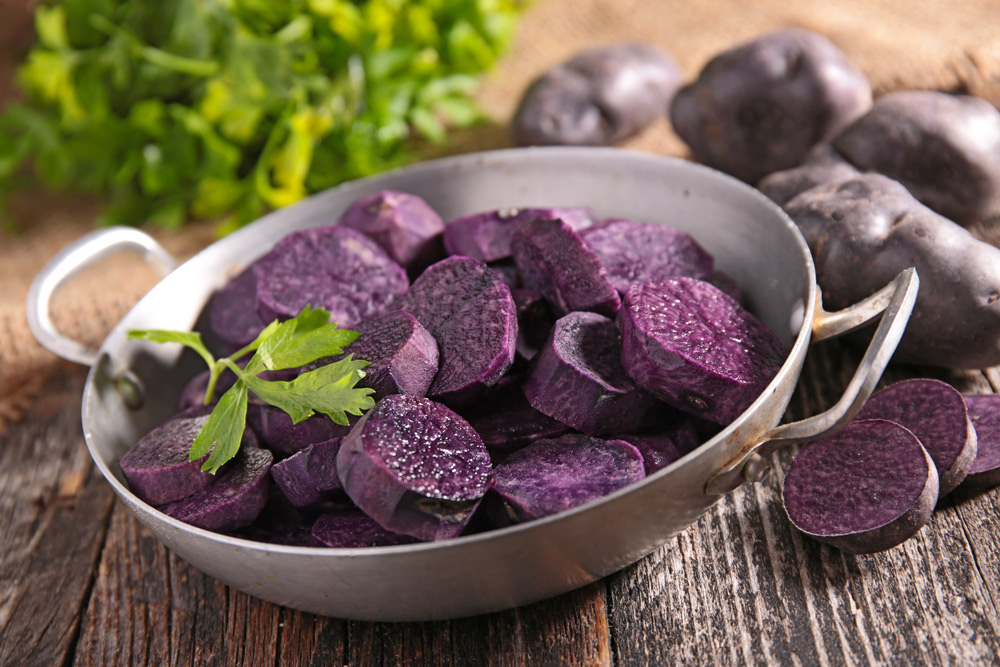
The beauty of these potatoes is more than skin deep—they’re rich in antioxidants. Leave on the skins for maximum nutritional benefits.
Ingredients
2 pounds Peruvian purple potatoes, scrubbed
3 tablespoons Pear Balsamic Vinegar
2 teaspoons Dijon mustard
1/2 teaspoon salt, plus more to taste
1/4 teaspoon black pepper, plus more to taste
1/2 cup extra virgin olive oil
1/2 cup Kalamata olives, pitted and roughly chopped
1/4 cup red onion, peeled and diced
1 jalapeño pepper, stemmed, seeded, and finely diced (optional)
1/2 yellow or orange bell pepper, stemmed, seeded, and diced
3 tablespoons each chopped fresh cilantro, parsley, and chives
Directions
Step 1
Boil the potatoes in salted water until just tender—20 minutes or so, depending on their size, but don’t overcook. Drain, let cool slightly, and quarter them. Transfer to a large bowl.
Step 2
In a small bowl, combine the vinegar, mustard, salt, and black pepper. Slowly whisk in the olive oil until the mixture emulsifies. Pour the vinaigrette evenly over the potatoes while they’re still warm. Gently fold in the olives, onion, jalapeño (if using), bell pepper, and herbs. Season to taste with more salt and black pepper.
Peruvian Purple Potato Salad Recipe, Spotlight on Potatoes, The Other “Utility” Knife and Spiritual Fitness for Brain Boosts and Protecting Your Skin
This week’s Olive Oil Hunter Newsletter delivers the goods with a delicious and surprising twist using richly colored Peruvian purple potatoes. And their beauty is more than skin deep!
Note: Specialty potatoes are often available online if they’re not at your local market. And if you can’t find purple ones, you can substitute any brightly colored variety.
The beauty of these potatoes is more than skin deep—they’re rich in antioxidants. Leave on the skins for maximum nutritional benefits.
Ingredients
2 pounds Peruvian purple potatoes, scrubbed
3 tablespoons Pear Balsamic Vinegar
2 teaspoons Dijon mustard
1/2 teaspoon salt, plus more to taste
1/4 teaspoon black pepper, plus more to taste
1/2 cup extra virgin olive oil
1/2 cup Kalamata olives, pitted and roughly chopped
1/4 cup red onion, peeled and diced
1 jalapeño pepper, stemmed, seeded, and finely diced (optional)
1/2 yellow or orange bell pepper, stemmed, seeded, and diced
3 tablespoons each chopped fresh cilantro, parsley, and chives
Directions
Step 1
Boil the potatoes in salted water until just tender—20 minutes or so, depending on their size, but don’t overcook. Drain, let cool slightly, and quarter them. Transfer to a large bowl.
Step 2
In a small bowl, combine the vinegar, mustard, salt, and black pepper. Slowly whisk in the olive oil until the mixture emulsifies. Pour the vinaigrette evenly over the potatoes while they’re still warm. Gently fold in the olives, onion, jalapeño (if using), bell pepper, and herbs. Season to taste with more salt and black pepper.
Yields 4 to 6 servings
Healthy Ingredient Spotlight
Potatoes Get More Colorful
Americans don’t get enough fruits and vegetables, except when it comes to our beloved potatoes—we each eat about one pound every week! Potatoes are considered starchy because they’re calorie-dense, but a medium-sized potato, skin on, still delivers on nutrition: 35% of a day’s vitamin C needs, 30% of vitamin B6, and 25% of potassium, plus 4 grams of fiber and 5 of protein. Most of those nutrients are in the skin, so keep it on, even when making mashed.
Potatoes have been getting more and more colorful, and each color is a sign of its antioxidant content, just as it is for berries. Beyond Yukon golds and red-skinned potatoes, purple varieties are becoming easier to find. Even the US Agricultural Research Service got into the act by creating Huckleberry Gold, with a purple jacket, a fine-textured yellow flesh, and a significantly higher level of antioxidants than those Yukons.
As with pasta, it’s what you put on your potato that counts. Cleveland Clinic registered dietitian Andrea Dunn suggests: “Try a drizzle of olive oil with chives instead of sour cream, butter, and salt.”
Healthy Kitchen Nugget
The Other “Utility” Knife
Think of it as the unsung hero in your utensil drawer (chances are, it’s hidden somewhere in the back). The grapefruit knife, often the same length as a dinner knife, is unique because both edges are serrated and the blade itself is curved. This makes it not only ideal to cut out the sections of a citrus half (oranges and lemons as well as grapefruit), but also to stem peppers, from jalapeños to bells, and even strawberries, with a neat edge. It’s especially handy when you want to keep a pepper intact for stuffing, since you can maneuver the blade around the inside to cut away the ribs. If you don’t already have one, a grapefruit knife is just a few dollars, and you can find many options online.
For Your Best Health
Spiritual Fitness for Brain Boosts
According to researchers Dharma Singh Khalsa, MD, of the Alzheimer’s Research and Prevention Foundation in Tucson, and Andrew B. Newberg, MD, of the Marcus Institute of Integrative Health at Thomas Jefferson University in Philadelphia, “spiritual fitness,” a new concept in medicine that centers on psychological and spiritual well-being, may reduce multiple risk factors for Alzheimer’s disease (AD).
Spiritual fitness weaves together basic, psychological, and spiritual well-being, which is often practiced independent of religion. Drs. Khalsa and Newberg analyzed existing research for their review, “Spiritual Fitness: A New Dimension in Alzheimer’s Disease Prevention,” published in the Journal of Alzheimer’s Disease, and found positive connections between spiritual fitness and brain health. Psychological well-being includes having a purpose in life, and according to one study, people who feel this strongly are 2.4 times more likely to remain free of AD than people who don’t. In another study, having a purpose in life was linked to better cognitive function as people age.
Because stress, with its physical, psychological, and emotional effects, may elevate AD risk, stress management is important to help reduce it. Drs. Khalsa and Newberg highlighted a practice called Kirtan Kriya, a 12-minute singing meditation that involves four sounds, breathing, and repetitive finger movements. It not only helps improve sleep, decrease depression, increase well-being, and improve mood, but also may increase blood flow to areas of the brain involved in cognition and emotional regulation. Practiced long-term, it may increase grey matter volume and decrease ventricular size to help slow brain aging.
“Mitigating the extensive negative biochemical effects of stress with meditation practices, in tandem with the creation of heightened levels of spiritual fitness, may help lower the risk of AD. Small shifts in one’s daily routine can make all the difference in AD prevention,” Dr. Khalsa and Dr. Newberg conclude.
You know all about warming up and stretching before exercise to avoid injury, but you might not realize the risk that the sun poses, especially on hot, sunny days, and not only in terms of dehydration. Your skin is especially vulnerable to sunburn when you’re active outdoors, especially when you forget the sunscreen. In addition to being a risk factor for skin cancer, sunburn affects thermoregulation and the dissipation of excessive heat—that also makes it a risk factor for heat-related illnesses, according to Frank Perna, EdD, PhD, of the National Institutes of Health, and David Conroy, PhD, of the Penn State Cancer Institute, writing for the American College of Sports Medicine. Even though sweating plays the vital role of cooling you off, it also shortens the time it takes UV exposure to cause a sunburn.
Consider these smart precautions:
Protect your skin with a variety of approaches—sunscreen, protective clothing, and working out in shady conditions and/or avoiding peak UV times.
Apply sunscreen regularly, and don’t be skimpy with it. “Some dermatologists recommend higher SPF sunscreen for athletes because of sweat effects on photosensitivity and the common finding that most people only apply about half the recommended amount of sunscreen,” write Drs. Perna and Conroy. For less mess and to be sure it’s properly absorbed, apply it before going outside. The CDC recommends using a broadband sunscreen with SPF of 15 or greater and reapplying it every 80 minutes or every time you towel off. Carry sunscreen with you even if you don’t have specific plans for outdoor exercise—you never know when someone will toss a Frisbee your way at the park.
Choose exercise apparel with a UPF rating to shield skin. Add a hat to protect your scalp. And remember to wear sunglasses with UV protective lenses—sunlight can accelerate cataracts.
Grilled Halloumi Over Salad Recipe, Spotlight on Cheeses That Can Take the Heat, When to Wash Veggies and The Link Between Exercise and Sleep
Who doesn’t love a gooey grilled-cheese sandwich? But what can you do when you want cheesy goodness without the bread? The delicious answer is cheese varieties that hold their shape under heat.
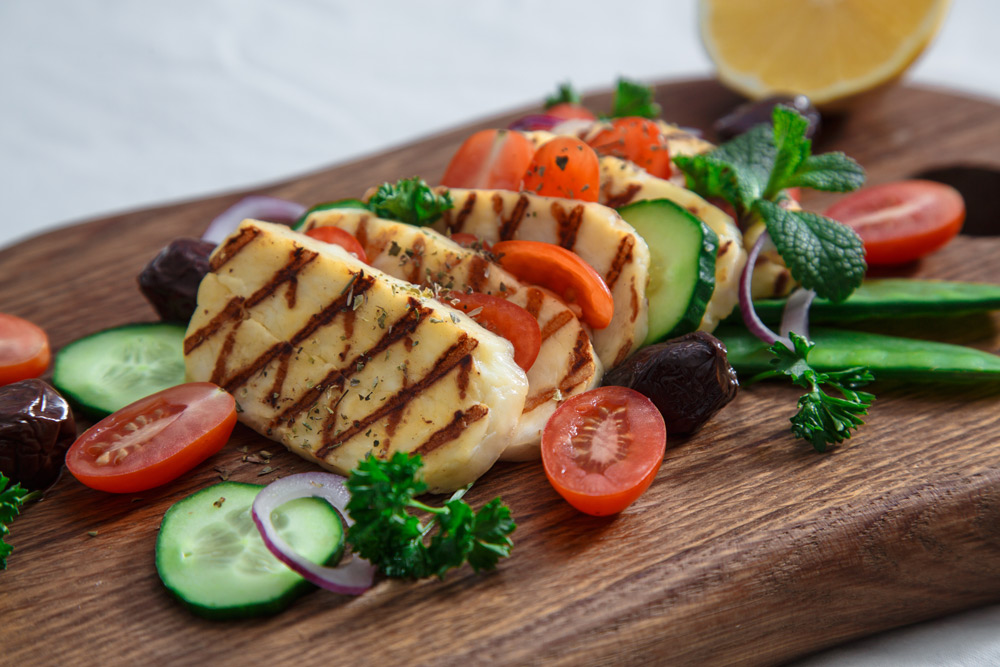
I’m a huge fan of halloumi, a brined goat’s milk cheese from Cyprus. Because it has a high melting point, this firm, somewhat salty cheese can be grilled directly on the grate. You can skewer chunks along with your favorite veggies or simply grill slices and serve them with the refreshing seasonal salad in this recipe.
Ingredients
4 tablespoons extra virgin olive oil, divided
1 tablespoon best-quality red wine vinegar
1 teaspoon fresh oregano, chopped, or 1/2 teaspoon dried oregano
Kosher salt to taste
Freshly ground black pepper to taste
8 ounces cherry tomatoes, halved
1 cucumber, diced
One head romaine lettuce, washed, dried, and torn
12 brined Kalamata olives, drained, pitted, and halved
1/2 cup loosely packed flat-leaf parsley, coarsely chopped
12 ounces of halloumi, cut crosswise into 1/3-inch-thick slices
4 tablespoons Greek yogurt (optional)
Directions
Step 1
Make the salad: In a bowl, whisk together 2 tablespoons of the olive oil, the red wine vinegar, oregano, salt, and pepper. Add the tomatoes, cucumber, lettuce, olives, and parsley. Toss gently to coat the vegetables with the dressing and divide evenly on four plates.
Step 2
Pour the rest of the olive oil onto a rimmed sheet pan and gently coat both sides of each cheese slice. On a medium-hot grill, grill the cheese for 1 to 2 minutes per side, turning with tongs or a thin-bladed spatula. (Work in batches if necessary.)
Step 3
Top each salad plate with equal amounts of the grilled cheese and add a dollop of yogurt, if desired. Serve immediately.
Yields 4 servings.
Healthy Ingredient Spotlight
More Cheeses That Can Take the Heat
Halloumi isn’t the only fresh, semi-firm cheese that can be cooked without melting. Another great one is paneer, the cheese used in Indian cuisine, most famously the creamy spinach dish saag paneer. It’s readily available at many markets, not just specialty shops. And from frigid Finland comes leipäjuusto, popular there at breakfast, according to the experts at the magazine Culture: The Word on Cheese. These cheeses will soften when grilled, but they won’t break down and melt thanks to their low acid content. That’s also the reason you may hear a squeaking sound as you bite into them!
Healthy Kitchen Nugget
When Exactly to Wash Veggies
While most concern over food contamination centers on raw meat, vegetables as well as fruits can have organisms you want to keep out of the kitchen. Here are some tips from the FDA and the University of Maine Cooperative Extension to stay safe.
Start by choosing produce that isn’t bruised or damaged. If shopping for precut foods, like fruit chunks or bags of lettuce, make sure they’ve been kept refrigerated or on ice at the store, and get them into the fridge as soon as you get home. If a food gets marred before you’ve had a chance to use it, cut off the affected areas before preparing or eating it.
There are also steps to take with freshly harvested produce, whether from your own garden or a farmers’ market. Washing off produce can help reduce microorganisms. There’s no need to use soap or a special produce wash—just gently rub the produce while holding it under plain running water. Do make sure the water is no more than 10 degrees Fahrenheit colder than the food, or else any pathogens could get drawn in through the stem (if there is one). Because excess water can lead to faster molding or rotting, be sure to thoroughly dry your produce with clean paper towels before storing it in the fridge. To store produce without washing it first, shake, rub, or brush off any garden dirt with either a clean, soft brush or a clean, dry paper towel before you bring it inside if possible. Then place the produce in a plastic bag or container to prevent any risk of contamination to other foods in your fridge. For a list of which produce should be washed and which produce should be wiped clean, check out this resource page from the University of Maine Cooperative Extension.
Always rinse produce right before you peel or cut it so that any dirt and bacteria aren’t picked up by your knife and transferred back onto the fruit or vegetable or elsewhere in your kitchen.
For Your Best Health
The Mediterranean Diet: Brain Booster
One of the reasons I’m such a proponent of olive oil is the key role it plays in the fabulously healthy Mediterranean diet, known for its heart health benefits. A recent study published in the journal Neurology advances the theory that it protects brain health too. The researchers found that, among a group of 500 seniors, those who ate an unhealthy diet had higher levels of amyloid and tau proteins, which have been linked to Alzheimer’s, in their cerebrospinal fluid, and that they performed worse in memory tests than those who regularly ate a Mediterranean-like diet. “There was also a significant positive correlation between a closer adherence to a Mediterranean-like diet and a higher volume of the hippocampus. The hippocampus is an area of the brain that is considered the control center of memory. It shrinks early and severely in Alzheimer’s disease,” explained Tommaso Ballarini, PhD, lead author of the study. “It is possible that the Mediterranean diet protects the brain from protein deposits and brain atrophy that can cause memory loss and dementia.” The researchers will continue their work by reexamining the same study participants in four to five years.
In the meantime, this delicious way of eating isn’t complicated. According to the Mayo Clinic, while there is no single definition of the Mediterranean diet, it is typically high in vegetables, fruits, whole grains, beans, nuts and seeds, and olive oil. Here’s an easy way to adopt it:
Daily: vegetables, fruits, whole grains, and healthy fats
Weekly: fish, poultry, beans and eggs with moderate portions of dairy
Limited: red meat
Fitness Flash
The Link Between Exercise and Sleep
There are many factors that contribute to good health, with getting enough exercise and getting good quality sleep among them. We know that, separately, physical inactivity and poor sleep are linked to a greater risk of death from causes such as heart disease and cancer. New research published in the British Journal of Sports Medicine now shows that exercise and sleep may be more linked to each other than we thought. Scientists looked at the exercise and sleep patterns of more than 380,000 middle-aged adults over an 11-year period and how different combinations affected their health. Not surprisingly, compared with those with a high physical activity level and healthy sleep combination, those at the other extreme—no moderate-to-vigorous physical activity and poor sleep—were most at risk for heart disease, stroke, and cancer. However, the findings also showed that getting the recommended 150 minutes of exercise a week could mitigate the risks posed by poor sleep, prompting the researchers to suggest that there’s a certain synergy between the two activities. This was an observational study that relied on self-reported data so cause and effect can’t be established, but it does give the idea that you should meet physical activity goals as you work on getting better sleep. Other lifestyle habits that helped participants achieve better sleep levels were being thinner, eating more fruits and vegetables, spending less time sitting each day, not smoking, and limiting alcohol.
I’m a huge fan of halloumi, a brined goat’s milk cheese from Cyprus. Because it has a high melting point, this firm, somewhat salty cheese can be grilled directly on the grate. You can skewer chunks along with your favorite veggies or simply grill slices and serve them with the refreshing seasonal salad in this recipe.
Ingredients
4 tablespoons extra virgin olive oil, divided
1 tablespoon best-quality red wine vinegar
1 teaspoon fresh oregano, chopped, or 1/2 teaspoon dried oregano
Kosher salt to taste
Freshly ground black pepper to taste
8 ounces cherry tomatoes, halved
1 cucumber, diced
One head romaine lettuce, washed, dried, and torn
12 brined Kalamata olives, drained, pitted, and halved
1/2 cup loosely packed flat-leaf parsley, coarsely chopped
12 ounces of halloumi, cut crosswise into 1/3-inch-thick slices
4 tablespoons Greek yogurt (optional)
Directions
Step 1
Make the salad: In a bowl, whisk together 2 tablespoons of the olive oil, the red wine vinegar, oregano, salt, and pepper. Add the tomatoes, cucumber, lettuce, olives, and parsley. Toss gently to coat the vegetables with the dressing and divide evenly on four plates.
Step 2
Pour the rest of the olive oil onto a rimmed sheet pan and gently coat both sides of each cheese slice. On a medium-hot grill, grill the cheese for 1 to 2 minutes per side, turning with tongs or a thin-bladed spatula. (Work in batches if necessary.)
Step 3
Top each salad plate with equal amounts of the grilled cheese and add a dollop of yogurt, if desired. Serve immediately.