
Watermelon & Feta Skewers Recipe, Spotlight on Watermelon, Storing Feta, The Facts on Flavanols, plus Strength Training and Longevity
Summer and watermelon go hand in hand, and this twist on the classic watermelon and feta salad is fun to put together and even more fun to eat. I’m also sharing two timely studies on ways to combat heart disease and increase longevity: eating more flavanol-rich foods and strength training for an hour and a half to two hours a week—two strategies you can actually enjoy.
Watermelon & Feta Skewers
 Watermelon & Feta Skewers
These skewers are a refreshing appetizer for summer gatherings and a great finger food—no forks required. It can be prepped a few hours in advance, but wait until you’re ready to serve before drizzling with the oil and vinegar.
Ingredients
- One 5-pound or larger watermelon
- 16-ounce block of feta cheese, preferably from Greece
- Twelve 8-inch wooden skewers
- Extra virgin olive oil, for drizzling
- Balsamic vinegar of Modena, for drizzling
- Freshly ground black pepper to taste
Directions
Cut the watermelon and the feta into 1-inch cubes. Thread 2 cubes of each in an alternating pattern onto wooden skewers. Arrange on a platter, drizzle with olive oil and vinegar, and sprinkle with black pepper.
Yields 12 skewers

Healthy Ingredient Spotlight
Wild for Watermelon
Watermelon is more than a summertime refreshment—it’s a nutrient powerhouse that, being 92% water, deliciously counts toward hydration.
Watermelon has more of the antioxidant lycopene than any other fresh fruit or vegetable. Lycopene is linked to a lower risk of cancer, heart disease, and age-related eye disorders. Just one cup of watermelon chunks contains 865 IUs of vitamin A, 12 milligrams of vitamin C, 170 milligrams of potassium, and a small amount of vitamin B6.
When shopping for a whole watermelon, look for one that is firm, symmetrical in size and markings, and solid for its size. It should have a deep yellow spot on the underside, which comes from sitting on the ground and ripening. A spot that’s white or pale yellow often indicates that the melon was picked too early and will not be sweet enough.

Quick Kitchen Nugget
Storing Feta
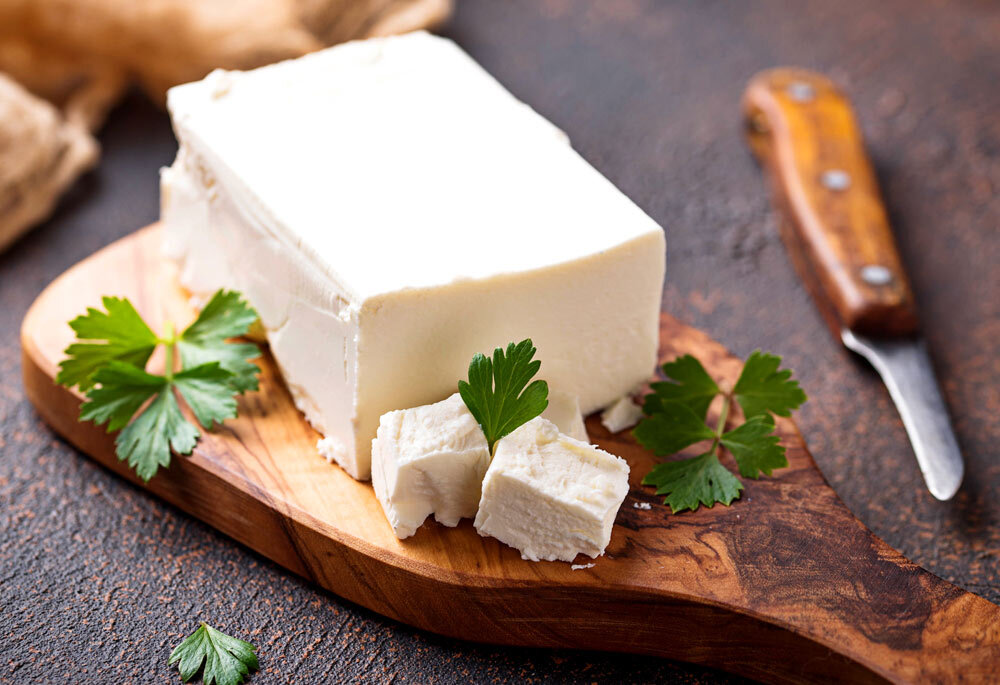
Containers of feta are typically sold with the cheese submerged in the brine it was made with to prevent it from drying out (I’m a fan of those imported from Greece). If you buy a block from a cheese store and it’s wrapped in paper, use it within a day or two. Place any extra in a covered glass dish and drizzle liberally with olive oil before refrigerating. The olive oil not only protects it but also imparts great flavor—you can even add aromatics like herbs, lemon slices, and crushed black peppercorns for marinated feta.
For Your Best Health
The Facts on Flavanols

Leading health organizations suggest eating a minimum of 5 portions of fruits and vegetables combined every day, with a daily split of 1.5 to 2 cups of fruit and 2.5 to 3 cups of vegetables.New research has found that this goal isn’t enough if you’re not choosing foods rich in flavanols, compounds linked to better heart health. According to earlier studies, it takes about 500 milligrams of flavanols per day to significantly lower the risk of death from heart disease.
For the new study, published in the journal Food and Function, scientists from the University of Reading in the United Kingdom, Harvard Medical School, the University of California, Davis, and Mars, Inc., analyzed dietary data from more than 30,000 people in the UK and the US using biomarker measurements to assess flavanol intake. They found that fewer than 20% reached the flavanol intake level associated with heart health benefits. Even many people who regularly ate the recommended five daily servings of fruits and vegetables failed to meet the flavanol target.
Said Dr. Javier Ottaviani, the study’s lead author, “Flavanols can significantly reduce the risk of dying from cardiovascular disease, but only if you consume enough of them. Most people assume that eating plenty of fruit and vegetables covers this, but what this research shows is that the specific choices you make matter far more than the total amount.” Having a handful of blackberries, a whole apple, or a cup of green tea with a meal could make a real difference to how much of these beneficial compounds you actually consume and absorb from the diet, he added.
Said Professor Gunter Kuhnle of the University of Reading, “Five-a-day is the right message, but we may need to think more carefully about which five. Different fruits and vegetables offer very different nutritional benefits beyond vitamins and minerals, and as our understanding of these compounds grows, there is a real opportunity to make dietary guidance more specific and more effective. This research is a step towards understanding what that might look like in practice.”
Here are the foods the researchers identified as some of the richest dietary sources of flavanols per serving:
- Plums, 500 grams: about 450 milligrams of flavanols
- Cranberries, 250 grams: about 300 milligrams of flavanols
- Blackberries, 200 grams: about 250 milligrams of flavanols
- Green tea, 250ml cup: about 200mg of flavanols
- Broad or fava beans, 80 grams: about 140 milligrams of flavanols
- Cherries, 400 grams: about 130 milligrams of flavanols
- Apples with skin, 200 grams or one medium apple: about 110 milligrams of flavanols
- Strawberries, 200 grams: about 90 milligrams of flavanols
- Blueberries, 150 grams: about 80 milligrams of flavanols
- Pinto beans, 40 grams or two tablespoons dry: about 70 milligrams of flavanols

Fitness Flash
Strength Training and Longevity
According to a study done by an international group of researchers and published online in the British Journal of Sports Medicine, 90 to 120 minutes of strength training a week may deliver some of the biggest long-term health rewards. That level of exercise was linked to a 19% lower risk of death from cardiovascular disease and a 27% lower risk of death from neurological disease. Combining strength workouts with aerobic exercise produced even stronger benefits. However, there was no additional advantage from doing more than 120 minutes of strength training per week.
While the life-extending benefits of aerobic exercise are well established, the impact of muscle-strengthening activities on overall mortality and specific causes of death has been less clear. The researchers wanted to determine whether strength training alone, or combined with aerobic exercise, could influence those risks.
To investigate, they analyzed data collected from three major American studies: the Health Professionals Follow-up Study (1992-2022), the Nurses’ Health Study (2002-2021), and the Nurses’ Health Study II (2003-2021). Together, the studies included 147,374 participants (31,540 men and 115,834 women).
Every two years, participants reported how much time they spent each week doing strength training and aerobic exercise. Aerobic activities included brisk walking, running, jogging, swimming, cycling, tennis, squash, strenuous outdoor work, and stair climbing. Strength training included exercises using weights or body weight, such as press-ups, squats, and lunges.
At the start of the study, participants were an average of 54 years old. Those who reported higher levels of strength training were generally younger, weighed less, followed healthier lifestyles, and engaged in more aerobic activity than those who did no strength training.
About three quarters (74%) of participants exceeded the recommended 150 minutes of moderate-intensity aerobic exercise per week, equivalent to 7.5 MET hours over the long term. METs measure how many calories are burned during physical activity compared with resting. Nearly half (46%) of participants reported doing some form of strength training.
The researchers found that higher long-term levels of weekly strength training were associated with a lower risk of death. After accounting for other factors that could affect the results, participants who performed 90-119 minutes of strength training per week had a 13% lower risk of death from any cause. Cancer-related benefits appeared at lower amounts of strength training. Participants who performed 1-29 minutes per week had a 21% lower risk of cancer death, while those doing 30-59 minutes per week had an 18% lower risk.
Compared with people who did less than 7.5 MET hours of aerobic activity per week and no strength training, participants who performed strength training alone for 1 to 59 minutes or 60 to 119 minutes per week had a 7 to 11% lower risk of death. Aerobic exercise on its own also showed strong benefits. Any amount above 7.5 MET hours per week was associated with a 26 to 43% lower risk of death.
The lowest mortality risk was seen among people who combined high levels of aerobic exercise with strength training. Those who accumulated 30 to 44 MET hours of aerobic activity per week and 60 to 119 minutes of strength training had a 45% lower risk of death. Even greater reductions were observed among participants who performed 45+ MET hours of aerobic activity per week. In that group, the risk of death was 53% to 58% lower regardless of how much strength training they did.
The researchers emphasized that this was an observational study, meaning it cannot prove that strength training directly caused the reductions in mortality risk. They also noted several limitations. Exercise habits were self-reported, which can introduce inaccuracies. The analysis did not include certain forms of strength training, such as calisthenics and Pilates. In addition, information was not available on the duration of individual workouts or the intensity of strength training sessions, factors that could have influenced the results.
Despite those limitations, the researchers concluded: “Our findings on different dose-response relationships between long-term resistance training with all-cause and cause-specific mortality suggest that different amounts of resistance training may be needed to optimize benefits across outcomes. The observed pattern that adding resistance training further reduced mortality risk across all levels of aerobic activity up to 45 MET hours/week supports current recommendations encouraging both types of activity to maximize mortality benefits.”
Get More Recipes In Your Inbox!