Fresh-Pressed Olive Oil Club

Portuguese Barbecued Chicken (Frango no Churrasco)

Centuries ago, the seafaring Portuguese established trade routes throughout the world, an endeavor that brought them into contact with many exotic foods. Among them was a potent little chile called piri-piri. Today, incendiary piri-piri sauce is a popular condiment in Portugal and on the African continent. If you can’t find it in the international aisle of your local supermarket, it is available online.

Ingredients

  • One 3 1/2 to 4 pound chicken, preferably organic, giblets removed
  • 2 to 3 cloves garlic, peeled
  • Sea salt
  • 2 teaspoons paprika
  • Juice of 1/2 lemon
  • 1/3 cup extra virgin olive oil
  • 2 teaspoons piri-piri sauce or your favorite hot sauce, plus extra for serving
  • Freshly ground black pepper
  • Sprigs of parsley, for garnish
  • Lemon wedges, for garnish

Directions

Step 1

Light a grill, set it up for indirect grilling, and preheat to medium-high. (Alternatively, the chicken can be roasted in a 400°F oven on a wire rack set over a rimmed baking sheet. Cooking time will be 45 to 50 minutes—the same as if the bird was grilled indirectly.)

Step 2

Butterfly the chicken: Using a sharp knife or kitchen shears, remove the backbone from the bird. Turn the chicken skin side up and gently flatten it with the palm of your hand. Transfer to a rimmed sheet pan.

Step 3

On a cutting board, smash the garlic cloves with the flat of a knife. Sprinkle with 1 teaspoon of salt and mince the garlic to a paste. Add the garlic and salt to a jar with a tight-fitting lid. Add the paprika, lemon juice, extra virgin olive oil, and piri-piri sauce, cover, and shake vigorously. Pour about 2 tablespoons of the mixture over the chicken and use your hands to rub it on both sides. (You’ll use the remainder as a baste after the chicken has cooked for 30 minutes.) Season the chicken with freshly ground black pepper.

Step 4

Arrange the chicken skin-side up directly on the grill grate away from direct heat. Close the grill lid. After 30 minutes, baste the bird with the olive oil mixture. Replace the lid and continue to roast the chicken for 15 to 20 minutes more, basting once or twice, until the bird is golden brown and cooked through. (There is no need to flip the chicken as it’s being grilled over indirect heat.) The internal temperature of the thickest part of the thigh should be 165°F when read on an instant-read thermometer.

Step 5

Transfer the chicken to a clean sheet pan. Let it rest for 5 minutes before carving. Arrange on a platter or plates and garnish with parsley and lemon wedges. The dish is especially nice when served with rice and/or a green salad.

Serves 4 — Recipe adapted from bbcgoodfood.com

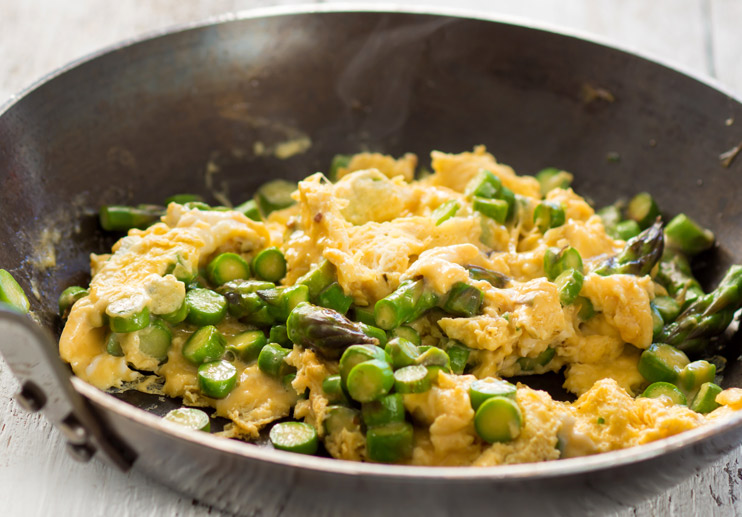
Scrambled Eggs with Asparagus (Revuelto de Espãrragos)

This dish has long been a favorite of mine, good any time of day or night. In Spain, thin stalks of asparagus, called trigueros, are often used. Recently, I enjoyed a version that featured tender green beans instead of asparagus. Feel free to customize with your favorite egg-friendly ingredients.

Ingredients

  • 2 garlic cloves, peeled and coarsely chopped
  • 1/4 cup extra virgin olive oil, plus extra for drizzling
  • 1 bunch asparagus, trimmed, stalks sliced into 1-inch lengths
  • 1 teaspoon pimentón (Spanish smoked paprika), or regular paprika
  • 2 tablespoons white wine vinegar
  • Sea salt
  • 6 eggs, beaten
  • Freshly ground black pepper

Directions

Step 1

Heat the oil in a frying pan and sauté the asparagus over medium heat for 2 minutes. Add the garlic, pimentón, vinegar, and a pinch of salt; stir to combine. Cover and cook for 2 to 3 minutes more, or until the asparagus is tender.

Step 2

Uncover the pan and pour in the eggs. Cook, stirring often, for 2 to 3 minutes, or until the eggs are almost cooked. Remove from the stovetop. (The perfect revuelto is creamy; do not let the eggs brown.) Season to taste with salt and pepper. Drizzle with additional olive oil and serve immediately.

Serves 2 to 3 — Recipe adapted from The Food of Spain (Bay Books, 2008)

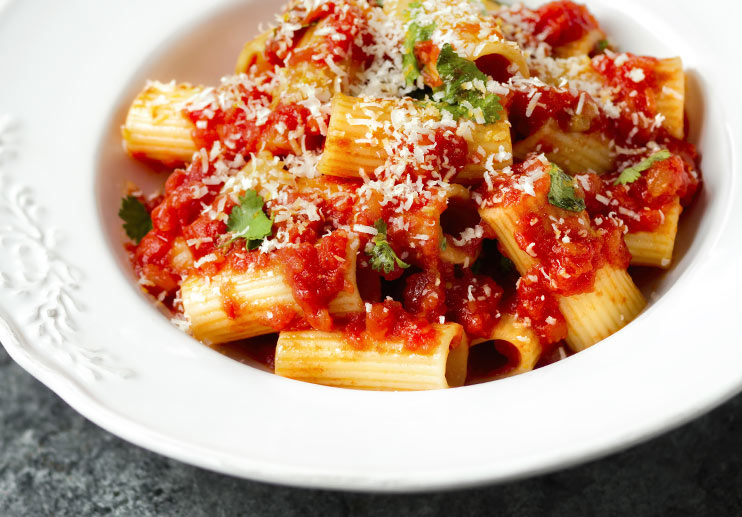
Garden Pasta Alla Hermes

My Merry Band of Tasters and I were treated to this colorful dish for lunch at the Di Mercurio family’s farm, and master miller Duccio Morozzo and I liked it so much we decided to recreate it back in his Roman kitchen. The tomato purée we used is called passata. Find it at larger supermarkets or online. Back in the US we also use high-quality crushed tomatoes.

Ingredients

  • Coarse salt (kosher or sea), to taste
  • 1/4 cup extra virgin olive oil, plus more for drizzling
  • 1/2 red bell pepper, stemmed, seeded, and diced
  • 1/2 small eggplant, stemmed, peeled, and diced
  • 1/2 small zucchini, stemmed and diced
  • 1 small red onion, peeled, and diced
  • 1/2 pound (8 ounces) uncooked rigatoni
  • 3 cups high-quality jarred tomato purée or crushed tomatoes
  • Parmigiano-Reggiano, for serving
  • Crushed red pepper flakes, for serving

Directions

Step 1

Bring a large pot of salted water to a boil. Pour 1/4 cup of olive oil into a cold saucepan. Add the bell pepper, eggplant, zucchini, onion, and a pinch or two of salt. Sauté the vegetables until they’re soft and cooked through, 10 to 12 minutes.

Step 2

In the meantime, add the pasta to the boiling water and cook until al dente according to the package directions.

Step 3

Stir the tomato purée into the vegetables and simmer over medium-low heat for 5 minutes. Purée the sauce with a stick blender until it’s fairly smooth. Season with additional salt, if desired. Drain the rigatoni and add to the sauce. Gently stir to combine. Transfer to a warmed shallow bowl and serve with grated Parmigiano-Reggiano, hot red pepper flakes, and extra olive oil for drizzling.

Serves 4 — Recipe courtesy of the Fresh-Pressed Olive Oil Club

Monkfish with Olive Oil and Tomatoes

Sometimes called “poor man’s lobster,” mild, sweet-tasting monkfish has a pleasantly rm texture. Fancy enough for a dinner party, it simply begs for a drizzle of exquisitely fresh EVOO. Serve with a mixed green salad lightly dressed with olive oil and lemon juice.

Ingredients

  • 1 1/2 pounds monkfish
  • Juice of 1 lemon
  • Coarse salt (kosher or sea) and freshly ground black pepper
  • 6 tablespoons extra virgin olive oil
  • 1/4 cup dried bread crumbs
  • 1 small onion, peeled and diced
  • 2 cloves garlic, peeled and minced
  • 2 medium ripe tomatoes, seeded and diced
  • 1 tablespoon minced fresh basil

Directions

Step 1

Slice the monkfish into medallions about 1 inch thick. Place in a dish, sprinkle with lemon juice, and season with salt and pepper.

Step 2

Heat one tablespoon of oil in a heavy skillet, add the bread crumbs, and sauté until they are golden. Remove from the pan and wipe out the pan.

Step 3

Heat another two tablespoons of the olive oil in the skillet. Add the onion and sauté over medium heat until tender. Add the garlic and sauté briefly, then add the tomatoes. Stir the tomatoes in with the other ingredients for a minute or two, just long enough to warm them without cooking them through. Remove the vegetables from the pan.

Step 4

Add one more tablespoon of the oil to the pan and cook the monkfish over medium heat, about three minutes on each side, until just cooked through. The monkfish will probably not take on any color. Arrange the monkfish medallions on a warm platter or on individual plates.

Step 5

Return the tomato mixture to the skillet, add the remaining two tablespoons of oil, stir, season with salt and pepper, and add the basil. Pour this mixture around the medallions of fish. Sprinkle the fish with the bread crumbs and serve.

Serves 4 — Recipe adapted from nytimes.com