Fresh-Pressed Olive Oil Club

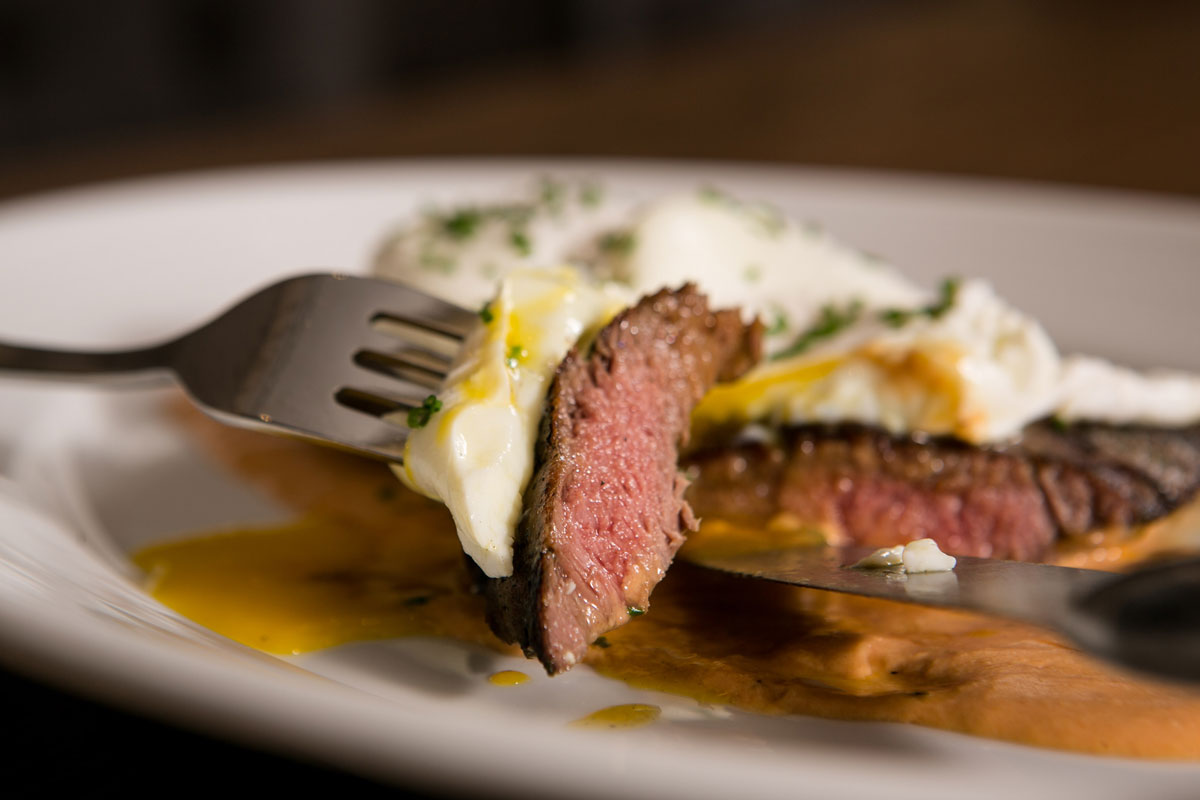
Lomo a la pobre

Meet the Chilean version of steak and eggs, a popular breakfast option throughout the country. The dish can be made on the stovetop or grill using a grill plate, a cast iron skillet, or a plancha—a very handy flat Spanish griddle you can use right on your grill without the risk of food falling through a grill basket or the grill grates—plus, its smooth surface distributes heat evenly. For a more substantial meal, serve the lomo with oven-roasted potatoes.

Ingredients

  • Two 6-ounce filet mignons or strip steaks, each about 1 inch thick
  • Extra virgin olive oil
  • Coarse salt (kosher or sea)
  • Freshly ground black pepper
  • One large red or white onion, peeled, halved lengthwise, and thinly sliced
  • 2 large eggs
  • 2 tablespoons chopped fresh cilantro, flat-leaf parsley, or chives

Directions

Step 1

Brush the steaks on both sides with olive oil, then season with salt and pepper. Set aside.

Step 2

Toss the onions with olive oil and season with salt and pepper. In a cast iron skillet, sauté the onions over medium heat until soft and lightly colored. Remove from the skillet and keep warm. Over medium-high heat, sear the steaks for 3 to 4 minutes per side; cook until done to your liking. Keep warm. Wipe out the skillet with a paper towel. Add a tablespoon of olive oil to the skillet and fry the eggs until done to your liking. (I prefer runny yolks. They mingle with the olive oil and make an unctuous sauce.)

Step 3

To serve, arrange the steaks on a bed of onions. Top each steak with a fried egg, drizzle with olive oil, and sprinkle with the fresh herbs.

Serves 2, but can be multiplied as desired
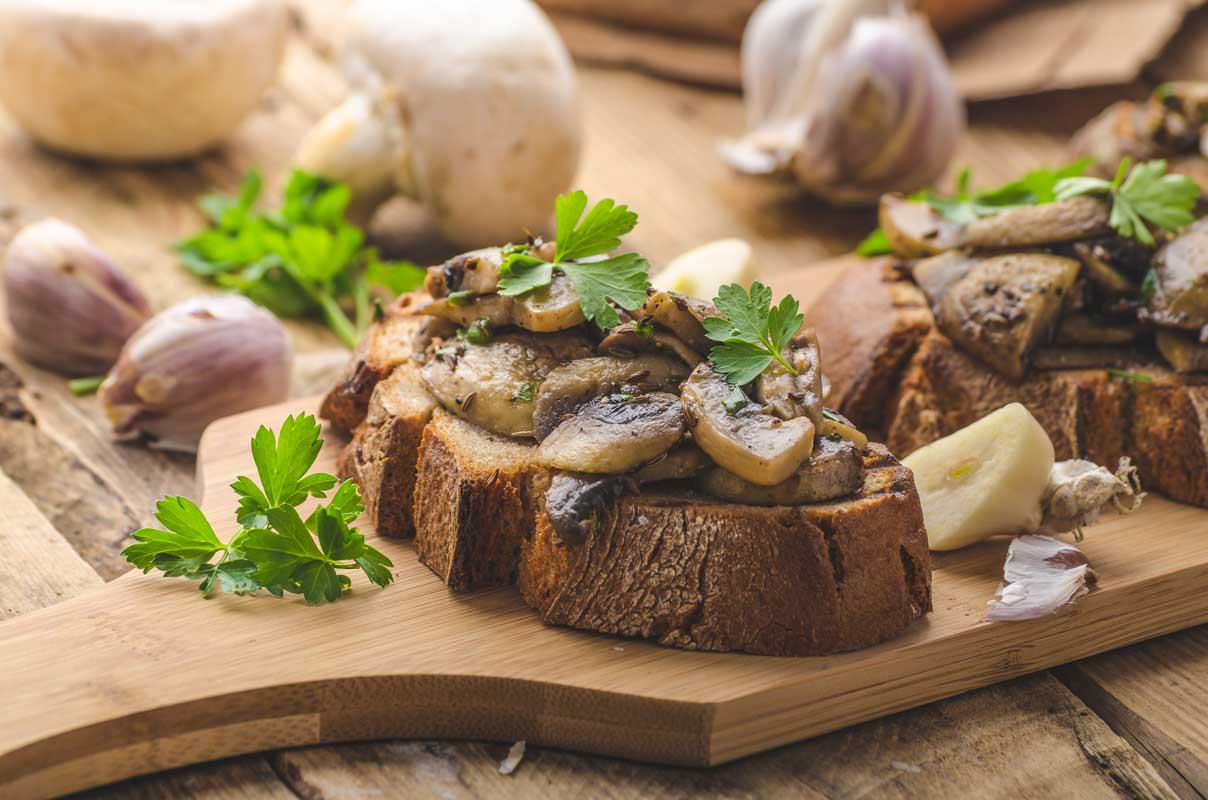
Mushroom Toasts

This South American take on bruschetta gets its inspiration from marraqueta, the crusty bread wildly popular in Chile (often called pan francés), and the country’s penchant for white sauces.

Ingredients

  • 1 small onion, peeled and quartered
  • 4 garlic cloves, peeled, one halved
  • 4 tablespoons extra virgin olive oil, plus more for drizzling
  • 12 ounces baby bella (cremini) mushrooms, thinly sliced
  • 2 tablespoons red wine or sherry vinegar
  • 1/2 teaspoon coarse sea salt, or to taste
  • 1/2 teaspoon freshly ground black pepper, or to taste
  • 2 tablespoons half-and-half or light cream
  • 1 tablespoon chopped flat-leaf parsley
  • 4 slices of crusty bread, 1/2 inch thick

Directions

Step 1

Place the onions and 3 1/2 of the garlic cloves in a food processor and pulse until finely chopped (reserve the remaining garlic half). Heat a sauté pan and, when warm, add 2 tablespoons of olive oil and the onion-garlic mixture. Cook until the vegetables start to brown, 3 to 5 minutes. Add the mushrooms and sauté until browned and the moisture has evaporated, about 10 minutes. Deglaze the pan with the vinegar and stir until it evaporates; add the salt and pepper and stir again. Off the heat, stir in the half-and-half and top with the parsley; set aside.

Step 2

Set your oven to broil (lowest setting if it’s calibrated). Place the bread on a rimmed sheet pan and brush both sides with the remaining 2 tablespoons of olive oil. Toast the bread under the broiler for about 2 minutes, watching closely so it doesn’t burn; flip and toast the other side. (This can also be done on the grill if cooking outdoors.)

Step 3

Transfer the bread to a platter and rub the tops with the garlic half. Top each slice with equal amounts of the mushrooms and a drizzle of olive oil.

Serves 4

Olive oil is beneficial for maternal-fetal health

Adapted from Cortez-Ribiero et al (2022) and an article by Liji Thomas, MD, in News Medical, January 3, 2023

Numerous studies have shown that olive oil can have positive effects on pregnancy.
A recent systematic review published in the journal Nutrition Research is the first to summarize the evidence for the protective effects of EVOO consumption on maternal-fetal health.

Introduction

Nutrition plays a vital role in the health of a pregnant woman and the outcome of her pregnancy. Olive oil is a healthy source of monounsaturated fatty acids (MUFAs) and phytochemicals such as polyphenols that promote favorable outcomes in pregnancy. In addition, olive oil is linked to lower rates of gestational diabetes mellitus (GDM), preeclampsia (a sudden, dangerous rise in blood pressure), and small-for-gestational-age (SGA) or large-for-gestational-age (LGA) infants.

A systematic review included nine studies from Europe, the UK, and Argentina, conducted between 2008 and 2020. Study sizes ranged from 30 to 35,000 women.

  • Six studies were interventional, including five randomized controlled trials, and three were observational (case-control or cohort studies).
  • Maternal-fetal outcomes evaluated included SGA, LGA, GDM, premature birth, preeclampsia, and cardiovascular risk.
  • The intervenional studies evaluated the effects of EVOO, while the observational studies did not specify the grade of olive oil.

What did this study show?

  • EVOO in particular, and olive oil in general, is associated with a reduction in the risk of maternal and fetal adverse effects, including GDM, SGA, LGA, prematurity, and preeclampsia.
  • EVOO supplementation was associated with favorable cardiovascular effects in pregnancy, including a decrease in triglyceride levels.

What are the implications?

  • SGA increases the risk of poor fetal outcomes, while LGA increases the risk of birth complications. Both SGA and LGA were reduced in association with EVOO intake.
  • Both GDM and prematurity were reduced in one or more of the interventional studies. The anti-diabetic effects of EVOO may be attributed to the activity of polyphenols, which can improve insulin sensitivity.
  • Two studies evaluated the risk of preeclampsia: increased EVOO consumption reduced the risk in one study; the other did not find a reduced risk of preeclampsia but reported a reduction in gestational weight gain, a risk factor for preeclampsia.

This systematic review is an important, first-of-its-kind summary of the evidence that EVOO can confer protective effects on pregnancy outcomes. More studies focusing on the impact of olive oil consumption on maternal-fetal outcomes are needed.

Reference: Cortez-Ribeiro, AC et al. Olive oil consumption confers protective effects on maternal-fetal outcomes: a systematic review of the evidence. Nutr Res. 2022;110:87-95. doi.org/10.1016/j.nutres.2022.12.013.

Asparagus with Olive Oil Sabayon

Fresh asparagus is one of my favorite vegetables, especially when paired with a luscious olive oil sabayon. If not using the asparagus immediately, trim the ends (as you would cut flowers) and stand upright in a tall glass of water. Cover the tips with a plastic bag and refrigerate for a day or two.

Ingredients

  • 1 cup dry white wine
  • 1/3 cup white wine vinegar
  • 1 pound green or white asparagus, tough ends trimmed
  • 2 egg yolks
  • 1/3 cup extra virgin olive oil
  • Coarse salt (kosher or sea) and freshly ground black or white pepper

Directions

Step 1

Place the wine and vinegar in a saucepan and bring to a simmer over medium-high heat. Reduce the mixture by three-quarters and let cool.

Step 2

Steam the asparagus in a double boiler over medium-high heat until tender, about 8 to 10 minutes; set aside but keep warm.

Step 3

Transfer the wine reduction to the top of a double boiler and add the egg yolks. Set over simmering water over medium heat. Cook, whisking constantly, until the yolks thicken enough to fall into thin ribbons when the whisk is lifted from the pan. Remove the pan from the heat and gradually whisk in the olive oil. Thin, if necessary, with one to two tablespoons of water. Season with salt and pepper.

Step 4

Arrange the asparagus on a platter, spoon on the sauce, and serve.

Serves 4 — Recipe adapted from saveur.com