Fresh-Pressed Olive Oil Club

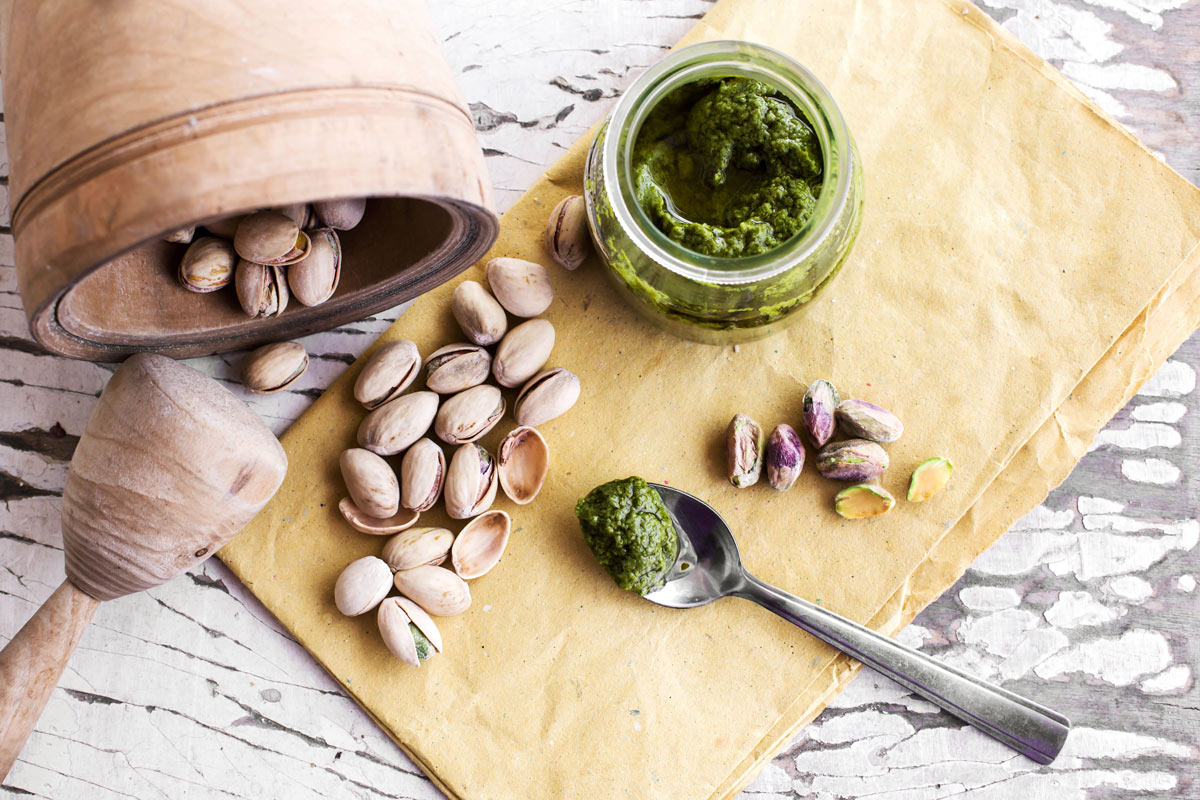
Chicken with Pistachio Pesto

As my team knows, I love pistachio anything. And this version of pesto has earned a place in my repertoire. While my wife Meghan and I enjoy it on skin-on chicken thighs or breasts, it can be used on boneless skinless chicken pieces (or whole birds) as well. Leftovers are amazing on bruschetta, on sandwiches, or stirred into pasta.

Ingredients

For the pesto:

  • 1/4 cup salted pistachios, shelled
  • 1 cup fresh basil leaves, washed and spun dry
  • 1/4 cup freshly grated Parmigiano-Reggiano
  • 1 clove garlic, peeled and coarsely chopped
  • 1 tablespoon fresh lemon juice, or more to taste
  • Pinch of crushed red pepper flakes (optional)
  • 1/4 cup extra virgin olive oil

For the chicken:

  • 6 bone-in, skin-on chicken thighs or breasts
  • Extra virgin olive oil
  • Coarse salt (kosher or sea)
  • Freshly ground black pepper

Directions

Step 1

Heat the oven to 325°F. Make the pistachio pesto: Place the pistachios in a single layer on a rimmed sheet pan and bake for 5 minutes to lightly toast them. Let cool completely.

Step 2

In the bowl of a small food processor or a blender jar, combine the toasted pistachios, basil, cheese, garlic, and lemon juice. Pulse until roughly chopped. Add the red pepper flakes, if using. With the machine running, slowly add the olive oil until the mixture is emulsified, but still retains some texture. Taste, adding more lemon juice, if desired. (If not using immediately, cover and refrigerate for up to 3 days, but the color and flavors will be brightest if freshly made.)

Step 3

Increase the oven heat to 380°F if roasting the chicken immediately. Line a rimmed sheet pan with parchment paper or foil and top with a wire rack. Gently lift the skin on the chicken thighs or breasts and push about a spoonful of the pistachio pesto under the skin. Massage with your fingertips to distribute the pesto evenly. Brush the skin on each chicken piece with olive oil, then season with salt and pepper. Arrange skin side up on the wire rack over the baking sheet.

Step 4

Roast the chicken for 25 to 30 minutes or until the chicken is cooked through and the skin is nicely browned. The internal temperature when read on a meat thermometer should be 165°F. As a final step, for even crispier skin, set the oven to broil and broil for 2 to 3 minutes. Let rest for 5 minutes before serving.

Serves 4 to 6

Roasted Monkfish with Burst Cherry Tomatoes and Olives

Monkfish, sometimes called “poor man’s lobster,” is deliciously meaty. If you can’t find it, substitute grouper, swordfish, halibut, or tuna. Greens sautéed with garlic or a green salad would make a nice accompaniment.

Ingredients

  • Extra virgin olive oil
  • 1 1/2 pounds monkfish fillets
  • 1 cup cherry tomatoes
  • 1/2 cup brined Castelvetrano olives, pitted
  • 1 lemon, cut into 6 wedges
  • Coarse salt (kosher or sea)
  • Freshly ground black pepper
  • 4 sprigs fresh thyme
  • Chopped fresh flat-leaf parsley, for garnish

Directions

Step 1

Drizzle a bit of olive oil in the bottom of a shallow
baking dish large enough to hold the fish. Arrange the fish in the dish, then surround it with the tomatoes and olives. Drizzle additional olive oil over all, then squeeze the lemon wedges over the fish to release their juice. (Put the rinds into the baking dish, too.) Season the fish with salt and pepper, then top with the thyme sprigs. Cover and refrigerate for 30 minutes. (Don’t marinate longer, or the lemon juice will begin to “cook” the fish.)

Step 2

Heat the oven to 425°F. Uncover the fish and place in the oven. Roast the fish until it is cooked through and the tomatoes have begun to break down, about 20 minutes, depending on the thickness of the fish. Transfer the monkfish, tomatoes, and olives to a platter. Discard the lemon rinds and thyme sprigs (the stems are too tough to eat). Stir the juices and pour over the fish. Serve immediately.

Serves 4

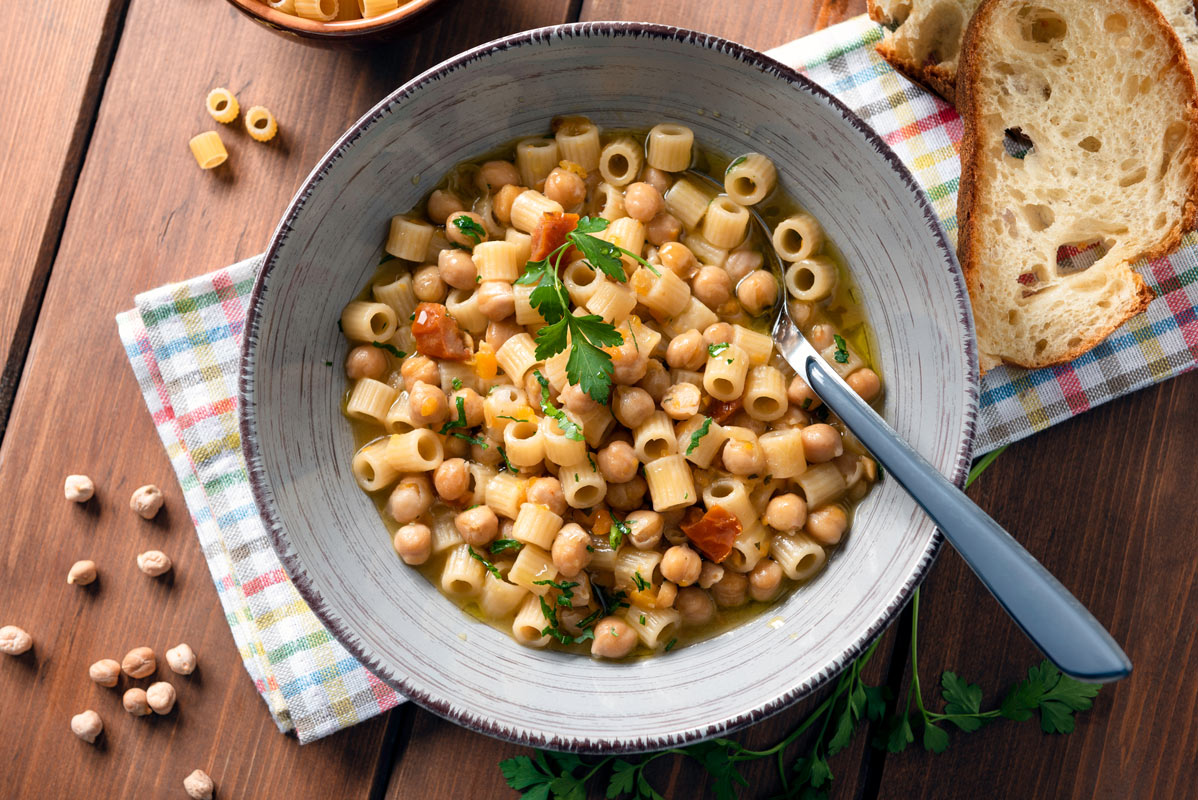
Pasta e Ceci

This popular Roman soup pairs small tube-shaped pasta and chickpeas. Using broth instead of water, along with a Parmigiano-Reggiano cheese rind, really amps up the flavor—save your leftover rinds in the freezer to drop in stews as well as soups. You can also adjust the ratio of chickpeas to pasta as you like.

Ingredients

  • 2 tablespoons extra virgin olive oil, plus more for drizzling
  • 1 small yellow onion, peeled and chopped
  • 1 celery stalk, finely sliced crosswise
  • 1 large carrot, trimmed, peeled, and diced
  • 2 cloves garlic, peeled and minced
  • 1/4 teaspoon crushed red pepper flakes
  • 1/2 teaspoon freshly ground black pepper
  • 1/2 teaspoon coarse salt (kosher or sea)
  • 2 cups canned chickpeas with liquid
  • 1 cup diced canned tomatoes,
    preferably San Marzano
  • 1 sprig fresh rosemary
  • 4-inch Parmigiano-Reggiano rind, if available
  • 6 to 8 cups chicken broth or vegetable broth, homemade or low-sodium canned
  • 1 cup ditalini or another small tube-shaped pasta, uncooked
  • Shavings of Parmigiano-Reggiano, for serving

Directions

Step 1

Heat a stock pot or Dutch oven over medium heat. When hot, add the olive oil and sauté the onion, celery, and carrot until soft but not browned, 10 to 12 minutes. Add the garlic and cook 2 minutes. Stir in the red and black peppers and salt. Add the chickpeas, tomatoes, rosemary, cheese rind, if using, and 6 cups of the broth. Bring to a low boil, add the pasta, and cook until tender, about 10 minutes, stirring frequently. If the pasta absorbs most of the liquid, add more broth as needed.

Step 2

Ladle into warmed soup bowls and use a vegetable peeler or cheese plane to top each bowl with shavings of cheese, then add a drizzle of olive oil.

Serves 8

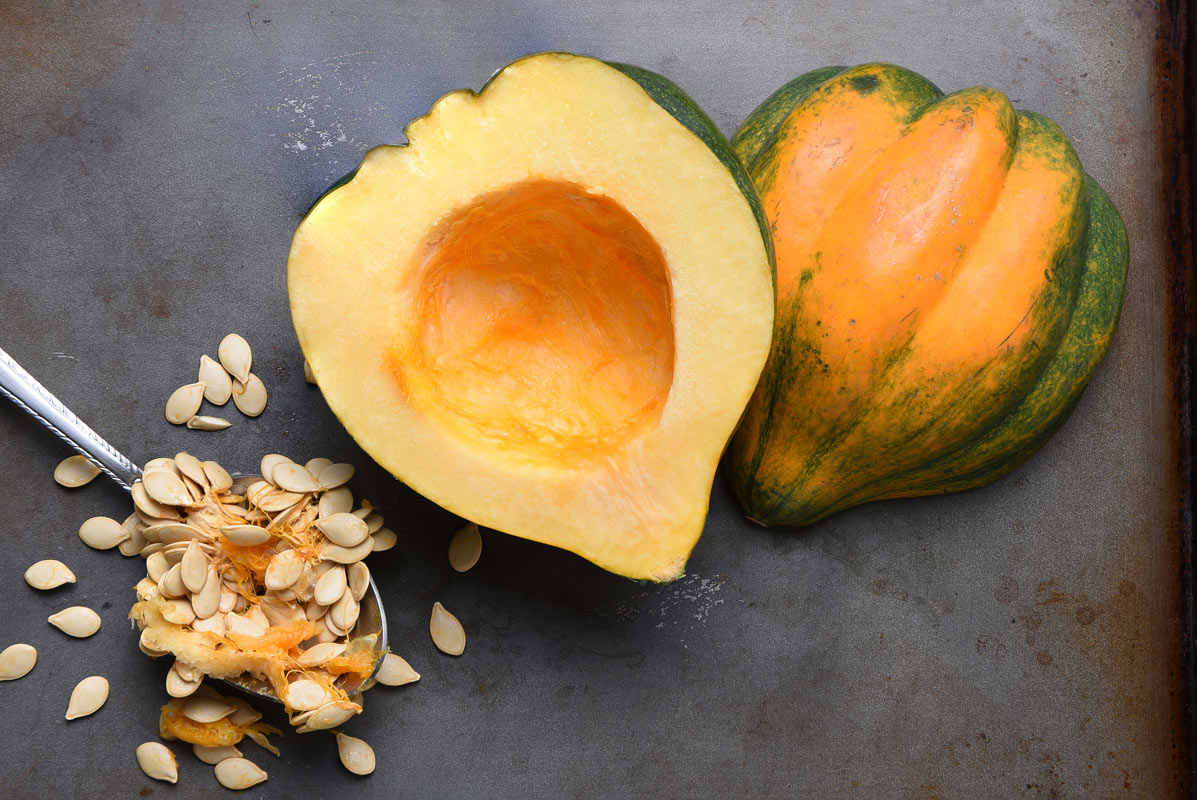
Baked Acorn Squash with Asiago Flan and Fried Sage Leaves

Squash stuffed with a cheesy flan is a beautiful cool weather dish, whether served as a side or as a meatless entrée. Feel free to use other varieties of squash, though baking times will vary according to their size.

Ingredients

For the squash:

  • 2 acorn squash
  • Extra virgin olive oil Coarse salt (kosher or sea)
  • Freshly ground black pepper

For the flan:

  • 2 large eggs
  • 1 1/4 cups heavy cream
  • 1/4 cup extra virgin olive oil
  • 4 ounces Asiago or Pecorino Romano, freshly and finely grated
  • Pinch cayenne pepper
  • Pinch freshly grated nutmeg

For the garnish:

  • Extra virgin olive oil
  • 12 fresh sage leaves

Directions

Step 1

Heat the oven to 400°F.

Step 2

Using a sharp knife, remove the squash stems and cut each squash in half lengthwise. If the halves don’t sit flat, cut a small slice off the bottom (rounded side) of each to stabilize them. Scrape out the seeds and stringy bits. Generously brush the cut sides and cavities with olive oil and season with salt and pepper. Arrange on a rimmed sheet pan, cut sides down, and roast until almost tender, 30 to 40 minutes.

Step 3

Prepare the flan: Whisk the eggs until the yolks and whites are well mixed. Whisk in the cream, then the olive oil, cheese, cayenne, and nutmeg. Season with salt and pepper.

Step 4

Turn the squash halves over so the cavities face up. Divide the flan mixture among the cavities. Return to the oven and bake until the center of the flan is set and the squash is tender, 20 to 25 minutes more.

Step 5

In the meantime, heat a frying pan to medium-high. Coat the bottom with olive oil. Fry the sage leaves in a single layer, then drain on paper towels. Sprinkle with salt, and use the leaves to garnish the acorn squash flans.

Serves 4 to 6