Fresh-Pressed Olive Oil Club

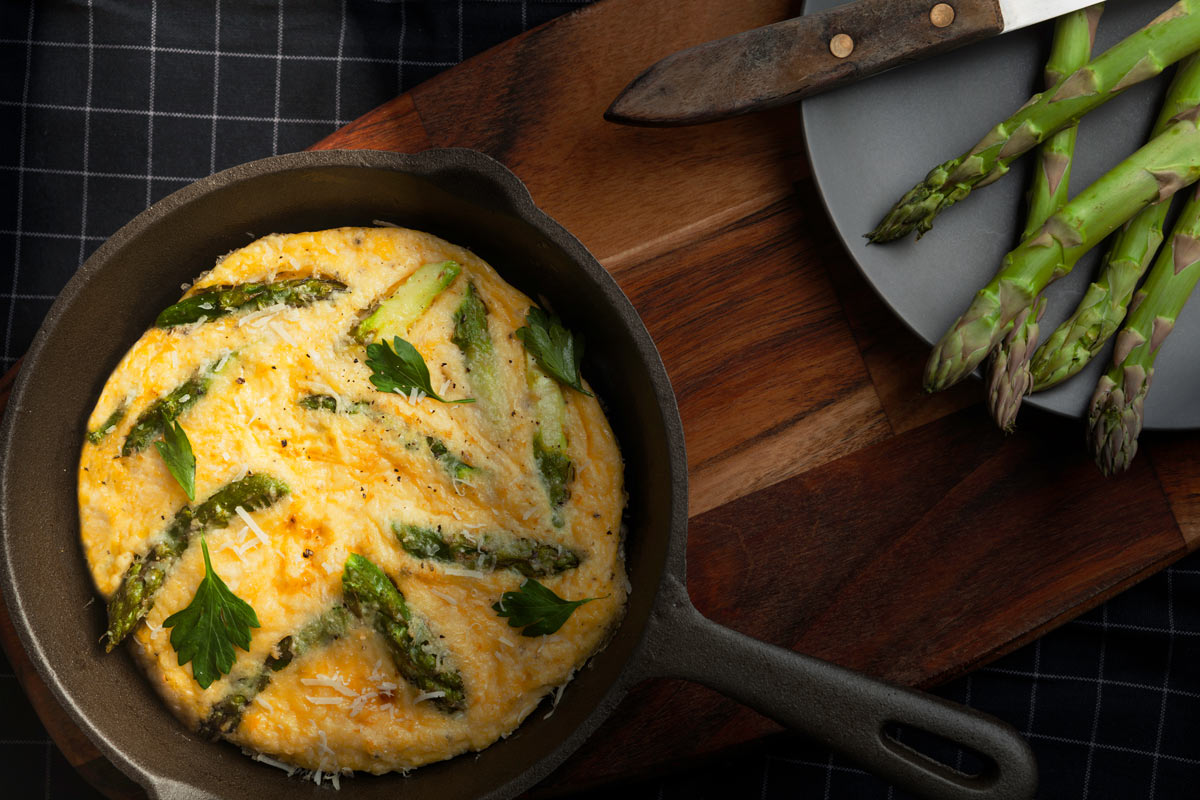
Asparagus Frittata with Piquillo Pepper Sauce

Frittatas are infinitely customizable—you can add to them nearly any cooked meat or vegetable you would like—and don’t require any scary maneuvers (like flipping the entire dish multiple times as it cooks, as you do with a tortilla Espagnole). Feel free to substitute a couple of roasted, peeled, and seeded red peppers for the piquillos if you don’t have the latter on hand.

Ingredients

For the frittata:

  • 8 to 10 stalks fresh asparagus, medium width 2 tablespoons extra virgin olive oil
  • Coarse salt (kosher or sea) and freshly ground black pepper
  • 1 cup coarsely grated Manchego or Parmigiano-Reggiano, divided use
  • 8 large eggs
  • 1/2 cup heavy cream, half and half, or whole milk

For the piquillo pepper sauce:

  • One 6.5 ounce jar piquillo peppers, seeded and drained
  • 2 cloves garlic, peeled and coarsely chopped 2 tablespoons extra virgin olive oil
  • 2 tablespoons mayonnaise
  • 1 tablespoon best-quality sherry or red wine vinegar, or more to taste
  • 1 teaspoon pimentón
  • Coarse salt (kosher or sea), to taste

Directions

Step 1

Trim the tough, fibrous ends off the asparagus, then slice into 1-inch lengths. Warm a 10-inch oven-proof nonstick or well-seasoned cast iron skillet over medium- high heat. Add the olive oil and asparagus; season with salt and pepper. Sauté the asparagus for 5 to 6 minutes, stirring often. Set aside and allow the pan and asparagus to cool. Distribute the asparagus evenly in the pan, then sprinkle with half the cheese; reserve the remaining cheese. In the meantime, heat the oven to 350°F.

Step 2

Break the eggs into a medium mixing bowl. Add the cream. Whisk just until the egg yolks, whites, and cream are combined. (Do not overbeat, or the frittata will be dense.) Carefully pour the egg mixture over the asparagus and cheese. Transfer the pan to the middle rack of the oven and bake until the frittata is just set, 20 to 25 minutes. Sprinkle the remaining cheese on top of the frittata in the last 5 minutes of baking. Let the frittata cool slightly before cutting into wedges.

Step 3

While the frittata bakes, make the piquillo pepper sauce: Combine all the ingredients in a blender or small food processor. Process until the sauce is smooth. Taste, adding more vinegar or salt as needed. Drizzle over the plated frittata wedges or serve the sauce on the side. Refrigerate, covered, for up to 3 days if not using immediately.

Serves 6
Traditional Atlantic Diet of Spain and Portugal Offers Metabolic and Environmental Benefits

The traditional Atlantic diet of northwestern Spain and Portugal consists of local, fresh, minimally processed seasonal foods such as vegetables, fruits, whole grains, beans, and olive oil, along with high consumption of fish and other seafood. It shares similarities with the Mediterranean diet and has been linked to improved metabolic risk factors as well as environmental benefits.

The Galicia Atlantic Diet (GALIAT) study set out to assess the effects of the traditional Atlantic diet on the metabolic health and dietary habits of families in Spain:

  • Two hundred fifty families—a total of 574 people—from a community in northern Spain were randomized either to the Atlantic diet intervention group or to the control group. (A family was defined as 2 or more members.)
  • Families in the intervention group attended nutrition education sessions at a local health care center and received additional support, including supplemental food baskets every 3 weeks with characteristic foods of the Atlantic diet,* and a cooking class.
  • The control group was encouraged to maintain their current lifestyle.

A recently published analysis of the GALIAT trial evaluated metabolic syndrome (MetS) in study participants. MetS involves at least 3 of 5 risk factors for heart disease:

  1. abdominal obesity (measured by waist circumference)
  2. elevated blood lipids
  3. low levels of HDL (“good”) cholesterol
  4. high blood pressure
  5. elevated blood sugar

The analysis also evaluated study participants’ dietary carbon footprint by calculating the carbon dioxide
(CO2) emissions associated with each individual’s diet.

The average age was 46; ~60% women and ~40% men; all participants were white and of Spanish ancestry.

Results: Participants who followed the traditional Atlantic diet for 6 months were significantly less likely
to develop metabolic syndrome than were participants who continued their usual lifestyle. In addition, individuals who followed the Atlantic diet had significantly lower rates of both abdominal obesity and low HDL cholesterol.

The analysis also found that family structure had an important influence on CO2 emissions, indicating that family-based interventions to reduce greenhouse gas emissions may prove effective.

Takeaway: Efforts to preserve and bolster traditional eating habits, such as the Atlantic diet, with its emphasis on local produce, olive oil, and seafood, can improve metabolic health and support sustainable development goals.

*Atlantic diet baskets included turnip greens, cabbage, mushrooms, tomatoes, zaragallada (green pepper-tomato-onion sauce), plums, mussels, low-fat cheese, EVOO, white wine, and red wine

Reference: Cambeses-Franco C, Gude Sampedro F, Benítez-Estévez AJ, et al. Traditional Atlantic diet and its effect on health and the environment: a secondary analysis of the GALIAT cluster randomized clinical trial. JAMA Netw Open. 2024;7(2):e2354473.

Phenols in EVOO are the primary source of its heart-health benefits

Reference: Flynn MM, Tierney A, Itsiopoulos C. Is extra virgin olive oil the critical ingredient driving the health benefits of a Mediterranean diet? Nutrients. 2023;15:2915.

A recent scientific review, published in the journal Nutrients, provides strong evidence that the phenols in EVOO—which are not present in lower grades of olive oil—play a primary role in the heart-health benefits associated with olive oil and the Mediterranean diet. 

Phenols are bioactive compounds in plant-based foods. EVOO is rich in phenols, whereas refined olive oils are stripped of these health-promoting compounds by chemical production processes. 

Study Objectives

Dr. Mary Flynn, PhD, registered dietician, and associate professor of medicine at Brown University, identified 34 randomized, controlled trials published between 2000 and 2022 that evaluated the effects of EVOO on risk factors for heart disease: blood pressure, levels of LDL (“bad”) and HDL (“good”) cholesterol, blood sugar, and body weight. 

A main aim of the review was to isolate the effects of the phenols in EVOO from the potential effects of monounsaturated fatty acids (MUFAs), which are present in all grades of olive oil and other vegetable oils. Flynn hypothesized that the MUFA content is not responsible for the many health benefits of EVOO. 

Another objective was to identify a minimum daily amount of EVOO required to experience its health benefits and the timing for improvements in heart-health risk factors to be observed.

Findings

Across the 34 studies, EVOO improved multiple risk factors for heart disease as compared to other grades of olive oil, other plant oils, and low-fat diets: 

  • Lowered blood pressure
  • Lowered LDL and increased HDL
  • Improved insulin sensitivity
  • Proved effective in weight-loss diets and improved long-term weight management

Daily dose of EVOO

According to Flynn and colleagues, “Daily use of EVOO starting at approximately two tablespoons a day will improve a plethora of risk factors in as few as three weeks.”

Phenomenal phenols

It is the phenols in EVOO that confer its heart-health benefits, the authors concluded. In order to obtain optimal levels of phenols, they recommend consuming the freshest olive oil: “The phenol content of extra virgin olive oil is highest in olive oil made close to the harvesting of the olive and will decrease with age and storage. Thus, for maximum health benefits, the EVOO should be produced and consumed as close to harvesting the fruit as possible.” 

The authors noted some limitations of this review: most studies did not include the specific phenolic content of the EVOO used, and many were conducted in the EU, where EVOO has been a part of the diet for centuries. More investigation, especially studies that identify the specific levels of phenols, is needed to confirm and build on these findings. 

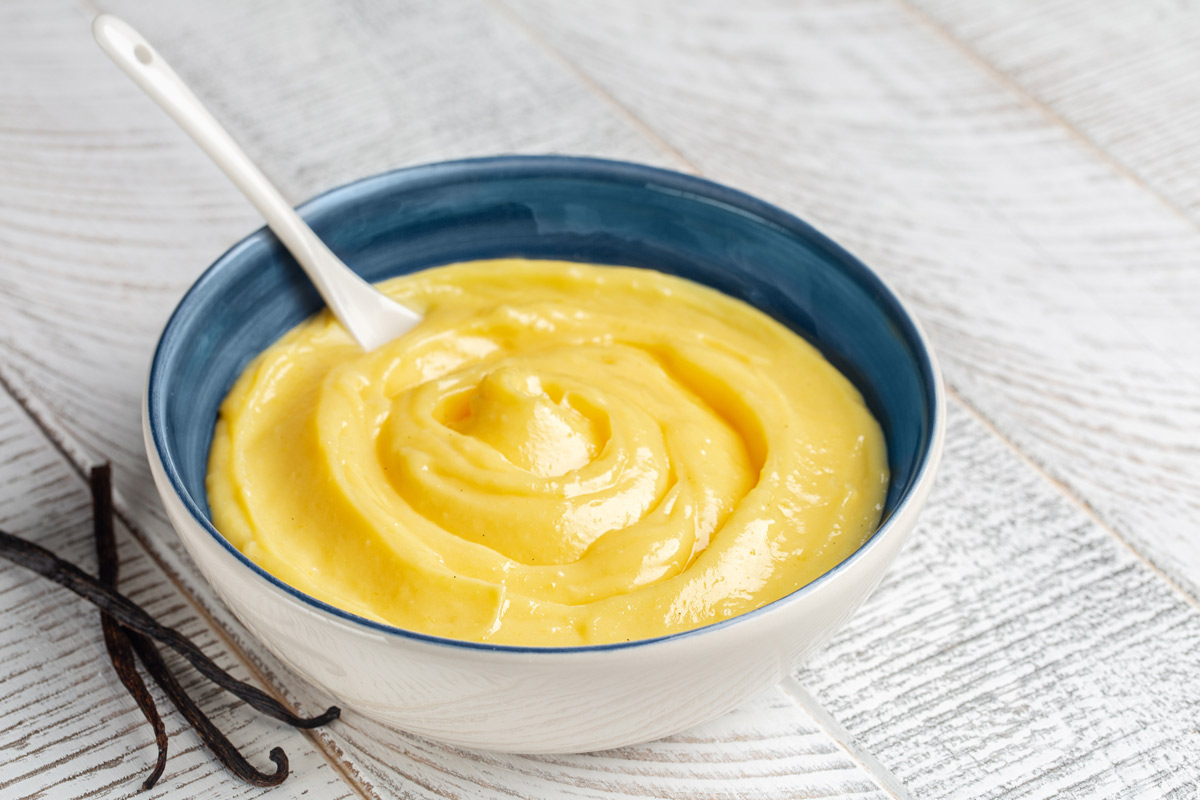
Vanilla and Olive Oil Custard Cream

Delicious spooned over the Flourless Pistachio Cake, this custard also makes a luscious pudding you can enjoy on its own.

Ingredients

  • 3 tablespoons cornstarch
  • 1/2 cup granulated sugar
  • Pinch of fine sea salt
  • 4 egg yolks
  • 1 1/2 cups whole milk
  • 1/2 cup heavy cream
  • 2 tablespoons extra virgin olive oil
  • 2 teaspoons pure vanilla extract or paste

Directions

Step 1

In a heat-safe bowl, whisk together the cornstarch, sugar, and salt. Add the yolks and whisk until the mixture is light yellow.

Step 2

Place the milk and the heavy cream in a saucepan and scald them—you should see a light skin start to form, but don’t let the mixture come to a fast boil. Vigorously whisk 1/4 cup of the liquid into the egg mixture, and then slowly whisk in the rest.

Step 3

Transfer the mixture back to the saucepan and bring to a medium boil over medium heat, whisking constantly. Let it boil for 2 minutes as you continue to whisk; it should become quite
thick. Remove from the heat. Whisk in the olive oil and vanilla, and transfer to a glass
serving bowl. Let it cool slightly, then press a round of parchment paper over the
surface to prevent a skin from forming. Serve warm or chilled.

Serves 4 as a pudding, 10 as a sauce for the pistachio cake