
Bountiful Breakfast Bowl Recipe, Spotlight on Spelt, Double Up on Cooking, “Fibermaxxing” and Women and Heart Disease
Most of us know we should be eating more fiber but lack the motivation to change habits. This edition of the newsletter starts with a delicious way to make a serious dent in your daily fiber intake. The focus is on a whole grain you might not be familiar with — spelt. I’m also sharing a report on why fiber is so important and, finally, why women need to be more aware of their growing heart disease risk (fiber helps lower it, too).
Bountiful Breakfast Bowl
 Bountiful Breakfast Bowl
This high-protein, high-fiber breakfast will get your day off to a nutritious start. To save time in the morning, make the spelt the night before and refrigerate as soon as it reaches room temperature.
Ingredients
- 1 cup uncooked spelt
- 4 tablespoons extra virgin olive oil
- 2 cups plain, unsweetened skyr or Greek yogurt
- 2 cups mixed fresh berries or 1/2 cup dried fruit
- 1/2 cup almonds or cashews
- 4 tablespoons freshly ground flaxseed
Directions
Prepare the spelt according to package directions. When ready to assemble, whisk the olive oil into the yogurt in a bowl. Spoon equal amounts of spelt into four cereal bowls and top with equal amounts of the yogurt mixture, fruit, nuts, and ground flaxseed.
Yields 4 servings

Healthy Ingredient Spotlight
Spelt
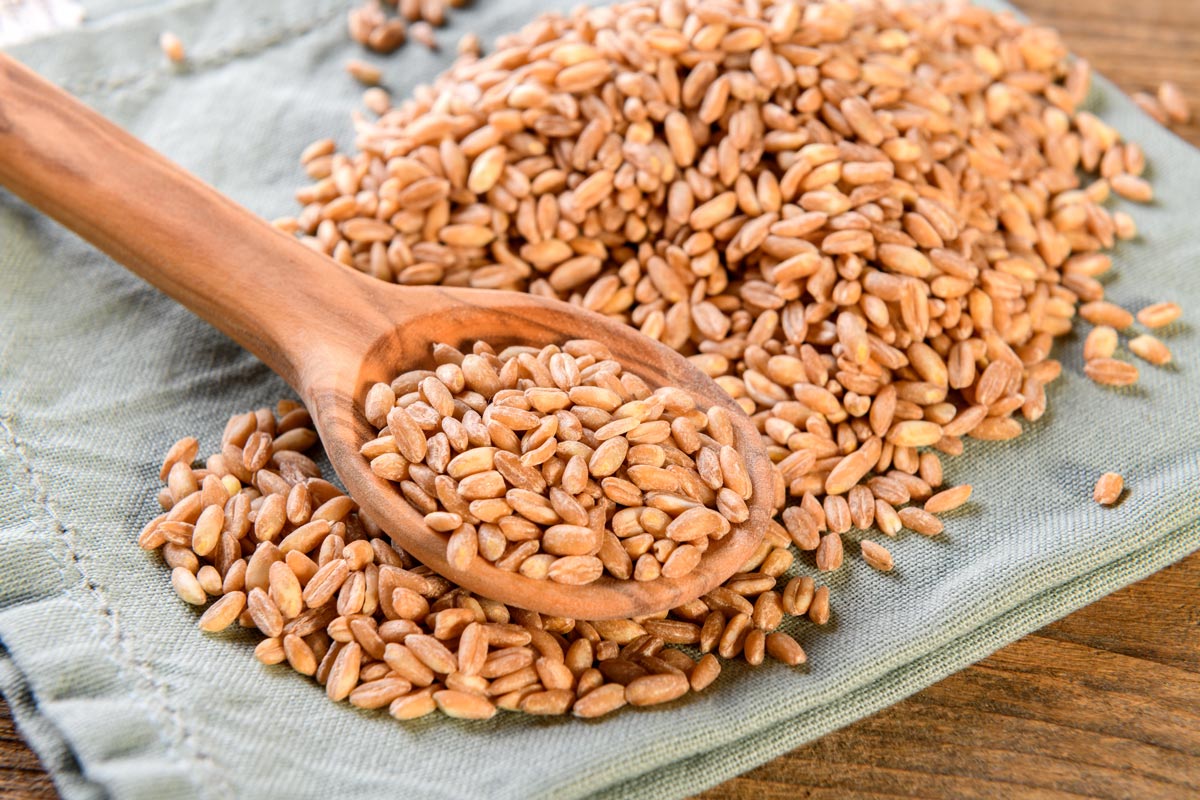
Spelt is a nutrient-dense ancient grain that’s high in fiber (8 grams per cooked cup), protein, and essential minerals like magnesium, iron, and zinc. It also has numerous phytochemicals including lignans and phenolic compounds, which have been linked to a reduced risk of certain cancers. According to the NIH, compared to modern wheat, other benefits include improved digestive health, reduced blood sugar spikes, and enhanced heart health (by lowering LDL cholesterol). One caution: Spelt is not suitable for those with celiac disease or severe gluten intolerance.

Quick Kitchen Nugget
Double Up on Cooking
Like other whole grains, spelt can take about 45 minutes to fully cook. While worth the effort, it makes sense to cook up a large batch and divide it over two or three meals. Spelt should be allowed to cool to room temperature before refrigerating—about 20 to 30 minutes—in an airtight glass container. Don’t put steaming-hot grains directly into the refrigerator because this can raise the temperature inside your fridge and compromise other foods.

For Your Best Health
“Fibermaxxing”
Fiber plays a powerful role in keeping the body healthy, from supporting digestion and feeding beneficial gut microbes to helping regulate blood sugar and cholesterol. Researchers say getting enough fiber may even lower the risk of conditions like obesity, diabetes, and certain cancers. A growing trend called “fibermaxxing” is putting dietary fiber in the spotlight—and for good reason, according to a report from Tufts University. Fibermaxxing refers to consuming at least the recommended daily amount of fiber each day. The idea has gained traction across social media and traditional media this year.
Jennifer Lee, PhD, is a scientist withthe Jean Mayer USDA Human Nutrition Research Center on Aging at Tufts, whose research focuses on how shifts in gut health and differences between sexes affect metabolism throughout a person’s life. Dr. Lee says she’s not surprised that fibermaxxing has become popular. In fact, she sees it as a sign that more people are recognizing an important distinction between lifespan and healthspan. Living longer does not necessarily mean living those years in good health, so many people are searching for ways to stay healthier as they age.
“There is a nine-year gap between living to a certain age in good health and then living in poor quality of health at the end of your life,” Dr. Lee explained. “Behavioral or nutritional strategies that can keep someone healthy are very on trend right now.”
Fiber plays a role. Research shows that consistently low fiber intake can contribute to metabolic and cardiovascular problems, including diabetes and obesity. “If you’re not consuming a lot of fiber, you’re possibly consuming calories from other macronutrient groups, and they may be high in carbohydrates or fats, which can lead to weight gain,” Dr. Lee added. “Then, depending on a number of factors that may impact one’s cancer risk, a fiber deficiency may increase your risk for certain cancers, such as colorectal, breast, and prostate cancer.” Overall, Dr. Lee explained that adding more fiber to your daily diet tends to produce wide-ranging health benefits.
According to the Dietary Guidelines for Americans, 2020-2025, published by the United States Department of Agriculture and the United States Department of Health and Human Services, adults should consume between 22 and 34 grams of fiber each day, depending on age and sex.

Dr. Lee noted that dietary fiber falls into two main categories. Soluble fiber dissolves in water and slows digestion, while insoluble fiber helps move waste through the digestive tract.
“Soluble fiber attracts water into your gut and forms a gel-like substance,” Dr. Lee said. “It keeps you full, helps you feel satiated, and once it makes it into the colon, can provide or serve as a substrate for microbiota, meaning your microbiota can metabolize the food that you digest as well. So, this type of fiber serves as a beneficial food source for the microbes.” Soluble fiber can also help regulate blood sugar by slowing digestion and reducing sudden spikes in glucose levels. It may also help lower cholesterol by preventing some cholesterol from being absorbed into the bloodstream.
“Insoluble fiber, on the other hand, cannot be dissolved and will not contribute to the calories you consume,” Dr. Lee said. “The body can’t take up energy from insoluble fiber, but it is critical to consume because it’s the bulk of substrate that helps you have a bowel movement. Because insoluble fiber bulks up your stool, it helps to prevent constipation.”
To maintain a healthy balance, Dr. Lee recommends consuming roughly twice as much insoluble fiber as soluble fiber each day. For example, if your daily goal is 30 grams of fiber, about 20 grams should come from insoluble fiber and 10 grams from soluble fiber. Foods rich in soluble fiber include many fruits and vegetables, such as apples, avocados, bananas, cabbage, broccoli, and cauliflower. Legumes, beans, and oatmeal are also good sources. Insoluble fiber is commonly found in whole grains, nuts, and seeds.

Fitness Flash
Women and Heart Disease
A new scientific statement published in Circulation, the peer-reviewed flagship journal of the American Heart Association, projects that nearly 6 in 10 women in the United States will be living with some form of cardiovascular disease within the next 25 years. The report, “Forecasting the Burden of Cardiovascular Disease and Stroke in the United States Through 2050 in Women: A Scientific Statement from the American Heart Association,” builds on previous research to estimate how common heart disease and stroke may become among women and how much the growing burden could cost if current trends continue.
The rise in cardiovascular disease will be driven largely by a surge in high blood pressure, diabetes, and obesity. By 2050, nearly 60% of women in the US could have high blood pressure, and close to one in three women ages 22 to 44 may already be living with some form of heart disease. Even children are affected: By 2050, nearly 32% of girls ages 2 to 19 may have obesity, raising concerns about earlier and longer-lasting heart health challenges.
“One in every three women will die from cardiovascular disease — maybe it’s your grandmother, or your mother, or your daughter,” said Karen E. Joynt Maddox, MD, MPH, FAHA, chair of the volunteer writing group, professor of medicine and public health, and co-director of the Center for Advancing Health Services, Policy & Economics Research at Washington University School of Medicine in St. Louis. “Additionally, more than 62 million women in the US are living with some type of cardiovascular disease and that comes with a price tag of at least $200 billion, annually. Our estimates indicate that if we stay on the current path, these numbers will grow substantially over the next 25 to 30 years.”
Researchers expect increases across every major category of cardiovascular disease in women, including heart disease, heart failure, atrial fibrillation, and stroke. Key drivers such as high blood pressure, obesity, and diabetes are also projected to climb.
“Cardiovascular disease is the leading cause of death for women and remains their #1 health risk overall,” said Stacey E. Rosen, MD, FAHA, volunteer president of the American Heart Association, executive director of the Katz Institute for Women’s Health, and senior vice president of women’s health at Northwell Health in New York City. “While many people may think conditions like high blood pressure are only occurring in older women, we know this is not the case. We know the factors that contribute to heart disease and stroke begin early in life, even among young women and girls. The impact is even greater among those experiencing adverse social determinants of health such as poverty, low literacy, rural residence, and other psychosocial stressors. Identifying the types of trends outlined in this report is critical to making meaningful changes that can reverse this course.”
There is some positive news. High cholesterol levels are expected to decline across nearly all groups of women. Improvements are also anticipated in several behaviors that influence cardiovascular health, including healthier eating, increased physical activity, and reduced smoking.
“We know that people are living longer as health conditions are being better managed. As a medical community, we have done a great job decreasing deaths from big cardiovascular events like heart attacks and strokes, but these data suggest that we need to really refocus our efforts on health, wellness, and prevention,” Dr. Joynt Maddox said. “We need to keep girls and women from developing cardiovascular risk factors so that they can live long, healthy lives free of cardiovascular disease, and that means being very intentional about focusing on optimal cardiovascular health across the life course.”
The American Heart Association defines ideal heart health through its Life’s Essential 8™ — four health behaviors (eat better, be more active, quit tobacco, and get healthy sleep) and four health factors (manage weight, control cholesterol, manage blood sugar, and manage blood pressure). “These ideal cardiovascular health metrics are based on extensive scientific research that recognizes the majority — as much as 80% — of heart disease and stroke can be prevented,” Dr. Rosen said. “I like to call Life’s Essential 8 a prescription for health. And one of the most exciting things about it is that we have tailored guidance for these metrics for different times in a woman’s life — from childhood through menopause and beyond. This report projects a concerning future; however, it’s not too late to take the first steps to healthier outcomes.”
Get More Recipes In Your Inbox!