
Tricolore Soup Recipe, Spotlight on Kidney Beans, Colanders and Strainers, Benefits of Monk Fruit, and Workouts Burn More Calories than Previously Thought
I love a hearty soup that delivers nourishing warmth with great taste. My combination of beans, barley, and broccoli is a flavorful hit! If you’re a fan of monk fruit as a sweetener, you’ll be wowed by the nutritional bounty of this gourd. I’m also sharing the latest research on calories burned during exercise—motivation to get moving.
Tricolore Soup
 Tricolore Soup
“Tricolore” refers to the three colors of the Italian flag, but this recipe has surprising choices for the red, white, and green—kidney beans, barley, and broccoli! Notes: Choose hull-less rather than pearl barley for better taste and more fiber. Always save and freeze Parmigiano-Reggiano rinds as they add great flavor to soups and stews.
Ingredients
- 1 cup hull-less barley, uncooked
- 3 tablespoons extra virgin olive oil, plus more for drizzling
- 2 garlic cloves, minced
- 1 pound broccoli florets, coarsely chopped
- 6 cups homemade or store-bought low-sodium chicken or vegetable broth
- Optional: rind from a block of Parmigiano-Reggiano cheese
- One 15.5-ounce can red kidney beans, rinsed and drained
- Fine sea salt to taste
- Freshly ground black pepper to taste
- Shavings of Parmigiano-Reggiano cheese
Directions
Step 1
In a medium saucepan, bring the barley and 4 cups of water to a boil. Lower the heat to a simmer and cook until tender, an hour or more. When the barley is done, all the water should have evaporated. Check it regularly in case the water evaporates before the barley is cooked through.
Step 2
Heat a stockpot over medium-high heat. When hot, add the 3 tablespoons olive oil and the garlic. Sauté until the garlic softens. Add the broccoli, broth, and, if using, the cheese rind. Bring to a simmer and cook until the broccoli is tender, about 12 minutes. Add in the cooked barley and beans and heat through. Season to taste with salt and pepper.
Step 3
Serve with large shavings of cheese and a drizzle of olive oil.
Yields 6 servings

Healthy Ingredient Spotlight
Red Kidney Beans
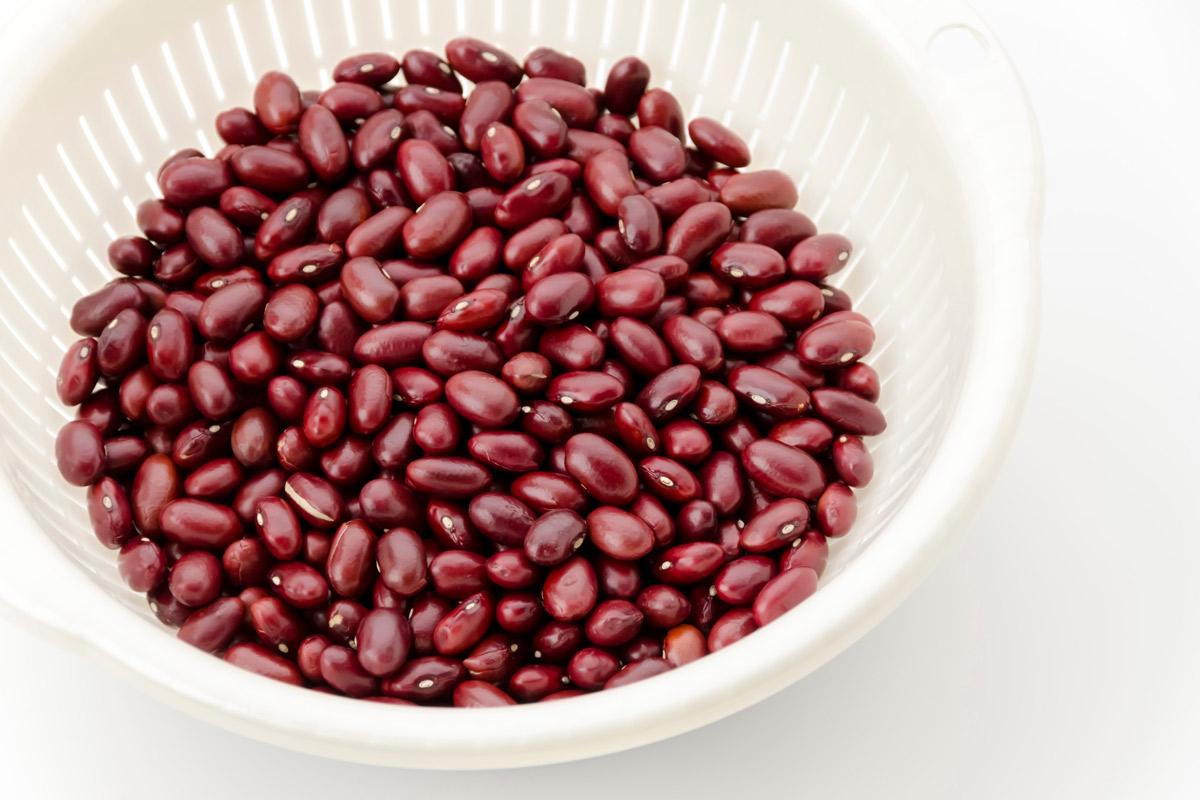
Named for their red color and their shape, kidney beans are a type of legume that come in light- and dark-red shades. Because they’re very firm, they retain their texture well in recipes. Kidney beans are a great source of fiber and protein, delivering 7 grams of each in a half-cup. You’ll also get folate and vitamin B1 along with minerals including iron, manganese, and phosphorus. What’s more, eating beans helps control cholesterol and blood sugar and may boost heart and colon health.

Quick Kitchen Nugget
Colanders and Strainers
Though many recipes call for straining or draining foods, they rarely specify what tool to use. Depending on the specific task at hand, you’ll need either a colander or a strainer. What’s the difference? The overall size and the size of the openings. Simply put, a colander is a footed bowl with two handles and large holes for draining foods like just-boiled potatoes and pasta and rinsing raw fruits, vegetables, and even canned beans. A strainer is a handheld gadget with a scoop-like surface made of mesh for jobs like straining cocoa to remove lumps or sifting confectioners’ sugar over baked goods. It’s also handy when you want to strain out very small ingredients, like seeds. Some strainers have a finer mesh than others. In general, it’s very helpful to have at least two sizes of each tool, typically made from stainless steel for durability.
For Your Best Health
Benefits of Monk Fruit
Scientists are taking a closer look at monk fruit and discovering it’s more than just a zero-calorie natural sweetener. Luo han guo (Siraitia grosvenorii), more commonly known as monk fruit, is a long-living vine that belongs to the gourd family, the same plant group as cucumbers and squash. It’s native to southern China, where it has been used for centuries in traditional foods and remedies. In recent years, monk fruit has drawn scientific attention because it contains high levels of antioxidants, which help protect cells from damage caused by unstable molecules—free radicals which have been linked to aging and many chronic diseases. New findings published in the Journal of the Science of Food and Agriculture looked at the specific chemical compounds of monk fruit and how they may support health.
One of the most important features of monk fruit is its abundance of what’s called secondary metabolites. These are natural plant chemicals that are not required for basic human growth but often play a role in health. In this case, researchers concentrated on three major groups: terpenoids, flavonoids, and amino acids. They examined both the peel and the pulp of four different monk fruit varieties and were able to identify where these compounds are concentrated and how they behave biologically. The study further explored how they interact with antioxidant receptors and other biological targets. (Receptors are structures in cells that receive chemical signals and trigger responses in the body.) These interactions influence various biological pathways, which are step-by-step processes that help regulate functions such as inflammation, metabolism, and cellular protection. Understanding these pathways helps explain why monk fruit may have health promoting properties beyond its use as a natural sweetener.
The researchers emphasized that not all monk fruit is chemically identical. Different varieties can contain different levels and combinations of active compounds. As the authors explained, “[I]t is crucial to conduct an in-depth investigation on the high-resolution metabolic profiles of different luo han guo varieties, providing valuable insights into the nutritional and health characteristics as well as the manufacturing suitability of the various resources available from this plant.” This type of detailed chemical mapping helps scientists determine which varieties may be best suited for food products, supplements, or other uses.

Fitness Flash
Workouts Burn More Calories than Previously Thought
For years, researchers have debated whether the body treats energy like a fixed paycheck or a flexible bonus system. One idea suggests that when people move more, the body shifts energy away from other tasks to pay for that activity. The other model proposes that energy use can expand, allowing total daily expenditure to rise as activity increases. Researchers, led by scientists at Virginia Tech working with colleagues from the University of Aberdeen and Shenzhen University, set out to learn which of these ideas best reflect what actually happens across different activity levels.
To do so, the team measured total energy expenditure, meaning the total number of calories burned in a day, among 75 participants between the ages of 19 and 63, with widely varying activity levels that ranged from largely inactive to ultra-endurance running. “Our study found that more physical activity is associated with higher calorie burn, regardless of body composition, and that this increase is not balanced out by the body reducing energy spent elsewhere,” said Kevin Davy, PhD, a professor in the Department of Human Nutrition, Foods, and Exercise at Virginia Tech and the principal investigator of the study. Physical activity continues to affect the body even after the movement itself has ended. More movement leads to more calories burned.

To measure calories burned, the researchers had the participants drink special forms of oxygen and hydrogen and provide urine samples over a two-week period. Oxygen leaves the body as both water and carbon dioxide, while hydrogen exits only as water. By comparing how much of each isotope was lost, researchers could estimate how much carbon dioxide participants produced and, in turn, how much energy they used. Physical activity was tracked using a small waist-worn sensor that recorded movement in multiple directions.
The results showed that as people moved more, their total energy use increased accordingly. The body did not appear to compensate by dialing down energy use elsewhere. Essential functions such as breathing, blood circulation, and temperature regulation continued to require the same amount of energy, even as physical activity rose. This means the body does not clearly offset or cancel out the extra calories burned through movement.
The researchers also observed a strong connection between higher activity levels and reduced time spent sitting. Simply put, people who move more tend to spend less time being inactive overall.
Get More Recipes In Your Inbox!