
Lobster Risotto Recipe, Spotlight on Lobster and Handling Lobster Tails, Music and Your Brain, Poor Sleep Doubles Running Injuries
Love to pull out all the stops for the holidays? This lobster risotto is a crowd-pleaser, with simple directions to master the dish. At the time of year when many of us think about improving health, two new studies provide easy-to-adopt lifestyle habits for better living: how music can help avoid cognitive decline and how sleep can help avoid sports injuries.
Lobster Risotto
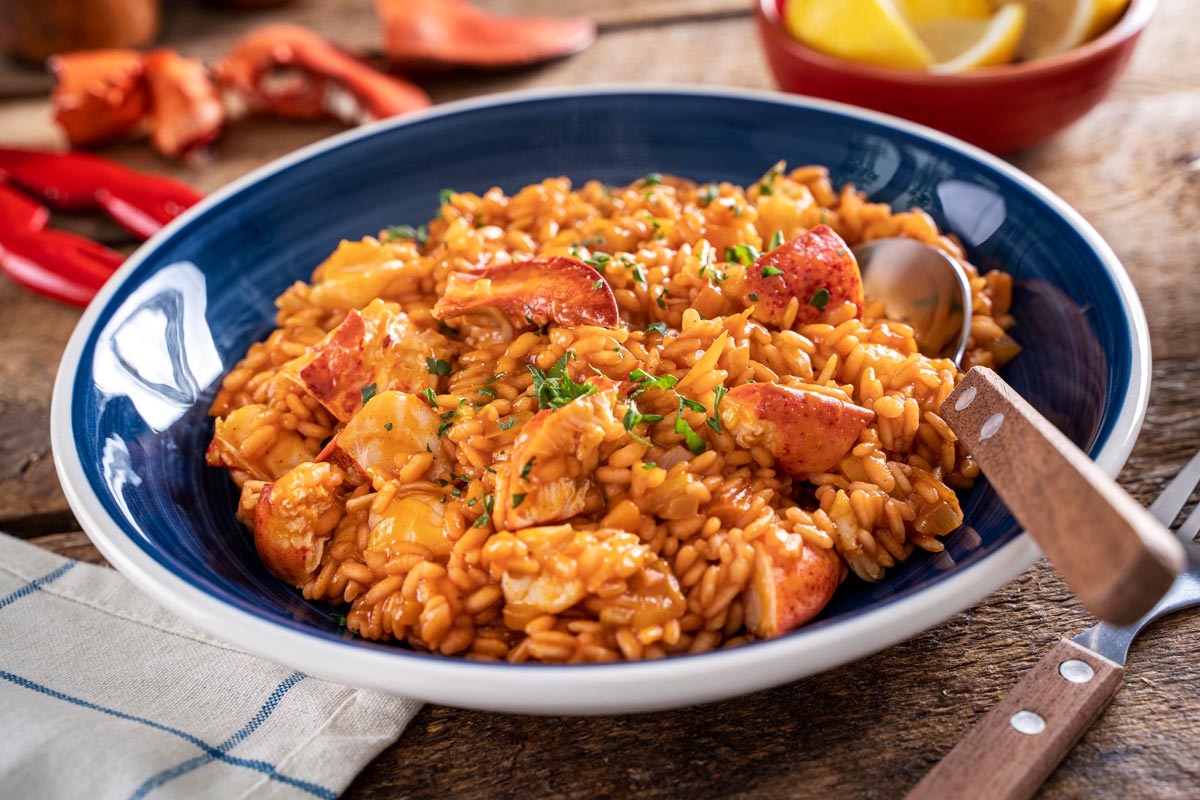 Lobster Risotto
A delicious and festive dish, this can be made quite easily with store-bought lobster broth and a pound of cooked lobster meat. I’m also including directions for making it from scratch, if you prefer, simplified by using only tails. You can get even more flavor from two whole lobsters—after steaming, remove all the claw and tail meat, then use all the shells, legs included, for the stock.
Ingredients
For Homemade Lobster Stock:
- 4 small (4-ounce) or 2 large (8-ounce) lobster tails, defrosted if frozen
- 3 tablespoons extra virgin olive oil
- 2 celery stalks, trimmed and diced
- 2 carrots, peeled and diced
- 1 large onion, peeled and diced
- 2 tablespoons tomato paste
- 1/2 teaspoon sweet paprika, such as Heirloom Sweet Paprika
- 2 bay leaves
For the Risotto:
- 3 or 4 threads saffron
- 1/2 cup dry vermouth
- 3 tablespoons extra virgin olive oil, plus more for drizzling
- 2 large shallots, minced
- 1-1/2 cups short grain risotto rice, such as carnaroli, vialone nano, or arborio
- Reserved homemade lobster stock or 4 cups best-quality store-bought stock
- Reserved lobster meat or 8 (or more) ounces store-bought lobster meat
- 3/4 cup freshly grated Parmigiano-Reggiano, divided use
- Freshly ground black pepper to taste
- 2 tablespoons chopped fresh chives
Directions
Step 1
To make the stock: Steam the lobster tails on a rack over simmering water in a large covered pot until they turn a bright red-orange, about 8 minutes. Use tongs to transfer them to a cutting board, then pour the cooking liquid into a 4-cup heatproof measuring cup; if needed, add enough water to make 4 cups.
Step 2
Use kitchen shears to cut through the underside of the shells and remove the tail meat. Slice into 1-inch medallions, place in a dish, and cover; set aside.
Step 3
Heat a large skillet or Dutch oven. When hot, add the olive oil, lobster shells, and all the vegetables. Sauté until the vegetables soften, stirring frequently. Add the tomato paste to the center of the pan and cook it until it darkens in color. Carefully whisk in the reserved liquid, plus another 2 cups of water, the paprika, and the bay leaves.
Step 4
Bring to a boil, then simmer for an hour. Strain the broth into a clean saucepan, pressing down on the vegetables to extract all the liquid. You should have 4 cups; if not, add enough water to make that amount.
Step 5
To make the risotto: Soften the saffron in the vermouth; set aside. Bring the lobster stock to a low simmer in a medium saucepan. Heat a heavy sauté pan or Dutch oven over medium heat. When hot, add the olive oil and shallots, sautéing them until soft, but don’t let them brown. Add the rice to the pan and stir to thoroughly coat with the oil. Cook until the rice is slightly translucent, about 7 to 10 minutes, stirring often.
Step 6
Add the vermouth-saffron mix to the pan and cook until the liquid has nearly evaporated. Ladle 1/2 cup of the hot stock into the rice mixture and stir continuously. When the liquid is almost completely absorbed, stir in another 1/2 cup of hot stock. Repeat until the rice is creamy yet al dente, about 25 minutes (you may not need all the stock).
Step 7
Stir in 1/2 cup of the Parmigiano-Reggiano and the lobster medallions. If the risotto is too thick, stir in any remaining stock or water, 1/4 cup at a time. Season to taste—the risotto might taste salty enough from the cheese but will benefit from a few twists of a pepper grinder. Serve immediately, topping each portion with a drizzle of olive oil and some chives and passing the rest of the cheese on the side.
Yields 4 servings

Healthy Ingredient Spotlight
Lobster
Unlike many other splurges, you can enjoy lobster without any guilt. It does have dietary cholesterol, but the cholesterol in foods isn’t what impacts a person’s cholesterol level—that has more to do with saturated fat consumption, and in that department lobster comes in under many other protein sources. It also has far fewer calories than an equivalent portion of meat. Lobster’s a good source of protein and, while it doesn’t have as much omega-3 fatty acids as a fatty fish like salmon, it has more than other types of shellfish.

Quick Kitchen Nugget
Handling Lobster Tails
Most tails are sold frozen. Let them slowly defrost overnight in a bowl in your fridge. As with all shellfish, whether you steam, boil, or grill it, avoid overcooking, which can make the meat rubbery. When the shells go from blue or brown to orangey red, you know they’re done, typically about 1 minute per ounce (e.g., 6 minutes if the tails weigh about 6 ounces). Use a pair of kitchen shears to cut the length of the undersides and release the meat. If you’re making a cold recipe or not using the meat right away, place it in a sealed glass container in the fridge.

For Your Best Health
Music and Your Brain

Listening to music after age 70 appears to be linked with a meaningful reduction in dementia risk, according to a research team from Monash University in Melbourne, Australia. The project, led by Monash honors student Emma Jaffa and Professor Joanne Ryan, examined how both listening to music and playing instruments relate to cognitive health in later years.
The researchers based their work on information from the ASPirin in Reducing Events in the Elderly (ASPREE) study and the ASPREE Longitudinal Study of Older Persons sub‐study, analyzing data from more than 10,800 older adults.
People who reported always listening to music demonstrated the strongest cognitive advantages, with a 39% lower incidence of dementia and a 17% lower incidence of cognitive impairment, along with higher overall cognitive scores and better episodic memory (used when recalling everyday events). Those who both listened to and played music on a regular basis had a 33% reduced risk of dementia and a 22% reduced risk of cognitive impairment.
The outcomes of the research “suggest music activities may be an accessible strategy for maintaining cognitive health in older adults, though causation cannot be established,” Jaffa said.
Senior author Professor Ryan emphasized the urgency of exploring options to help delay or prevent dementia. “With no cure currently available for dementia, the importance of identifying strategies to help prevent or delay onset of the disease is critical,” she said. “Evidence suggests that brain aging is not just based on age and genetics but can be influenced by one’s own environmental and lifestyle choices. Our study suggests that lifestyle-based interventions, such as listening to and/or playing music can promote cognitive health.” The results were published in the International Journal of Geriatric Psychiatry.

Fitness Flash
Poor Sleep Doubles Running Injuries
If you’re one of the 620 million people who regularly go for a run, you probably like to get an early start. But if you haven’t slept well the night before, you could be putting yourself at greater risk of injury.
A survey of 425 recreational runners was conducted by Professor Jan de Jonge, PhD, a work and sports psychologist at Eindhoven University of Technology in the Netherlands and adjunct professor at the University of South Australia, and Toon W. Taris, PhD, of the Department of Social, Health and Organizational Psychology at Utrecht University in the Netherlands. The researchers discovered that participants who reported shorter sleep duration, lower sleep quality, or frequent sleep problems were almost twice as likely to experience an injury compared to those who slept well.
The results, published in Applied Sciences, provide what Dr. de Jonge calls “compelling evidence that sleep is a critical yet often overlooked component of injury prevention” and not just recovery. “While runners specifically focus on mileage, nutrition, and recovery strategies, sleep tends to fall to the bottom of the list,” he explained. “Our research shows that poor sleepers were 1.78 times more likely to report injuries than those with stable, good-quality sleep, with a 68% likelihood of sustaining an injury over a 12-month period. That’s a strong reminder that how well you rest is just as important as how hard you train.”
Recreational running remains one of the most popular sports worldwide, yet it carries a substantial risk of injury. Studies estimate that up to 90% of runners will be injured at some point, resulting in millions of dollars lost each year in medical bills and missed work. Dr. de Jonge’s team took a comprehensive approach, examining sleep not only in terms of duration but also quality and disorders. This broader view helped identify how different aspects of sleep contribute to physical vulnerability.
“Sleep is a vital biological process that allows the body and mind to recover and adapt to the physical and mental demands of training,” said Dr. de Jonge. “When sleep is disrupted or insufficient, the body’s ability to repair tissues, regulate hormones, and maintain focus diminishes, all of which can increase injury risk.”
The study revealed that runners who struggled with falling asleep woke up frequently during the night or who rarely felt rested were the most prone to injury. In contrast, those who maintained consistent sleep schedules and felt well rested reported significantly fewer injuries.
Experts generally recommend seven to nine hours of sleep per night, though athletes often benefit from additional rest, including short naps, to enhance both physical and mental recovery. To improve sleep quality, maintaining consistent bedtimes, limiting screen use before sleep, reducing caffeine and alcohol, and maintaining a quiet, cool bedroom environment are all advised, noted the researchers.
Get More Recipes In Your Inbox!