
Chocolate Cheesecake in the Basque Style Recipe, Spotlight on Cocoa Powder, A Boost for Better Lungs
Ready for a chocolate indulgence that’s simple to make? Look no further than my chocolate cheesecake—dreamy, creamy, and luscious. Just allow enough time for it to chill and firm up before serving. New research has found that nutrients in cocoa powder have even more benefits than previously thought, making this dessert less of a guilty pleasure (see the details below). Finally, read about the surprising way to boost your respiratory system.
Chocolate Cheesecake in the Basque Style
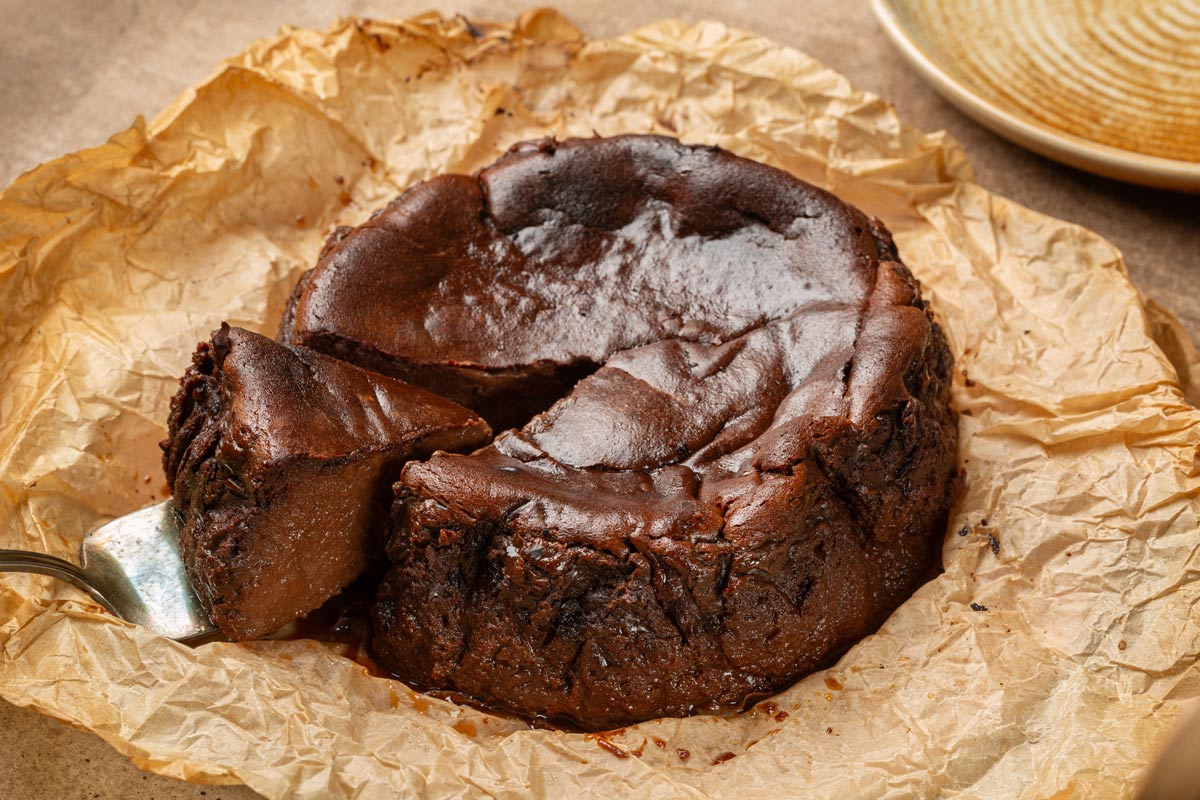 Chocolate Cheesecake in the Basque Style
Basque cheesecake is the ultimate in creaminess. Unlike traditional cheesecake that has a crust and is baked at a low temperature, this style is crustless (perfect if you’re gluten-free) and cooks at a higher temp. Adding two kinds of chocolate to the traditional ingredients makes it a chocolate lover’s dream. The parchment paper used to line the springform pan creates Basque cheesecake’s signature look when peeled away and makes for a great presentation at holiday celebrations.
Ingredients
- 1/3 cup unprocessed cocoa
- 1/3 cup cornstarch
- 1/2 teaspoon instant espresso
- 2 cups heavy cream at room temperature, divided use
- 6 ounces dark chocolate (between 64% and 72% cacao)
- 2 pounds best-quality cream cheese at room temperature
- 1-1/3 cup sugar
- 1 tablespoon vanilla
- 1/4 teaspoon fine sea salt
- 6 large eggs at room temperature
- 1/3 cup extra virgin olive oil
Directions
Step 1
Preheat oven to 400°F. Line a 10-inch by 3-inch springform pan with a large piece of parchment paper, pleating it as needed to flatten it against the sides—don’t worry about making the pleats uniform. Add a second piece of parchment if needed for full coverage, placing it diagonally opposite the first one.
Step 2
Sift the cocoa and cornstarch into a small bowl to remove any lumps; set aside.
Step 3
In a small cup, mix the instant espresso into 1 tablespoon of the heavy cream; set aside.
Step 4
Coarsely chop the chocolate and place 5 ounces in a microwave-safe bowl. Microwave at 50% power for 2 minutes, stir, and repeat until the chocolate is almost fully melted. Out of the microwave, add the remaining ounce of chocolate to the bowl, let sit for 2 minutes, and then stir until smooth; set aside.
Step 5
In the bowl of a stand mixer fitted with the flat beater or in a very large bowl using a hand mixer, beat the cream cheese at medium-high speed for about 2 minutes, until smooth and creamy, stopping every minute or so to scrape down the sides of the bowl. Beat in the sugar, vanilla, instant espresso and cream mixture, and salt. Lower the speed and add the eggs, one at a time, followed by the cornstarch/cocoa, the melted chocolate, the rest of the heavy cream, and the olive oil. Make sure to scrape the bottom of the work bowl with a flexible spatula to incorporate any lumps.
Step 6
Pour the batter into the pan and bake for about an hour, until the top turns deep brown (the center will still jiggle a bit). Place on a wire rack to cool completely before transferring to the fridge to chill from 4 hours to overnight.
Step 7
When ready to serve, release the sides of the pan and gently peel the parchment away from the sides. You can slice it from the parchment right from the pan bottom or use a cake lifter to transfer the cake to a platter.
Yields 10 servings

Healthy Ingredient Spotlight
Choosing Cocoa Powder
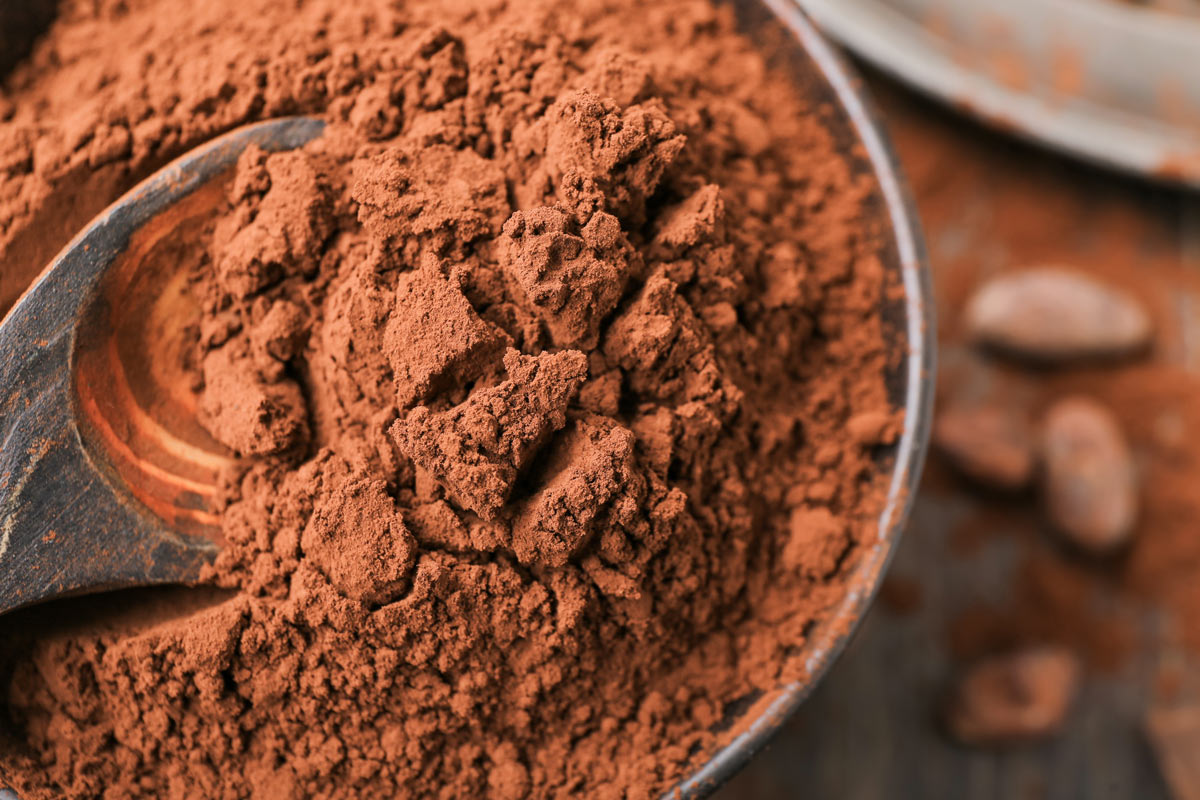
Unsweetened cocoa powder has intense chocolate taste and few calories. Also, ounce for ounce, natural cocoa is the food with the highest flavanol content, one of chocolate’s most important polyphenols. Surprisingly, cocoa gives baked goods deeper flavor than chocolate alone.
Cocoa is sold in one of two ways: natural, with a deeper taste and lighter color, and Dutch-processed, with a milder taste and darker color. Dutching uses an alkaline ingredient to counter cocoa’s natural acidity. While it’s possible to use the two interchangeably with only slight differences in taste in the finished dish, Dutch processing reduces cocoa’s polyphenols, so consider choosing natural cocoa instead.

Quick Kitchen Nugget
Straining Cocoa
Though cocoa comes as a powder, it can form lumps. Always sift it through a fine strainer, pressing it with a small whisk or the back of a spoon to break up any lumps and push it through the mesh. In recipes that call for other dry ingredients, sift it right into the same bowl and whisk well to combine.

For Your Best Health
Harnessing the Power of Cocoa
A new report from the COcoa Supplement and Multivitamin Outcomes Study (COSMOS) found that taking daily cocoa supplements has surprising anti-aging potential. The findings reinforce the value of flavanol-rich plant-based foods for healthier aging.
Investigators from Mass General Brigham and Augusta University looked at changes in five age-related markers of inflammation among participants who received daily cocoa supplements over several years. They found a decrease in hsCRP, an inflammatory marker that can signal increased risk of cardiovascular disease, suggesting cocoa’s anti-inflammatory potential may help explain its heart-protective effects. Their results were published in Age and Ageing.
Nutritional interventions have become an increasingly attractive solution for slowing inflammatory aging, or inflammaging. Cocoa extract was shown in smaller previous studies to reduce inflammatory biomarkers, thanks to its flavanols. To bridge the gap between these studies and humans, researchers launched the large-scale COSMOS trial, which examines the effects of cocoa extract on cardiovascular disease and whether inflammaging may explain those effects.
“Our interest in cocoa extract and inflammaging started on the basis of cocoa-related reductions in cardiovascular disease,” said corresponding author Howard Sesso, ScD, MPH, associate director of the Division of Preventive Medicine and associate epidemiologist at Brigham and Women’s Hospital, a founding member of the Mass General Brigham health care system. “We also appreciate the important overlap between healthy aging and cardiovascular health, where aging-related inflammation can harden arteries and lead to cardiovascular disease. Because of that, we wanted to see whether multiyear cocoa extract supplementation versus a placebo could modulate inflammaging—and the data suggests it does.”
Between 2014 and 2020, Brigham and Women’s Hospital led the COSMOS trial, a large-scale randomized, double-blind, placebo-controlled clinical trial with 21,442 participants over 60 years old, finding that cocoa extract supplementation decreased cardiovascular disease mortality by 27%.
In this new study, researchers collected and analyzed blood samples of 598 COSMOS participants to measure several inflammaging biomarkers: three pro-inflammatory proteins (hsCRP, IL-6, and TNF-α), one anti-inflammatory protein (IL-10), and one immune-mediating protein (IFN-γ). Comparing changes in these biomarkers measured at baseline and at one-year and two-year follow-ups, hsCRP levels decreased by 8.4% each year compared with the placebo, while the other biomarkers remained relatively consistent or increased modestly.
“Interestingly, we also observed an increase in interferon-γ, an immune-related cytokine, which opens new questions for future research,” said senior author Yanbin Dong, MD, PhD, director of the Georgia Prevention Institute and cardiologist/population geneticist at the Medical College of Georgia/Augusta University. “While cocoa extract is not a replacement for a healthy lifestyle, these results are encouraging and highlight its potential role in modulating inflammation as we age.”
The team will continue to evaluate the COSMOS trial to determine whether the cocoa and multivitamin regimens can curb more severe inflammaging, as well as other important aging-related health outcomes.
“This study calls for more attention to the advantage of plant-based foods for cardiovascular health, including cocoa products rich in flavanols,” added Dr. Sesso. “It reinforces the importance of a diverse, colorful, plant-based diet, especially in the context of inflammation.”

Fitness Flash
A Boost for Better Lungs

According to research presented at the European Respiratory Society Congress in Amsterdam, the Netherlands, eating fruit may reduce the effects of air pollution on lung function. The study was presented by Pimpika Kaewsri, a PhD student from the Centre for Environmental Health and Sustainability at the University of Leicester in the UK.
As Kaewsri explained, “Over 90% of the global population is exposed to air pollution levels that exceed WHO guidelines, and ample research shows that exposure to higher air pollution levels is associated with reduced lung function. Separately, a healthy diet, particularly one high in fruits and vegetables, has been linked to better lung function. We wanted to explore whether a healthy diet or specific food groups could modify or partly mitigate the known adverse effects of air pollution on lung function.”
Using UK Biobank data from around 200,000 participants, Kaewsri compared people’s dietary patterns, including their fruit, vegetable, and whole grain intake, with their lung function (FEV1,or the amount of air exhaled in one second) and their exposure to air pollution in the form of fine particulate matter (PM2.5). PM2.5 concentration is the amount of very tiny particles, 2.5 micrometers or smaller, released into the air by vehicle exhaust and industrial processes, among other sources. The team also accounted for other factors such as age, height, and socioeconomic status.
For every increase in exposure to PM2.5 of 5 micrograms per cubic meter of air, the team observed a 78.1ml reduction in FEV1 in the low fruit intake group compared to only a 57.5ml reduction in the high fruit intake group in women.
“Our study confirmed that a healthy diet is linked to better lung function in both men and women, regardless of air pollution exposure. And that women who consumed four portions of fruit per day or more appeared to have smaller reductions in lung function associated with air pollution compared to those who consumed less fruit,” Kaewsri said. “This may be partly explained by the antioxidant and anti-inflammation compounds naturally present in fruit. These compounds could help mitigate oxidative stress and inflammation caused by fine particles, potentially offsetting some of the harmful effects of air pollution on lung function.”
Kaewsri also noted that, in the study population, men generally reported lower fruit intake than did women. “This difference in dietary patterns may help explain why the potential protective effect of fruit against air pollution was only observed in women,” she added. Kaewsri plans to extend the research by exploring whether diet can influence changes in lung function over time.
Get More Recipes In Your Inbox!