
Savor Three Vibrant Fresh-Pressed Olive Oils from the Heart of Andalucía

- Prized varietals from Spain’s leading artisanal producers, these olive oils feature distinctive aromas and exquisite flavors.
- Certified by an independent lab to be 100 percent extra virgin and brimming with healthful polyphenols, this trio has been rushed to you by jet.
- Incredibly food-friendly, they will elevate spring’s bounty of vegetables and other seasonal dishes.
In any given quarter, Mother Nature can be the olive growers’ ally or their greatest nemesis. This year, she had knives out for the Iberian Peninsula. With apologies to Professor Henry Higgins in My Fair Lady, the rain in Spain fell mainly in vain, at the wrong time of year. Autumn saw no rain at all, resulting in olives that were more pit than pulp. And when rain did come, it was in a deluge that increased the water content of many olives to 60 percent, compared to the ideal of 50 to 55 percent. Those extra percentage points are enough to negatively skew flavors and aromas.
I knew from the steady stream of weather woes that it was going to be a challenge to create three oils that would live up to Club members’ expectations—not to mention my own! Portugal wasn’t even a contender this season, due to a lackluster harvest. We set our sights solely on Spain.

Overcoming the Odds
Along with Duccio Morozzo della Rocca, my trusted international olive oil expert, I determined which of Spain’s finest producers were most likely to craft oils that would meet—and hopefully exceed—our standards. Of course, the proof is always in the tasting glass, but early samples gave us confidence. Only the most expertly prepared producers—those who knew how to leverage irrigation, refrigeration, and skill to rise above the challenges—hit our targets for aroma and taste. As Duccio eloquently puts it, “They were able to surf the wave of this season while the others were underwater. Many growers who kept waiting for the best moment to harvest found it never arrived.”
Both Francisco “Paco” Vañó of Castillo de Canena and José and Andrés Gálvez of Finca Gálvez have irrigation systems that help them to adjust the level of water in the olive trees over the course of the long growing season as needed, as well as climate-control systems in their mills to keep the olives at an ideal cold-pressing temperature of 22°C (71°F). Our third chosen producer, García Torres, has groves that are perfectly positioned near the foot of the Sierra Morena mountains, at 700 meters (2300 feet) elevation, which provides natural coolness. As we tasted impressive early samples from these master growers, we knew that we could achieve perfection.

In the Presence of Greatness
My Merry Band of Tasters and I often get the opportunity to meet the legends who were instrumental in shaping the rarefied world of ultra-premium olive oil. Most of these elder statesmen are, well, men. It was especially exciting to be introduced to Anuncia Carpio Dueñas while visiting Finca Gálvez. Trained as a biologist at Instituto de la Grasa in Seville, Anuncia has been raising the standards for EVOO in Spain since 1986. A teacher, taster, and mentor, she has spent decades advocating for sensory, or organoleptic, analysis to ensure quality. She helped develop and validate tasting panels and has judged competitions from Europe to Japan, Chile and the US.
She recounted for me that a notable shift in EVOO’s importance occurred in 1992, when, in preparation for an expo in Spain, the government led a campaign focusing on the health benefits of high-quality olive oil, drawing on research about its polyphenols. Then it was off to the ultra-premium races.
Many improvements we now take for granted were influenced by Anuncia, including one that is particularly close to my heart and palate. She noted that the aromas and flavors of Picual were greatly enhanced when it was harvested early. Following her guidance, those producers crafting high-quality Picual commence the harvest much earlier in the season, ending around the time it used to start.

Paco describes Anuncia and her colleague Brigida Jiménez Herrera as being “prophets in the desert” when he first started Castillo de Canena more than 20 years ago, helping him achieve his goal of creating premium extra virgin olive oil. Anuncia remains active, though now retired after decades at the Ministry of Agriculture in Jaén, doing tastings, trainings, and advising millers as she campaigns for olive cultivation that honors the landscape and the environment. Anuncia and I are of one mind when it comes to the highest-quality olive oils, and I’m sure you’ll agree that this trio meets that ideal. These are oils you’ll love to lavish on all your favorite foods and seasonal recipes.
Happy drizzling!

T. J. Robinson
The Olive Oil Hunter®
This Quarter’s First Selection

I will never forget my first visit to Castillo de Canena, a Renaissance-era castle built by Moors on the ruins of a Roman settlement in the province of Jaén. The year was 2005. I was ushered into a large hall dominated by a “sofa” made of massive slabs of stone. The armrests, I noticed, had concave depressions, worn down by the arms of thousands of visitors over the centuries, who like me, awaited an audience with the castle’s occupant.
If Francisco “Paco” Vañó—occupant of said castle in 2005 and to this day—sounds lord-like, I have misrepresented him: Though a sharp dresser, Paco’s demeanor is quite humble. We had met at the previous summer’s Fancy Food Show in New York City, where he exhibited his olive oils.

Though the family’s been associated with olive oil since George Washington’s time, Paco, his sister Rosa, and their father, Luis, dedicated themselves in 2003 to producing premium extra virgin olive oil. The guide to the planet’s best olive oils, Flos Olei, recently gave Castillo de Canena a perfect score—100 points—for the sixth consecutive year. Castillo de Canena has been inducted into the publication’s exclusive Hall of Fame, one of only nine such producers worldwide.
Paco is a highly respected olive oil authority, known especially for his generosity in sharing his expertise. His oils have delighted Club members for many years. Paco’s father consumes a spoonful every morning and will be 97 in June. Just sayin’.
In addition to producing oils of the highest quality, the family has dedicated itself to sustainability, innovation, and—very important to me—consistency. For years, I have listened to Paco recount the challenges of the harvest, knowing his oils will still be amazing. This year, the olive trees blossomed lushly on the branches’ periphery but not on the inner limbs, creating a deceptive promise of an ample crop. Early predictions were off by about 30 percent, Paco said. Untimely rains bedeviled the harvest. But quality control supervisor Mariela Chova Martínez expertly managed the harvest teams, directing them to the fruit that was at its peak. The resulting Arbequina is wonderful.

Paco is particularly proud of the fact that his team shares his passion for high-quality olive oil. And of the fact that most of the key players at Castillo de Canena are women (about 90 percent). That is unusual in the world of olive oil, which is generally dominated by men. But women have played pivotal roles in the elevation of olive oil quality. Read more about one of these influential female personalities above.
Though he is modest about his accomplishments, Paco told me he is currently working on a coffee-table book featuring Spain’s many unique contributions to world gastronomy. He will write the chapter on extra virgin olive oil with special enthusiasm.
Speaking of enthusiasm, I am thrilled to share his superlative extra virgin olive oil with you. Check out my personal suggestions for its use below
Impressions and Recommended Food Pairings
This enticing Arbequina is full of personality. On the nose, we appreciated the aromas of golden apple, green banana, and almond, along with scents of wheatgrass, green tomato, Belgian endive, and basil. On the palate, there are notes of lettuce, endive, and fava beans; the nuttiness of almonds and hazelnuts; and the bitterness of escarole. Its beautiful finish has the spiciness of white pepper balanced by the sweetness of fresh mint.
Drizzle it into smoothies, over yogurt, and on salads with fruit and nuts. Create vinaigrettes and the marinade for Andalucían Roast Chicken.* It adds depth to delicate pork and veal entrées, Escabèche with Hake and other mild fin fish, paellas, and Spring Vegetable Medley and roasted vegetables, and is perfect for sweets like ice cream, chiffon cakes, and Baked Churros with Two Sauces.
*See the recipe section below for bolded dishes.
This Quarter’s Second Selection

Veteran Club members know that I love, love, love Picual—when done right, which can be tricky. (Don’t get me started on “Picual Gone Wrong.”) The ideal expression of Picual that I seek for my Club entails an early harvest of the finest fruit to create an enticingly herbaceous, robust, harmonious oil, redolent of fresh garden herbs and brimming with flavor. Or, as producer José Gálvez describes it, we strive to “transmit the soul of the fruit into the bottle.”
Finca Gálvez, family-run olive groves comprising 18 distinct farms across more than 5,000 acres in the province of Jaén, started producing artisanal EVOO in 1999, as a pioneer on the Spanish ultra-premium scene. I first met brothers José and Andrés Gálvez in 2005, and we collaborated on our first Club selection in 2008. Their oils have been fêted around the globe—the walls of one office are covered entirely in awards—yet the brothers and their talented team are always seeking to improve and innovate.

This season bestowed gorgeous fruit on the groves, and José kept me and my Merry Band of Tasters apprised of its progress throughout the growing season. He’s a boots-on-the-ground producer, inspecting the olives regularly from at least two months out so he can identify the exact moment to start harvesting. That moment—what I call “the magic window”—varies from farm to farm. For instance, one farm sits 300 meters (~990 feet) above sea level, while another farm a few miles away sits at higher elevation, in a different microclimate. The variations in topography, soil composition, and sun exposure across the farms produce a broader palette of aromas and flavors in the olives.
José explains, “In the mill, we don’t ‘make’ anything”—the aim of milling is to preserve the liquid gold in its purest form. “We do everything within our control to manage the fruit.” Internationally esteemed agronomist Patricia Cano, in her fifth year with the team, oversees the health of the olive trees on all 18 farms. Irrigation provides another crucial form of control; in this arid region, managing hydration of the trees is impossible with rain alone. The harvest team also tightly controls the intricately choreographed logistics of rushing the just-picked olives to the mill, keeping the fruit cool during transit and upon entry to the mill.
Last year, the Gálvez team incorporated a new cooling machine that chills the olive paste—below the standard temperature for “cold-pressed” oil—as it moves from the crusher to the malaxer, which then separates the oil from pulp and water. José notes “a big difference” with the added cooling, which preserves the roundness, balance, and harmony that make for an exceptionally food-friendly EVOO.
Finca Gálvez sorts the EVOO from each day’s harvest not just by varietal but also by aroma and flavor profile. With this technique, batches of the same varietal, pressed on different days from different microclimates, commingle into a complex and harmonious oil.
I can’t wait for you to taste this exquisite Picual. José speaks from my own heart when he says, simply, “I make oil for the people to enjoy.”

Impressions and Recommended Food Pairings
This Picual leads with a symphony of green grassy notes, such as Tuscan kale, arugula, and tomato leaf, followed by the sweet aromas of fennel and pear, and a cornucopia of chopped culinary herbs, notably rosemary, oregano, and thyme, with a whiff of crushed pepper. We tasted Tuscan kale, walnuts, baby spinach, fava beans, and herbs along with the bitterness of radicchio and the spiciness of arugula and green peppercorns.
It’s wonderful on egg dishes like Huevos a la Flamenca*; tomato-based dishes like Pan con Tomate and gazpacho; salads of radicchio, endive, and other greens; crusty breads, focaccia, and pizza; and cheeses. It makes a fabulous marinade for Beef Pinchitos and other grilled meats and enhances Spanish Rice with Garlic Shrimp, other seafood dishes, and beans and lentils. Drizzle it on cheesecake, chocolate mousse, and flan.
*See the recipe section below for bolded dishes.
This Quarter’s Third Selection

Each time I visit the town of Carcabuey, I am struck by its beauty—whitewashed houses, winding streets, and lush bougainvillea that seems to grow everywhere. It’s only fitting that a place this exquisite would be where some of the finest olive oils in the world are produced.
I’m thrilled that for the third year in a row we’ve selected an olive oil from the team at Almazaras de la Subbética, the award-winning cooperative led by Luis Torres, head oenologist, and Carlos García, chief of operations and new dad to baby Alonso. Inspired to be one of the Fresh-Pressed Olive Oil Club’s selections, they push the flavor envelope for us. “You and the Club are top of mind at all our planning meetings so we can be sure to create the best oil for you,” Luis says proudly.
Luis and Carlos credit this year’s winning blend to two amazing milling talents: mill master Francisco Ramón García Ramírez and Miguel Ángel Ortiz López, whom he has been mentoring for the past six years. Francisco Ramón has announced his retirement after an illustrious career: he was just 17 when he first started working at a small mill in town and 30 when he became Almazaras de la Subbética’s mill manager, 35 years ago. Back then, the goal was simply pressing oil for the farmers in the co-op. When the decision was made, in the late ’90s, to build a new facility focused on ultra-premium EVOO, Francisco Ramón worked closely with the engineers to design it.

In 1999, Almazaras de la Subbética won its first gold medal, in Spain’s prestigious D.O.P. Priego de Córdoba competition. In all, Francisco Ramón’s tenure has seen a total of 2,152 prizes across Spanish and international competitions, including an ongoing nine-year streak in the EVOO World Ranking, a nonprofit created to spread the word about olive oils that have been recognized at international competitions. In 2023, Francisco Ramón won Best Mill Master from the Spanish Association of Olive Municipalities. “He has been key to the cooperative’s growth—not only for producing excellent oils but also for training the new generations who join the company,” praises Luis. As Francisco Ramón passes the baton, we celebrate his achievements, just as we are excited by the possibilities that lie ahead with Miguel.
“This season, we gave Miguel more opportunities to make key decisions, and he showed us that he’s the right person to run the mill. He loves the work and loves tasting olive oil—he’s learning a lot with every day’s tasting,” Luis says. “He also works hand in hand with Carlos—we have a formidable team.”
All this star power is concentrated in the extraordinary blend you have just received: 74 percent Hojiblanco and 26 percent Picudo. While the inclusion of Picudo is not new for a Club selection, in previous blends it was just a splash, enough to create some delicious drama. “Hojiblanca is always a winning variety—it never fails, but it is rare to get a Picudo this superb,” observes Luis. It takes a combination of the right temperature, rain at the right time and, of course, skill in the mill. The two varietals have a symbiotic relationship in the field—Picudo is a pollinator of Hojiblanca blossoms—and in the bottle. It’s a remarkable synthesis that I know you’ll enjoy as much as I do.

Impressions and Recommended Food Pairings
In this beguiling duo, the spiciness of Hojiblanco is further elevated by the dark-green intensity of Picudo. Inhale the aromas of green grass, green tomato, artichoke, celery, and microgreens; the fruitiness of green apple, kiwi, rhubarb, and green almond; and hints of crushed black peppercorns. Next, taste an explosion of green tomato, artichoke, green almond, and parsley; and the bitterness and spiciness of arugula, celery leaves, and black pepper.
Lavish this vibrant oil on an Iberian Charcuterie Board* with whole grain breads and Green Salad with Sherry Vinaigrette and other composed salads. It enhances Spanish Pork Burgers and other pork, lamb, and game dishes, as well as grilled tuna, bluefish, sardines, calamari, and octopus. Enjoy it in (and on) frittatas, marinated vegetables, and hummus, and over yogurt and ice cream parfaits.
*See the recipe section below for bolded dishes.
Olive Oil and Health
Stroke ranks as the second-leading cause of death worldwide as well as the third-leading cause of death and disability combined.1 Women have a greater lifetime risk of stroke than men—in part because women live longer, on average, than men do, and because stroke risk in women rises sharply after menopause.2
A substantial body of evidence shows that the Mediterranean Diet (MeDi) reduces stroke risk in both women and men, but little has been published on the MeDi’s effects by stroke type in women.3 In
the US, about 80% of strokes are ischemic—a clot blocks blood flow to or within the brain—and the remainder are hemorrhagic, in which a blood vessel in the brain ruptures and bleeds.4
The journal Neurology Open Access recently published an analysis of data from the California Teachers Study (CTS), which followed more than 130,000 women for more than 25 years, starting in 1995.3 This analysis excluded those with a history of stroke or with missing dietary data, for a total cohort of 105,614 women. Average age at the study’s outset was 52.3
At the start of the study, participants answered a validated dietary questionnaire that asked how often they consumed 103 food and beverage items/groups during the previous year, and in what quantities
(small, medium, large serving size). Responses were converted to a score that reflected adherence to the Mediterranean Diet (MeDi), ranging from 0 to 9. Participants were stratified by MeDi scores into low (0–2), moderate (3–5), and high (6–9) MeDi adherence groups: 12.5% low, 57.5% moderate, 30% high.3
MeDi is typically characterized by high intake of fruits and vegetables, legumes, and whole grains, with olive oil as the primary source of fat; a moderate intake of fish; and minimal intake of meat and dairy products. Some versions of the MeDi include moderate alcohol consumption.3
During the 25 years of follow-up, the CTS study population experienced a total of 4,083 stroke events: 3,358 ischemic and 725 hemorrhagic.3
Participants with high adherence to the MeDi had a 23% lower overall stroke risk compared with the low-adherence group. When results were adjusted for patient characteristics, including smoking, BMI, and demographics, overall stroke risk was still reduced by 18% with high adherence to the MeDi. Even a one-unit increase in MeDi adherence was associated with a significant decrease in stroke risk.3
When analyzed by stroke subtypes, higher adherence to the MeDi resulted in a significant decrease
in stroke risk for ischemic stroke as well as for hemorrhagic stroke. This effect was seen across premenopausal, menopausal, and postmenopausal women in the study, including participants taking hormone treatment.3
This study, with strengths including a large population, long-range follow-up, and analysis by stroke subtype, adds to the body of evidence of the preventative health benefits of the MeDi and helps identify dietary choices that can help reduce stroke risk in women.3
References: 1. Feigin VL, Brainin M, Norrving B, et al. World Stroke Organization (WSO): Global stroke fact sheet 2022 [published correction appears in Int J Stroke. 2022;17(4):478. doi:10.1177/17474930221080343]. Int J Stroke. 2022;17(1):18–29. 2. Rexrode KM, Madsen TE, Yu, AYX, Carcel C, Lichtman JH, Miller EC. The impact of sex and gender on stroke. Circulation Res. 2022;130(4):512-528. 3. Sherzai AZ, Cuble EL, Spielfogel ES, et al. Mediterranean diet and the risk of stroke subtypes in women. Neurol Open Access. 2026;2:e000062. 4. Prabhakaran S, Gonzales NR, Zachrison KS, et al. 2026 guideline for the early management of patients with acute ischemic stroke. Stroke. 2026; doi:10.1161/STR.0000000000000513. Online ahead of print.
Kudos from Club Members
Vibrant pimentón, Spain’s famous smoked paprika, is a culinary mainstay. It’s the spice that gives cured Spanish chorizo its vibrant color, and you’ll see it in a number of the following recipes, along with the country’s distinctive sherry vinegar (we’re partial to vinegars made with the famed Pedro Ximénez grape, for its hint of sweetness). These are richly flavored dishes, many drawing on spring’s vegetable bounty, and perfect for enjoying this quarter’s olive oils.
Recipes
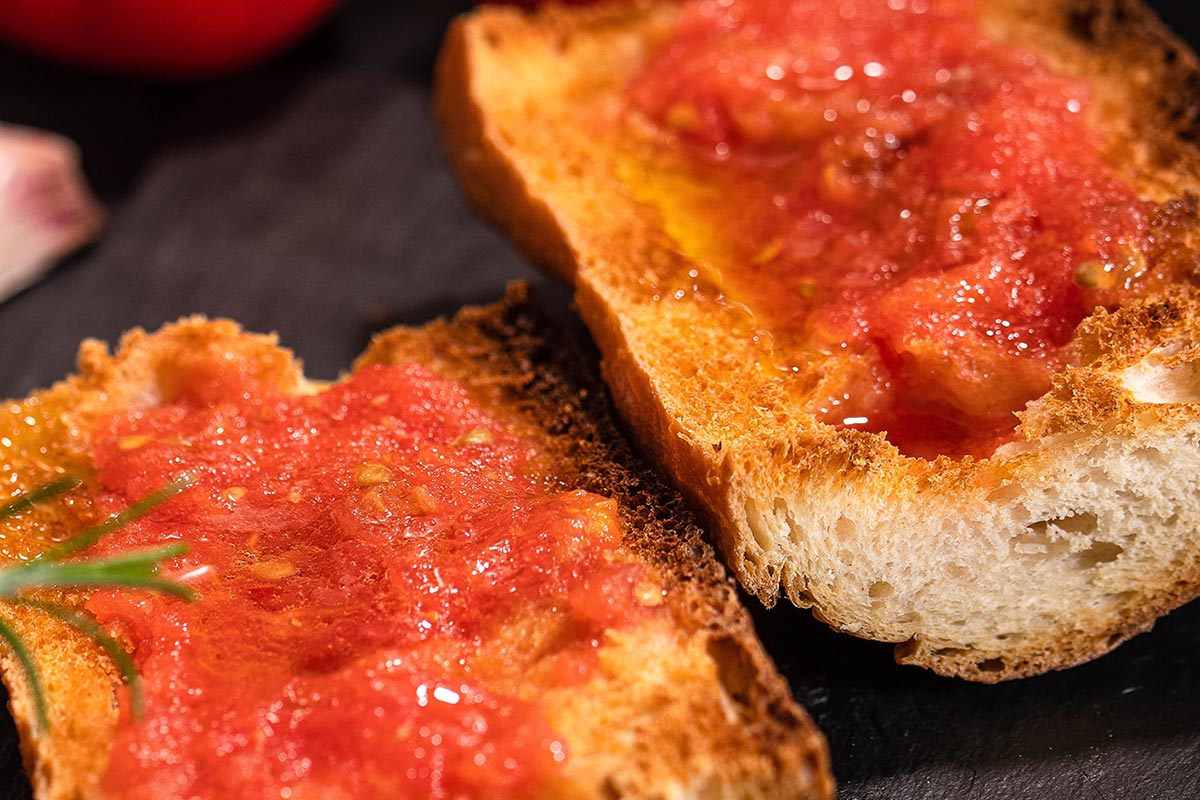 Pan con Tomate This Catalan twist on bruschetta is simple and delicious. Choose the ripest tomatoes you can find. If available, Sungold cherry tomatoes make for a tasty and eye-catching tapa. Ingredients 8 ounces fresh tomatoes 3 garlic cloves, chopped 1 teaspoon sherry vinegar, preferably Pedro Ximénez, or more to taste 2 tablespoons extra virgin olive oil 1/2… view recipe
 Beef Pinchitos Pinchitos, skewers of highly spiced meat, are the highlight at barbecues across many areas of southern Spain. Though this recipe features beef, it’s equally good with chicken, pork, and lamb. To make pinchitos without turning on the grill, you can sear the meat in a Dutch oven and then place it on skewers to serve… view recipe
 Escabèche with Hake Escabèche is a zesty vegetable dish done in two steps: sautéing the vegetables in olive oil then marinating them in sherry vinegar. A popular way to serve it is with lightly fried anchovies. This recipe is for lovers of mild, white flaky fish. Hake is a member of the cod family found in the waters… view recipe
 Spring Vegetable Medley Hard-cooked eggs figure prominently in many Spanish dishes. With this sauté of spring vegetables, they elevate a side dish to meal status. Ingredients 4 tablespoons extra virgin olive oil, plus more for drizzling 6 thin scallions, trimmed 6 ounces asparagus spears, trimmed and cut in thirds 6 ounces shelled green peas 1 teaspoon coarse sea… view recipe
 Spanish Rice with Garlic Shrimp A vibrant, one-pot Spanish classic where saffron-spiced rice meets plump, garlicky shrimp — a weeknight dinner that feels like a dinner party. Ingredients For the rice: 3 tablespoons extra virgin olive oil, plus more for the pot 1 medium onion, finely chopped 1 red bell pepper, finely diced 2 garlic cloves, finely chopped 2 cups… view recipe
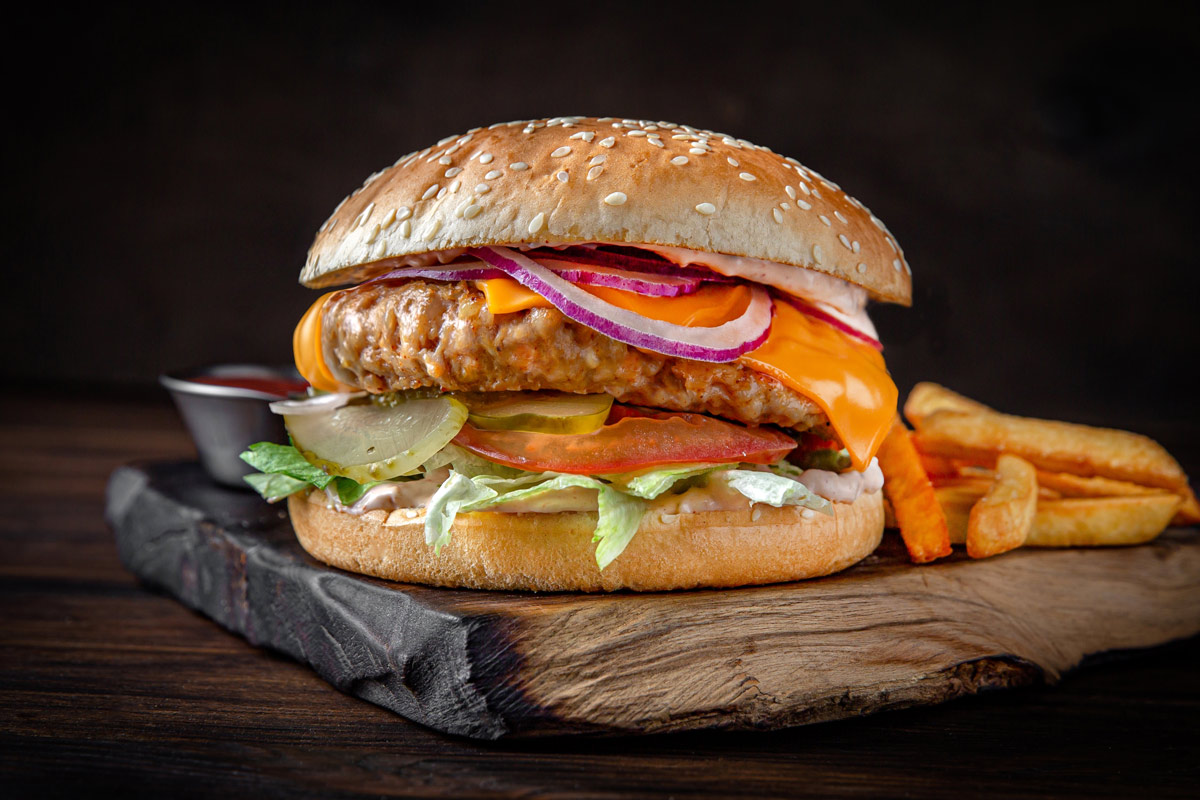 Spanish Pork Burgers It’s hard to beat the all-American beef hamburger, but this pork burger is one you’ll want to add to your repertoire. It can be cooked on the stovetop or grilled—your choice. Serve it with crispy fries, coleslaw, baked beans, or potato salad. Ingredients For the sauce: 1/2 cup mayonnaise 2 tablespoons finely diced red or… view recipe
 Iberian Green Salad with Sherry Vinaigrette I was inundated with recipe requests when I took this salad to a dinner party recently. It features incredible extra virgin olive oil plus an ingredient you might not be familiar with—guindilla peppers. These small slender peppers, typically sold pickled, hail from Basque country. Find them in the international section of your supermarket or online.… view recipe
 Huevos a la Flamenca (Spanish Eggs) Traveling, even vicariously, will whet your appetite for alternative breakfast or brunch dishes enjoyed in other parts of the world. Similar to Middle Eastern shakshuka, this Spanish marriage of mostly pantry ingredients plays to a sophisticated weekend audience. If served for brunch, lunch, or dinner, complement these eggs with a dry Spanish wine and crusty… view recipe
 Baked Churros with Two Sauces Traditional churros are deep-fried. For a lighter version, I’m baking them, with a sprinkling of sanding sugar, to create crispy puffs perfect for dipping in dulce de leche, chocolate sauce, or both! There are delicious brands of premade dulce de leche available online. But a very inexpensive way to make your own is the following… view recipe
 Iberian Charcuterie Board This is one of my favorites, and it involves no cooking and minimal prep. At its center are cured meats from the unique black Iberian pigs. The star of the show is jamón Ibérico, a cured ham with wonderful flavor. I also love chorizo Ibérico, cured sausage redolent of garlic and pimentón; salchichón Ibérico, similar… view recipe