Adapted from Cortez-Ribiero et al (2022) and an article by Liji Thomas, MD, in News Medical, January 3, 2023
Numerous studies have shown that olive oil can have positive effects on pregnancy. A recent systematic review published in the journal Nutrition Research is the first to summarize the evidence for the protective effects of EVOO consumption on maternal-fetal health.
Introduction
Nutrition plays a vital role in the health of a pregnant woman and the outcome of her pregnancy. Olive oil is a healthy source of monounsaturated fatty acids (MUFAs) and phytochemicals such as polyphenols that promote favorable outcomes in pregnancy. In addition, olive oil is linked to lower rates of gestational diabetes mellitus (GDM), preeclampsia (a sudden, dangerous rise in blood pressure), and small-for-gestational-age (SGA) or large-for-gestational-age (LGA) infants.
A systematic review included nine studies from Europe, the UK, and Argentina, conducted between 2008 and 2020. Study sizes ranged from 30 to 35,000 women.
Six studies were interventional, including five randomized controlled trials, and three were observational (case-control or cohort studies).
Maternal-fetal outcomes evaluated included SGA, LGA, GDM, premature birth, preeclampsia, and cardiovascular risk.
The intervenional studies evaluated the effects of EVOO, while the observational studies did not specify the grade of olive oil.
What did this study show?
EVOO in particular, and olive oil in general, is associated with a reduction in the risk of maternal and fetal adverse effects, including GDM, SGA, LGA, prematurity, and preeclampsia.
EVOO supplementation was associated with favorable cardiovascular effects in pregnancy, including a decrease in triglyceride levels.
What are the implications?
SGA increases the risk of poor fetal outcomes, while LGA increases the risk of birth complications. Both SGA and LGA were reduced in association with EVOO intake.
Both GDM and prematurity were reduced in one or more of the interventional studies. The anti-diabetic effects of EVOO may be attributed to the activity of polyphenols, which can improve insulin sensitivity.
Two studies evaluated the risk of preeclampsia: increased EVOO consumption reduced the risk in one study; the other did not find a reduced risk of preeclampsia but reported a reduction in gestational weight gain, a risk factor for preeclampsia.
This systematic review is an important, first-of-its-kind summary of the evidence that EVOO can confer protective effects on pregnancy outcomes. More studies focusing on the impact of olive oil consumption on maternal-fetal outcomes are needed.
Reference: Cortez-Ribeiro, AC et al. Olive oil consumption confers protective effects on maternal-fetal outcomes: a systematic review of the evidence. Nutr Res. 2022;110:87-95. doi.org/10.1016/j.nutres.2022.12.013.
Fresh asparagus is one of my favorite vegetables, especially when paired with a luscious olive oil sabayon. If not using the asparagus immediately, trim the ends (as you would cut flowers) and stand upright in a tall glass of water. Cover the tips with a plastic bag and refrigerate for a day or two.
Ingredients
1 cup dry white wine
1/3 cup white wine vinegar
1 pound green or white asparagus, tough ends trimmed
2 egg yolks
1/3 cup extra virgin olive oil
Coarse salt (kosher or sea) and freshly ground black or white pepper
Directions
Step 1
Place the wine and vinegar in a saucepan and bring to a simmer over medium-high heat. Reduce the mixture by three-quarters and let cool.
Step 2
Steam the asparagus in a double boiler over medium-high heat until tender, about 8 to 10 minutes; set aside but keep warm.
Step 3
Transfer the wine reduction to the top of a double boiler and add the egg yolks. Set over simmering water over medium heat. Cook, whisking constantly, until the yolks thicken enough to fall into thin ribbons when the whisk is lifted from the pan. Remove the pan from the heat and gradually whisk in the olive oil. Thin, if necessary, with one to two tablespoons of water. Season with salt and pepper.
Step 4
Arrange the asparagus on a platter, spoon on the sauce, and serve.
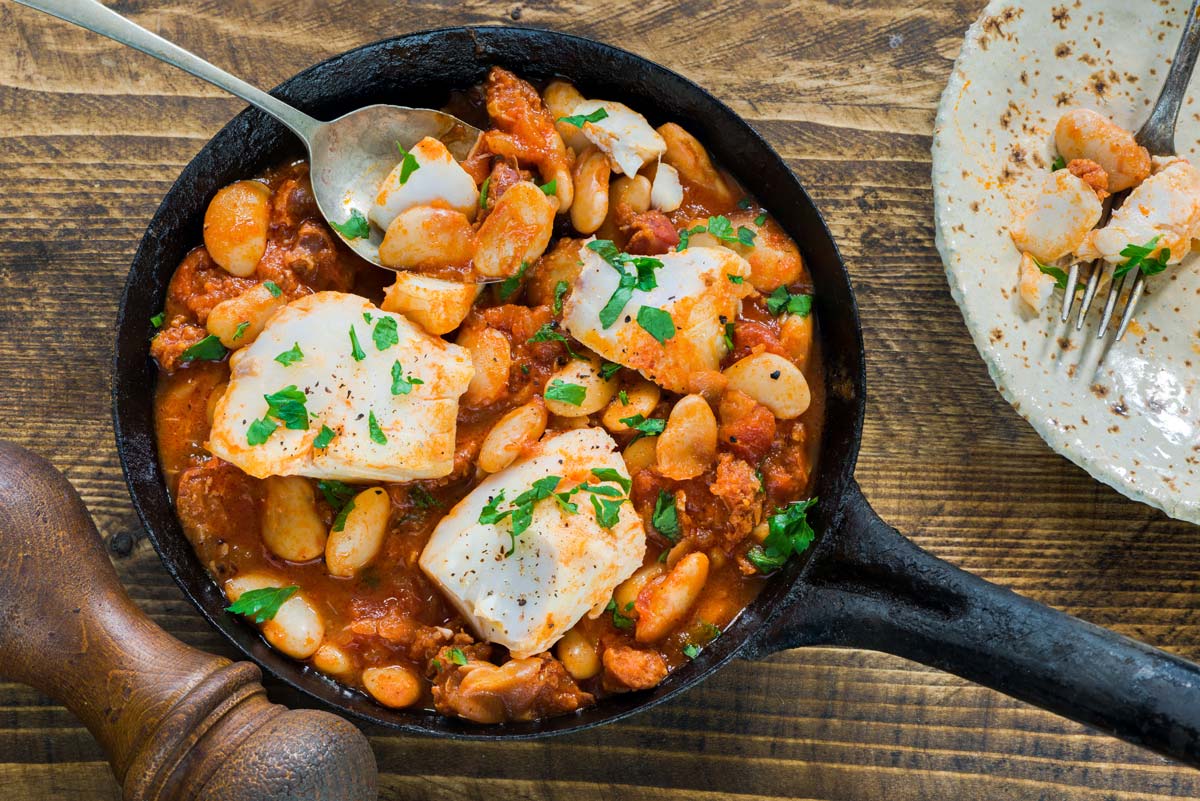
A splash of sherry or red wine vinegar cuts the richness of the chorizo and brightens the flavors. Find cured Spanish chorizo online or in the international aisle of your supermarket. (Do not confuse cured, salami-like Spanish chorizo with raw Mexican chorizo, which must be cooked before using.)
Ingredients
2 slices country-style bread, crusts removed
4 tablespoons extra virgin olive oil, divided
Coarse salt (kosher or sea) and freshly ground black pepper
1 tablespoon chopped flat-leaf parsley
1 tablespoon chopped oregano
1 small shallot, peeled and thinly sliced
2 ounces smoked Spanish chorizo, halved and thinly sliced
2 tablespoons sherry vinegar or red wine vinegar
4 skinless cod or halibut fillets, each about 6 ounces
Directions
Step 1
Heat the oven to 425°F. Pulse the bread in a food processor until coarse crumbs form. Heat a large ovenproof skillet over medium-high heat. Add the olive oil and breadcrumbs. Cook, stirring often, until the bread crumbs are golden and crisp, about 3 minutes; season with salt and pepper. Transfer the mixture to a bowl, add the parsley and oregano, and toss to combine. Wipe out the skillet.
Step 2
Heat the same skillet over medium-high heat. Add a tablespoon of olive oil as well as the shallot and chorizo, and cook, stirring often, until the chorizo is just crisp, about 2 minutes. Transfer the mixture to a bowl and stir in the vinegar; season with salt and pepper. Wipe out the skillet.
Step 3
Heat the same skillet over medium-high heat. Add a tablespoon of olive oil. Season the cod with salt and pepper and cook until the bottom side begins to turn opaque, about 3 minutes. Transfer the skillet to the oven and roast until the fish is cooked through, about 5 minutes longer. Serve the cod topped with the chorizo mixture and toasted breadcrumbs.
Roasted Pears Recipe, How to Adopt the Mediterranean Diet, Plus Discover the Easy Ways to Get the Benefits of Olive Oil and Other Healthful Foods
Many issues of The Olive Oil Hunter Newsletter have been devoted to sharing the science behind the health benefits of olive oil and how you can reap them by adopting the well-known Mediterranean Diet. Still, changes to your diet—especially the permanent ones that can add up to longer life—are hard to make. Problem solved: this issue contains suggestions from two of the country’s leading health institutions, the Cleveland Clinic and Harvard Health, on how to adopt and adapt the most important parts of the diet. And to start, here’s a delicious recipe that doesn’t sacrifice anything in the way of taste.
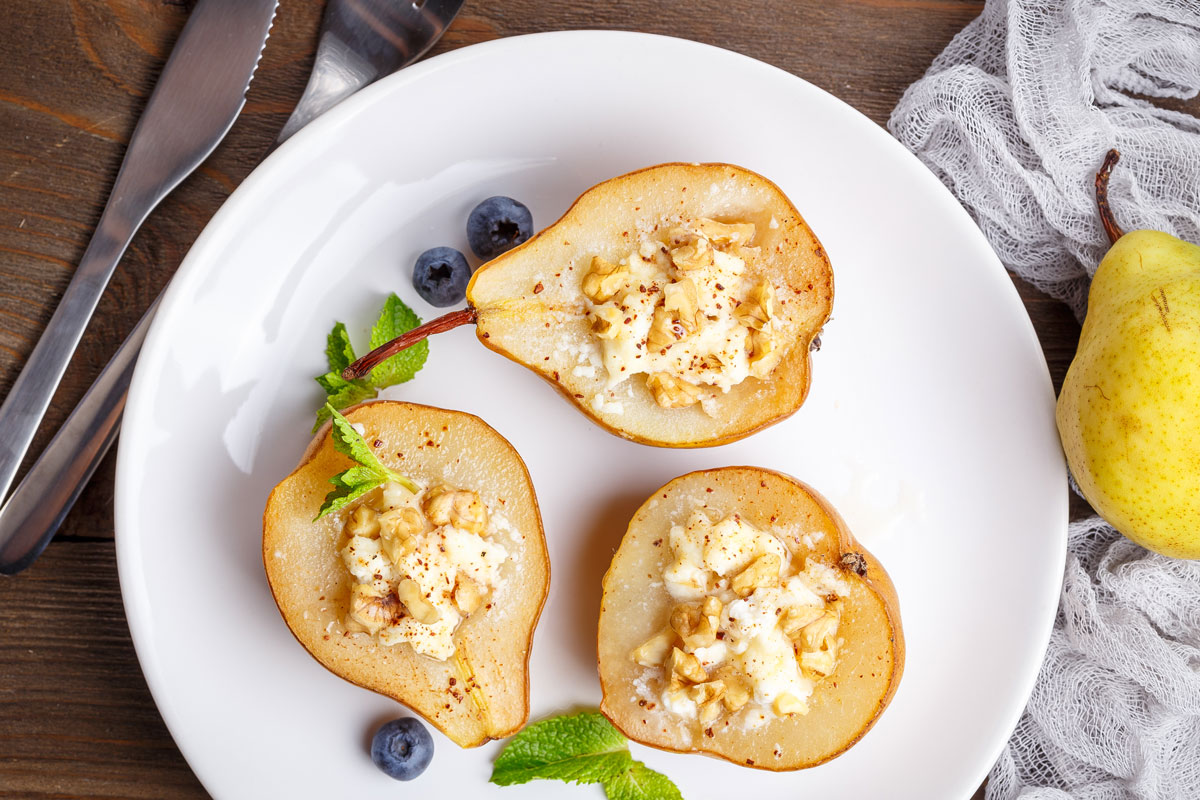
A quick trip to the oven intensifies the flavor of pears—no added sweetener needed. Labneh, a Middle Eastern cultured yogurt with the thickness of sour cream, enhances the pears when plated for dessert. For a hearty breakfast, enjoy them with plain Greek yogurt or its even-thicker cousin from Iceland, skyr.
Ingredients
4 Anjou or Bosc pears, ripe but still firm
2 tablespoons extra virgin olive oil
1/2 cup labneh
1/2 cup walnuts or pecans, coarsely chopped
Cinnamon or pumpkin pie spice blend, to taste
Directions
Step 1
Preheat your oven to 350°F. Halve the pears and use a melon baller or small spoon to remove the seeds; cut out any stem with a sharp paring knife. Cut each half lengthwise into 2–3 slices. Place the pear slices on a large baking sheet lined with parchment paper and brush both sides with olive oil. Bake for 15 minutes or until the pears are slightly browned. Remove from the oven and let cool for a few minutes.
Step 2
Fan the pear slices on each of four plates and top with a large dollop of labneh, chopped nuts, and a light sprinkle of your chosen spice.
Yields 4 servings
Reaping the Benefits of Olive Oil
How to Adopt the Mediterranean Diet
You likely know about its benefits, which range from heart health to brain health, but chances are you haven’t fully adopted it. It can seem more overwhelming at first than it really is. Rather than being a diet with hard-and-fast rules, it’s about taking a thoughtful approach to eating: have more of the healthy foods and fewer of the less healthy ones.
Master the Principles
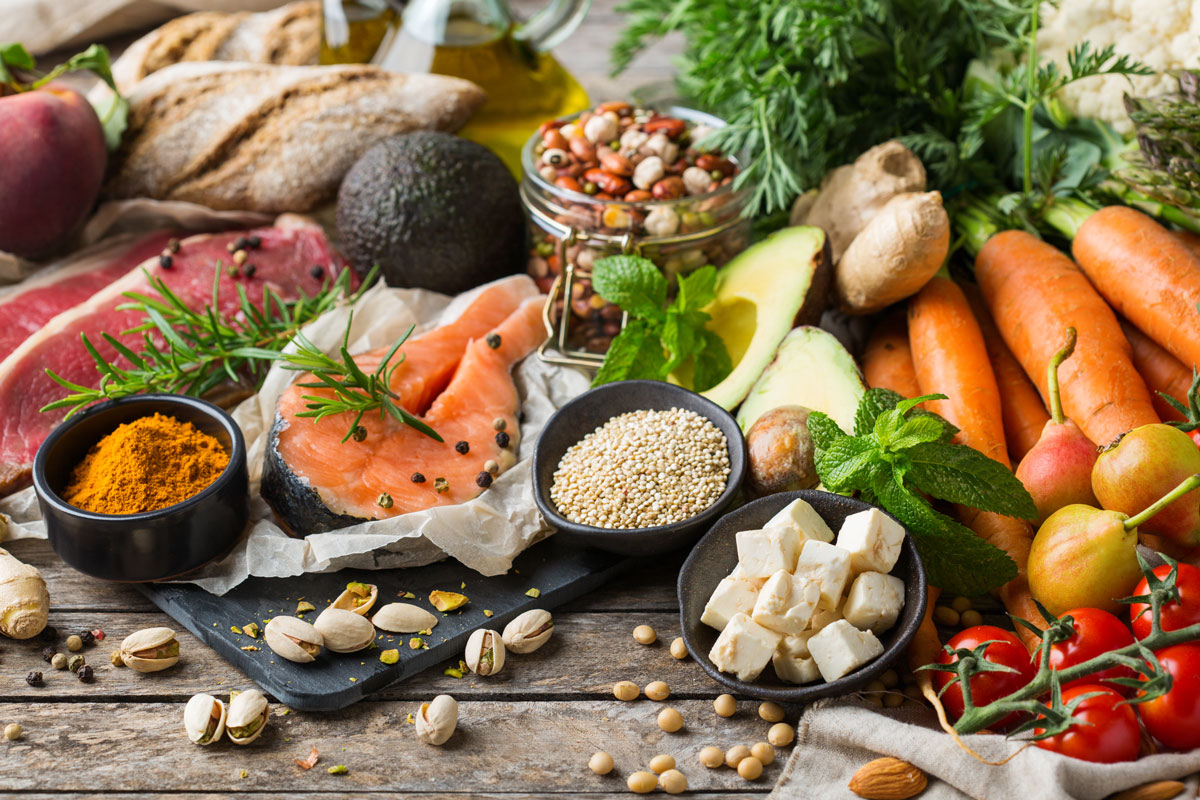
Here are the food emphasized on the Mediterranean Diet, according to the Cleveland Clinic:
Lots of vegetables, fruit, beans, lentils, and nuts
Lots of whole grains, like whole-wheat bread and brown rice
Plenty of extra virgin olive oil as a source of healthy fat
A moderate amount of fish, especially fish rich in omega-3 fatty acids
A moderate amount of cheese and yogurt
Little or no red meat—choose poultry instead
Little or no sweets, sugary drinks, or butter
A moderate amount of wine with meals (but if you don’t already drink, don’t start)
Get Motivated
Why is the Mediterranean Diet so good for you? Again, according to the Cleveland Clinic:
It rebalances the types of fat Americans typically eat. The focus is on healthy unsaturated fats because they promote healthy cholesterol and blood sugar levels, support brain health, and fight inflammation. You limit saturated fat, which can raise bad cholesterol and, in turn, the risk of plaque buildup in arteries (it’s also been linked to excess inflammation).
It prioritizes foods high in fiber and antioxidants. Antioxidants help reduce inflammation, the foundation of many types of diseases. Fiber helps to not only keep you regular but also sweep cholesterol out of your system.
It limits salt, sugar, and refined carbs. Too much salt is a high blood pressure risk. Refined foods, including sugary ones, can cause blood sugar spikes and usually deliver a lot of calories with little nutritional benefit.
Together, these tenets of the diet translate to important health benefits: a lower risk of cardiovascular disease and its risk factors such as high blood pressure, high cholesterol, diabetes, and being overweight. It improves the quality of the gut microbiome, which is important because a diversity of good bacteria promotes good health. It slows cognitive decline and, overall, helps promote longer life.
Researchers believe these protective benefits are partly due to the healthy fats you eat on the Mediterranean Diet. These come from foods like extra virgin olive oil, nuts, and fish. Speaking of olive oil, here’s how the Cleveland Clinic distinguishes between extra virgin olive oil and lesser types:
“A crucial fact to know before starting the Mediterranean Diet is that not all olive oils are the same. The Mediterranean Diet calls for extra virgin olive oil (EVOO), specifically. That’s because it has a healthy fat ratio. This means EVOO contains more healthy fat (unsaturated) than unhealthy fat (saturated). Aside from its fat ratio, EVOO is healthy because it’s high in antioxidants. Antioxidants help protect your heart and reduce inflammation throughout your body. Because it’s manufactured differently, regular olive oil doesn’t contain these antioxidants.”
Get Started
Now that you know more about the Mediterranean Diet and why it’s so helpful, you probably want to know where to begin. Experts from Harvard Health offer steps for an easy and gradual transition. Try to incorporate a new one every week or two, and soon they’ll all be second nature:
Switch to extra virgin olive oil in cooking, as the base for salad dressings, and in place of butter on crusty bread.
Have a handful of raw nuts every day instead of processed snacks and candy. Olives are great, too.
Go for whole-grain bread and other whole grains at meals—try bulgur, barley, farro, couscous, whole-grain pasta, and pasta made from legumes.
Have a dark, leafy green salad plus seasonal veggies at every meal. In all, aim for three to four vegetable servings a day, and have fun by trying a new vegetable every week.
Discover the world of legumes—try the many varieties of lentils, beans, and dried split peas, plus chickpeas and peanuts. Aim for at least three servings a week.
Include three servings of fruit a day. Save high-fat, high-sugar desserts for special occasions.
Think fish first when choosing proteins. Aim for two to three servings a week. When you choose lean poultry, keep portions to 3 or 4 ounces. Use meat as a supporting player in dishes where you can maximize veggies, like stews, stir-fries, and soups.
If you drink alcohol, substitute wine for other alcoholic beverages, but still stay within healthy guidelines: no more than two 5-ounce glasses per day for men, and one glass per day for women.
Harvard also offers these practical mealtime ideas to put their guidelines into action:
At Breakfast
Have oatmeal or an ancient grain, like quinoa or farro, topped with yogurt, fruit, and honey. Or start with plain Greek yogurt and build on that with fresh berries and a sprinkle of nuts.
At Lunch
Have a grain- or legume-based salad, hot or cold, with a variety of vegetables and a fresh cheese like feta, and with a drizzle of a homemade vinaigrette.
At Dinner
Replace meat dishes with fish, especially wild-caught salmon and other fish high in omega-3 fatty acids. Expand meatless Mondays to two or three nights a week with dishes like lentil soup, veggie-stuffed acorn squash, and meatless lasagna.
There are two more aspects of the Mediterranean Diet that I love and get to enjoy on my trips to Italy and Spain for the Fresh-Pressed Olive Oil Club: its emphasis on conviviality—cooking and sharing meals with family and friends—and eating locally sourced foods, which tend to maintain higher levels of nutrients than foods trucked across the country—it’s also better for the environment.