

Presenting a Trio of Superlative Fresh-Pressed Olive Oils from Chile’s Most Esteemed Award-Winning Artisanal Producer
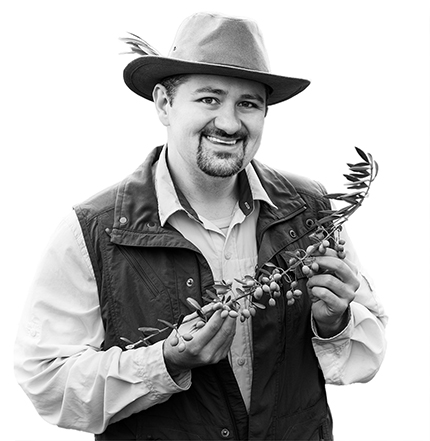
- These three gorgeous Club exclusives, available nowhere else, have been rushed to the US by jet at their peak of flavor and healthful polyphenols.
- Each tantalizing EVOO features uniquely Chilean expressions of beloved Mediterranean varietals.
- Certified by an independent lab to be 100 percent extra virgin olive oil, these spectacular beauties will enhance every dish on your table.
In your hands are the freshest and most vibrant extra virgin olive oils on the planet. Many new Club members are surprised that amazing EVOO can be produced in the South American country of Chile, but the reason is simple: This long, narrow, coastal nation is the mirror image of the Mediterranean region in terms of climate and geography, allowing many traditional European varietals, such as Picual, Coratina, and Leccino, to thrive. So, when spring comes to the Northern Hemisphere, that’s my cue to jet south, where it’s autumn and harvest time, to secure the finest oils for the Club.
When I first visited Chile, in 2005, European olive producers were famously concerned about the “Chilean threat,” as they dubbed the ambitious newcomer’s ultra-premium olive oil scene, which launched in the early 2000s. The Europeans had good reason to be anxious. I was struck by the fresh approach of Chilean producers and the impressive quality they’d attained in a short period of time. Determined to overcome the slings and arrows of Mother Nature, these ultra-premium upstarts used innovative planting techniques, advanced irrigation technology, and state-of-the-art milling equipment in their mission to create excellent EVOO.

However, a lot has shifted since then, mostly in the last decade. Some promising Chilean producers opted to go the mass-market route, waiting to harvest until long past my magic window for flavor and maximum health benefits. Harvesting later enables the millers to extract more oil, but it’s of inferior quality, lacking the green freshness Club members clamor for.
Others switched to imports, bringing in low-quality oil from neighboring countries (such as Argentina and Uruguay) and selling it as Chilean oil to supermarkets, the way some mass-market “Italian” olive oils are merely bottled in Italy, the label hiding the fact that the oil is from a hodgepodge of countries.
A Singular Commitment to Excellence
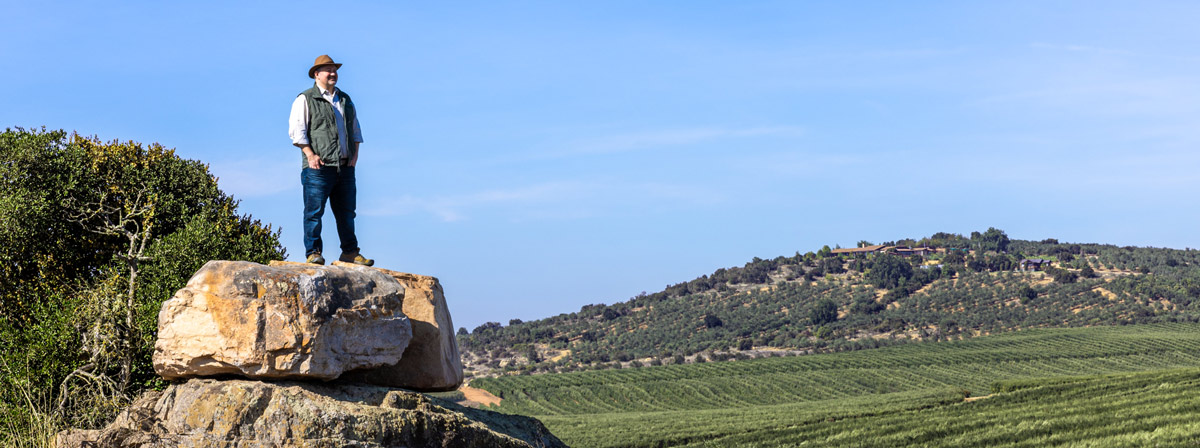
The pot (bottle?) of gold at the end of the Chilean rainbow is Agrícola Pobeña, the Alonso family’s farm in La Estrella, in the fertile O’Higgins Region. This is my eleventh year collaborating with this award-winning, passionate producer. The farm is the realization of the late Abel Alonso’s vision, inspired by olive groves from his childhood in Spain’s Basque country. From day one, the family has been devoted to creating the very finest extra virgin olive oil by carefully controlling each aspect of its production. Presciently, they bought parcels of farmland close to the coast, with numerous microclimates welcoming to a wide range of olive varietals. A world-class team assembled to oversee the development of the groves, led from the start by agronomist Juan Carlos Pérez, the soft-spoken genius in charge of the vast acreage.
The Pobeña mill pressed its first EVOO in 2014 and almost immediately drew international accolades, with more than 150 prestigious awards to date. In 2026, Agrícola Pobeña was again named one of the Top 20 Olive Farms in the World by Flos Olei, the international guide to ultra-premium EVOO.
An Outstanding Growing Season
Eager with anticipation, I couldn’t sleep at all on the flight to Santiago, as my advance scouts had reported that the olives were gorgeous. Upon landing, I traveled down the “Ruta Fruta,” a richly fertile stretch of agricultural land, to the town of Santa Cruz in the Colchagua Valley. I was joined for a kickoff tasting by my dear friend and international olive oil competition judge Denise Langevin and my favorite olive oil savant, Duccio Morozzo della Rocca, whose expertise is in demand around the world. More than two dozen early sample pressings, across a luscious range of varietals, greeted me at the tasting table. We determined unanimously that these were exquisite oils with remarkable flavor and character, hinting at the heights we could achieve as the harvest unfolded. I slept like a baby that night, knowing that the next few weeks would be full of sensational synergy in the field, at the mill, and in our collaborative blending sessions.

A Vintage Year
I am so proud to present you with the fruits of the best South American harvest in recent memory: three distinct, extremely food-friendly, and uniquely Chilean expressions of classic cultivars. Read on to learn about each of this quarter’s exclusive creations, the talented artisans and the extraordinary family behind them, and why we’re deeming this a vintage year.
Happy drizzling!

T. J. Robinson
The Olive Oil Hunter®
This Quarter’s First Selection
- Producer: Denise Langevin La Estrella, Chile
- Olive Varieties: Arbequina, Frantoio, Leccino
- Flavor Profile: Mild

It was a lucky day when I first met Denise Langevin. At the time, she was the export manager of a highly regarded olive oil producer in Chile’s Maule Region. In the decade that’s followed, Denise has become an extremely astute olive oil taster. She is spot-on when evaluating an oil and eloquent when describing its structure, character, and subtle nuances. Our collaboration (seven years now and counting) has produced consistent favorites for Club members.
This current selection is truly extraordinary, reflecting a banner growing season in Chile. In fact, Denise, My Merry Band of Tasters, and I describe this amazing oil as “vintage,” just as vintners do when Champagne grapes have a stellar year. It’s that good. Mild, yes, but delightfully complex. I know that Denise, a talented cook, will use this oil in cakes, splashed on appetizers, drizzled over cheese or ice cream, and more. (See my specific recommendations on page 5.) She is also thrilled to add to her expanding collection of Denise Langevin labels.

Denise possesses an enviable taste memory, the ability to discern distinct varietals. She is an in-demand competition judge and has traveled all over the world. (During my recent trip, Denise confessed that she had turned down an invitation to judge “Masters of Olive Oil” in glamorous Monte Carlo because she didn’t want to miss our time together and the chance to collaborate on another Club exclusive.)
Even more impressive than her eidetic taste memory is Denise’s passion for premium olive oil. For four years, Denise worked with local schoolchildren in her hometown of Codegua, about 45 minutes south of Santiago, to instill a love for the earth and its bounty. Her husband, Luis, built wooden forms so the youngsters could plant and tend their own vegetables. Once the plants matured, Denise created a kid-friendly dish featuring olive oil to teach the principles of farm to table. This modest program inspired Denise to think big! Though still in the idea stage, Denise hopes to take her initiative worldwide, perhaps writing a children’s book that traces olive oil’s incredible story throughout the millennia. Olive oil couldn’t have a better champion.
One of the highlights of the trip for me and my Merry Band of Tasters was a visit to Denise’s ancestral farm, with a farmhouse built almost 200 years ago. Constructed of adobe, the house survived the earthquake of 2010 (8.8 on the Richter scale). Its walls are nearly three feet thick. But for me, the main attraction was the outdoor clay oven and the hot empanadas it produced.
The oil this quarter is a unique and masterful blend of a Spanish cultivar, Arbequina, with two very complementary Italian cultivars—Frantoio and Leccino. Their union is very special—deliciously fruit forward—and will delight you and your guests during the warm-weather months when fresh vegetables are at their peak. I’d love to hear how you use this wonderful fresh-pressed olive oil.

Impressions and Recommended Food Pairings
A deliciously sophisticated mild oil, this exquisite expression of Chilean-grown Arbequina is enhanced with touches of Frantoio and Leccino. Aromas of fresh-cut grass, green banana, apple, Belgian endive, lettuce, celery, sweet almond, basil, and wild mint. On the palate, we noted a beautiful harmony of the nuttiness of almonds and walnuts, the sweetness of green banana, the bitterness of Belgian endive, and the lingering spiciness of celery leaves and white pepper.
This expressive oil will elevate egg dishes, classic berry bowl,* lighter vinaigrettes and homemade aioli, pasta salads, and salads with fruit; mild fish and shellfish, pork, and grilled chicken; farro bowl, rice, fresh corn dishes, artichokes, and asparagus; mild cheeses such as fresh goat and mozzarella; hummus; lime mousse, vanilla ice cream, yogurt, and drinks like your favorite smoothies.
*See the recipe section for bolded dishes.
This Quarter’s Second Selection
- Producer: El Agrónomo, La Estrella, Chile
- Olive Varieties: Picual, Koroneiki
- Flavor Profile: Medium

Everyone involved in our Chilean quest agrees that 2026 is a vintage year for fresh-pressed olive oil. In the sense that wine aficionados wax poetic about an ’86 Mouton-Rothschild, years from now we will likely be reminiscing about the 2026 El Agrónomo Picual and the two other dazzling elixirs you’ve received. All the factors—weather, olive varietals, team members, geography, timing, and more—interacted optimally to create truly spectacular oils, peak expressions of Old World varietals grown on the other side of the globe.
The greenest thumb in the Southern Hemisphere must belong to Juan Carlos Pérez, the immensely skilled, longtime agronomist of Agrícola Pobeña. Seventeen years ago, Juan Carlos planted the Picual that bore such gorgeous fruit this season. He’s cared for those trees since they were saplings, babying them through the megadrought Chile has endured since 2010 and producing consistently excellent fruit. But this year, he marvels, those trees “have something magical going on.” In a fitting celebration of Juan Carlos’s talents, this exquisite Picual blend bears his personal label, El Agrónomo (the agronomist).
In contrast to the Chilean norm of frequent job shifts, Juan Carlos has been with Agrícola Pobeña from its beginning. He oversees everything concerning the health of the olive trees and the groves’ ecosystem, from planting to pruning, irrigation, replanting, identifying the “magic window”—that is, the ideal harvest timing to obtain peak aromas, flavors, and polyphenol content—which varies by varietal and from plot to plot. Starting his days before sunrise, he also manages the 80-plus-member harvest team at Pobeña.

To create this once-in-a-decade Picual, Juan Carlos made two strategic decisions that I believe made all the difference in the extraordinary flavor and harmony of this oil. First, he held back on irrigating until a critical moment in the growing period. Looking for a metaphor, I’d liken his strategizing to an F1 driver or a track runner operating at high speed, keeping pace, watching intently, then knowing precisely when to “lower the hammer”: not too early and just in time to bring home the gold. This meticulous management of the hydration allowed the olives’ aromas and flavors to develop fully and optimized the amount of pulp in the fruit. (A ratio of too much pit to pulp—which happens in dry climates—can result in “woody” and overly astringent flavors.)
Second, Juan Carlos started the Picual harvest even earlier than usual, striving for the super-green, vibrant, herbaceous oil I prefer for our Club. We’ve combined three Picual pressings from three different microclimates, creating complexity and character in this gorgeous oil, which is rounded out by a zesty hint of Koroneiki.
My dear Club member, you’re in such luck—in contrast to fine wine, you are encouraged to consume a vintage fresh-pressed olive oil as soon as you get your hands on it!

Impressions and Recommended Food Pairings
This vibrant early-harvest Picual, splashed with Koroneiki, is the quintessence of the olive fruit. Its intoxicating aroma is redolent of tomato leaf, basil, wheatgrass, baby spinach, and microgreens, with sweet touches of kiwi and Asian pear. On the palate, we noted the lushness of dark leafy greens like Tuscan kale, brightness of green tomato and rosemary, and the bitterness of radicchio. The finish carries a pleasant tingling sensation, with the spiciness of arugula and freshly cracked black pepper.
This dynamo will enhance pork, turkey, seafood dishes such as pastel de jaiba,* Chilean sea bass with mango salsa, and fattier fish like sardines and salmon. Drizzle it on charcuterie; grilled and roasted vegetables; cold whole-grain salads; pasta or legumes; and guacamole and other avocado dishes. It will complement peach pebre, alfajores, and chocolate desserts.
*See the recipe section for bolded dishes.
This Quarter’s Third Selection
- Producer: Alonso, La Estrella, Chile
- Olive Varieties: Coratina, Frantoio, Leccino
- Flavor Profile: Bold
I always look forward to spending time with Juanjo Alonso, who oversees the family’s extraordinary olive farm, Agrícola Pobeña. He has the most engaging personality and an expansive love of life, family, and, of course, ultra-premium extra virgin olive oil. With four older brothers occupied by the family’s other businesses, Juanjo was tapped by his father, Abel, to help him start the farm. Juanjo was just a few years out of college in California and had recently returned to Chile to be with his family. He undertook the project because he understood how making olive oil connected Abel to his past.
Born and raised in Spain’s Basque country, at 17, Abel made his way to Chile, where he and his mother reconnected with Abel’s father, who had been imprisoned for years by the regime of Spanish dictator Francisco Franco before escaping and ultimately resettling in Chile. Young Abel found work in a shoe store and within months was managing the shop. The owners entrusted him to set up a factory in Buenos Aires, where he lived for three years. Back home in Chile, he struck out on his own, creating a thriving shoe business that, over the years, provided work for 600 families.
Through it all, Abel held fast to his love of his native country—later in life, he spent half of each year in Spain. As he neared retirement, he set out to realize his longtime dream of establishing an olive grove and mill that produced world-class olive oil, the elixir so deeply intertwined with Spanish culture. His son Juanjo was determined to make that happen. That’s not to say things always went smoothly.

“My father was a tough, old-school guy. I’m pretty laid back, so being his son wasn’t always easy. There was tension between us at times,” Juanjo reflects, in a rare quiet moment. It’s been a year and a half since Abel’s death, just a few months shy of his 89th birthday. “It’s amazing what happened to me since then. When I’m here, I feel him asking me to be more like him. It’s like he’s giving me the energy and the voice I need.”
I’m thrilled that Juanjo’s 19-year-old son Fermin has been working in the mill during this harvest. A top-ranked freeride snowboarder, Fermin flirted with the opportunity of training for the 2030 Winter Olympics, where the sport is likely to debut. But the grueling schedule would have taken him away from his family and his love of surfing, which he shares with his dad, so he turned it down. I’m looking forward to working with the next Alonso generation one day.

We pay homage to Abel with this very special bold olive oil. He would have been ecstatic about this magnificent farm blend I’ve created for you. It’s centered around Coratina—a cultivar so exceptional the Pobeña team calls it “The Queen”—from three different areas on the farm. The supporting players are Frantoio and Leccino, which are typically planted in side-by-side rows in the field. I love that this oil is the embodiment of three classic Italian varietals, Coratina from Puglia and Frantoio and Leccino from Tuscany. I know you’ll agree we’ve captured magic in a bottle.
We pay homage to Abel with this very special oil that bears his name and a label featuring the family’s coat of arms and a Basque-inspired font. I know he would have been ecstatic about this magnificent Picual I’ve created for you, a varietal from his native Spain, a zesty, complex character like Abel himself.
Impressions and Recommended Food Pairings
This robust Italian-style blend resonates with Southern Hemisphere energy. Its aromas reveal green and sweet almond, green apple, and dark leafy greens like arugula, with notes of artichoke, thyme, sage, and black pepper, rounded by citrus zest and warm hints of cinnamon and vanilla. On the palate are the nuttiness of hazelnuts; mint and oregano; the vegetal character of escarole and celery; and abundant polyphenols, as represented by the astringency of green tea, bitterness of cocoa nibs, spiciness of green chile, and the tingling sensation of Sichuan peppercorns.
Its bold personality is perfect for lamb-stuffed eggplant,* chacarero Chileno and other beef dishes, duck, wild game, tuna and swordfish; deconstructed palta reina and salads with dark leafy greens; bold vinaigrettes; crudités; tomato-based recipes; hearty pasta dishes; cured meats; aged cheeses; crusty breads; wild rice and legumes; and chocolate desserts.
*See the recipe section for bolded dishes.
Olive Oil and Health
In a recently published study, the combined Mediterranean/DASH—Intervention for Neurodegenerative Delay diet, known as the MIND diet, was associated with reduced structural changes to the brains of middle-aged and older adults.
Background: MIND combines the most neuroprotec-tive elements of the Mediterranean diet and the Dietary Approaches to Stop Hypertension (DASH) diet, empha-sizing the following:
- High intake of dark leafy greens and non- starchy vegetables, raw or cooked
- Fresh berries
- Nuts, olive oil, whole grains, and beans
- Fatty fish, such as sardines, mackerel, tuna, salmon, and trout
- Non-fried poultry
- Foods to avoid or consume infrequently: red meats (<3x/week), deep-fried foods, butter and cheese, sweets and pastries, and highly processed foods
Previous research has shown that even moderate adherence to the MIND diet may reduce the risk of cognitive decline and Alzheimer’s disease.
Methods: The current study evaluated the effects of the MIND diet on age-related structural brain changes in 1647 middle-aged and older adult participants from the Framingham Offspring Study (FOS) cohort. FOS is a large, long-term study launched in 1970, with a 99% retention rate and high-quality data collection; FOS conducts MRI brain exams of participants every 2- 6 years.
- 54% women, 46% men
- Average age at baseline: 60
- Median MIND score: 6.8 out of 15
- Low group: median MIND score 5.8
- Moderate group: median MIND score 6.8
- High group: median MIND score 8.3
MIND score (scale 0-15) was calculated based on 140-item dietary questionnaires that evaluated intake of 9 recommended food groups and 5 restricted food groups, plus moderate wine consumption.
MRI brain scans were analyzed to determine total brain volume and volumes of gray matter, white matter, hippocampus, and other measures of brain structure. (Gray matter consists of the cell bodies of neurons, the brain’s main cells; white matter represents the connections between neurons that facilitate communication across regions of the brain. The hippocampus is a brain region involved with forming and accessing memories.)
Results: Over a 12-year follow-up period, higher MIND scores were associated with less gray matter loss and lower percentages of other measures of brain shrinkage.
- Each 3-point increase in MIND score corresponded to 20% less gray matter loss, or a 2.5-year delay in brain aging.
- These associations were even stronger in older individuals.
- All participants’ brain imaging exhibited some decline in total brain volume and on other measures, which is normal.
The limitations of an observational study mean that no direct conclusions can be drawn about the MIND diet’s impact on brain volume, only the above-mentioned associations. In addition, dietary questionnaires are subject to participants’ recall bias. Nonetheless, the findings of this long-term and high-quality study reinforce that the MIND diet is a “brain-healthy” eating pattern that should be considered for its potential neuroprotective benefits.
References: Chen H, Hailili G, Tong L, et al. Adherence to the MIND diet and longitudinal brain structural changes over a decade: evidence from the Framingham heart study offspring cohort. 2026. J Neurol Neurosurg Psychiatry. 2026;97: 505-512. doi:10.1136/jnnp-2025-336957; Paharia PT. The MIND diet explained: Foods that fight cognitive decline. NewsMedical.net, June 17, 2025, www.news-medical.net/health/The-MIND-Diet-Explained-Foods-That-Fight-Cognitive-Decline.aspx.
Kudos from Club Members
Recipes
 The “Melvin” with a Twist The classic summer drink in Chile is Melón con Vino, commonly called a Melvin. It’s traditionally made by scooping out the flesh of a honeydew melon and filling the shell with a mix of white wine and confectioner’s sugar. My twist is to purée the honeydew and blend it with the wine, rather than sweetening… view recipe
 Lime Mousse Lime is the perfect counterpoint to the richness of heavy cream. This dessert comes together in minutes. Ingredients Zest and juice of 2 limes 2 cups heavy cream 1/3 cup confectioner’s sugar or sweetener of choice 2 teaspoons extra virgin olive oil 1 teaspoon vanilla extract Directions Step 1 Reserve 1 teaspoon of the lime… view recipe
 Alfajores Recipes for these sandwich cookies vary from country to country: They’re thin and crisp in Chile, thick and soft in Argentina. Mine is a happy compromise that will practically melt in your mouth! Serve them plain, rolled in coconut as suggested below, dusted with confectioner’s sugar, or go all out and dip the assembled cookies… view recipe
 Lamb-Stuffed Eggplant This Mediterranean lamb dish is delicious as is, but for another dimension of flavor, serve with tzatziki sauce. Ingredients Extra virgin olive oil 2 large eggplants, about 1 pound each Coarse sea salt Freshly ground black pepper 1 cup diced yellow onion 1 large red bell pepper, seeded and diced 1 pound ground lamb 2… view recipe
 Chilean Seabass with Mango Salsa Also known as Patagonian toothfish, Chilean sea bass is one of the most popular seafood options in the US. Flaky and buttery, this deep-sea fish is typically fished off the coast of southern Chile. Cod fillets are a good substitute. The mango salsa is also great with chicken or pork. Feel free to sub with… view recipe
 Pastel de Jaiba (Crab Pie) This rich dish can be served as a light main course or as an appetizer. Popular in Santiago, it’s traditionally baked in a ceramic vessel from the nearby town of Pomaire, famous for its burgundy-colored clay. Ingredients For the filling: 2 slices soft white bread (each about 3/4 inch thick), crusts removed 1 cup heavy… view recipe
 Chacarero Chileno A specialty of Chilean sandwich shops called fuentes de soda, this improbable mash-up of seasonal ingredients is unbelievably good. Eligible cuts of beef include top round, sirloin, ribeye, beef tenderloin, and hanger steak. Enjoy this “orchard sandwich” with your fresh-pressed olive oil! Ingredients Fine sea salt 4 ounces fresh green beans, frenched 1/4 cup mayonnaise… view recipe
 Deconstructed Palta Reina (Queen’s Avocado Salad) Chile’s beloved “Queen’s Avocado” gets a contem- porary reboot. All the classic flavors — creamy avocado, savory chicken salad, and a bright vinaigrette — are here, layered on a bed of greens instead of mounded onto the fruit. Tuna or shrimp salad works beautifully here, too. Ingredients For the vinaigrette: 1/4 cup extra virgin olive… view recipe
 Farro Bowl This ancient grain, often available in heirloom varieties such as emmer farro, has a nutty taste and is a great source of fiber and protein. Because it takes 45 minutes to cook, you might double the amount and save half for breakfast or lunch the next day. Notes: If you don’t want to light up… view recipe
 Peach Pebre Pebre is the delicious Chilean spin on salsa. This recipe brings in sweetness from peaches and makes a terrific summer accompaniment to grilled chicken or fish. Ingredients 1 jalapeño or aji pepper, seeded and minced 1/3 cup fresh cilantro (leaves and tender stems), chopped 1 garlic clove, peeled and finely minced 1 large ripe red… view recipe